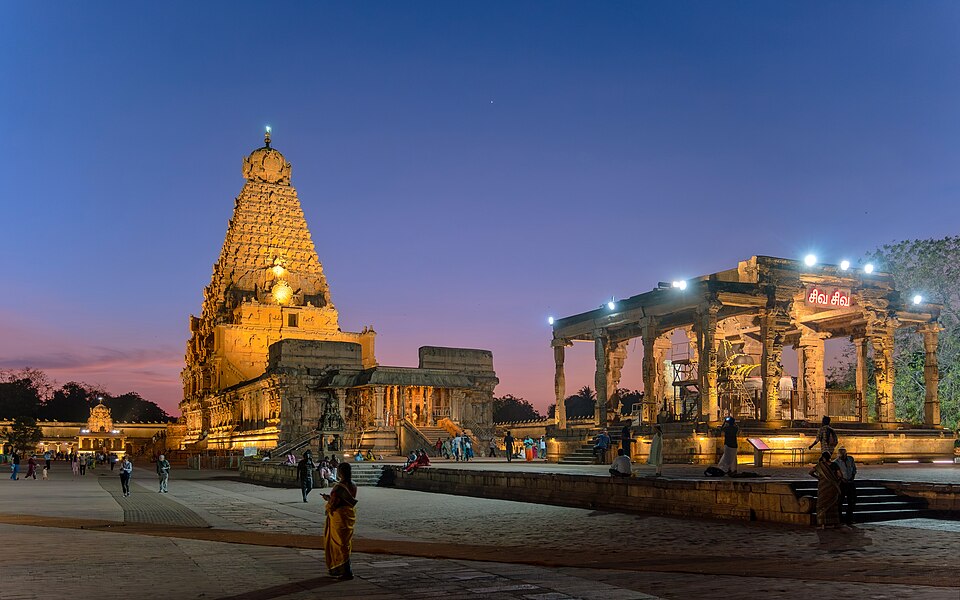
Brihadisvara Temple at Thanjavur is often introduced through an enormous number: the supposed weight of its crowning stone. That detail can attract attention, but the building offers much more to examine. Its scale, organisation, sculpture and continued religious use make it a rewarding place to look slowly.
Start with the tower and its setting
Notice the relationship between the main tower and the surrounding spaces before moving towards small details. The effect of height depends partly on those relationships. A tightly cropped photograph may communicate size while concealing how the whole complex is arranged.
The temple belongs to the Great Living Chola Temples World Heritage property. The word “living” is useful: this is not only a monument to an earlier period but also a place of continuing religious practice. Visitors should respect both conservation rules and the requirements of worship.
Treat engineering claims carefully
Stories about an eighty-tonne capstone and a very long construction ramp are repeated in many popular accounts. An exact weight or a proposed method of lifting requires a reliable source. A reconstruction of how something might have been built is not the same as direct evidence of how it was built.
The same care applies to claims that the temple “casts no shadow.” Buildings interact with sunlight according to their form and surroundings. A memorable slogan should not replace observation. Ask what a guide means by the statement and under which conditions it is supposed to hold.
See the work of many people
Large monuments depend on planners, craftspeople, labour, resources and patronage. Focusing only on a ruler or a single extraordinary stone can hide that collective achievement. Look for inscriptions, sculptural programmes and evidence of later care that place the building within a wider social world.
When reading an inscription in translation, note its date and purpose. A record of a gift, for example, answers a different question from a modern architectural survey. Different kinds of evidence become more useful when their limits are understood.
A better visitor’s notebook
Record one observation about scale, one about a sculptural detail and one about present use. Keep them separate from stories you were told. Later, compare the notes with a museum or heritage description. This turns a visit into a small exercise in careful looking.
Allow enough time for the outdoor setting and avoid touching or climbing on carved surfaces. The temple’s achievement is clearer when it can be described through what survives and what can be established, rather than through a chain of claims that no one could possibly explain it.
Sources & further reading
whc.unesco.org — reference and further reading. Interpretive reflections and practical reading suggestions in this article are the website’s own explanatory material. Check current official arrangements before travelling.