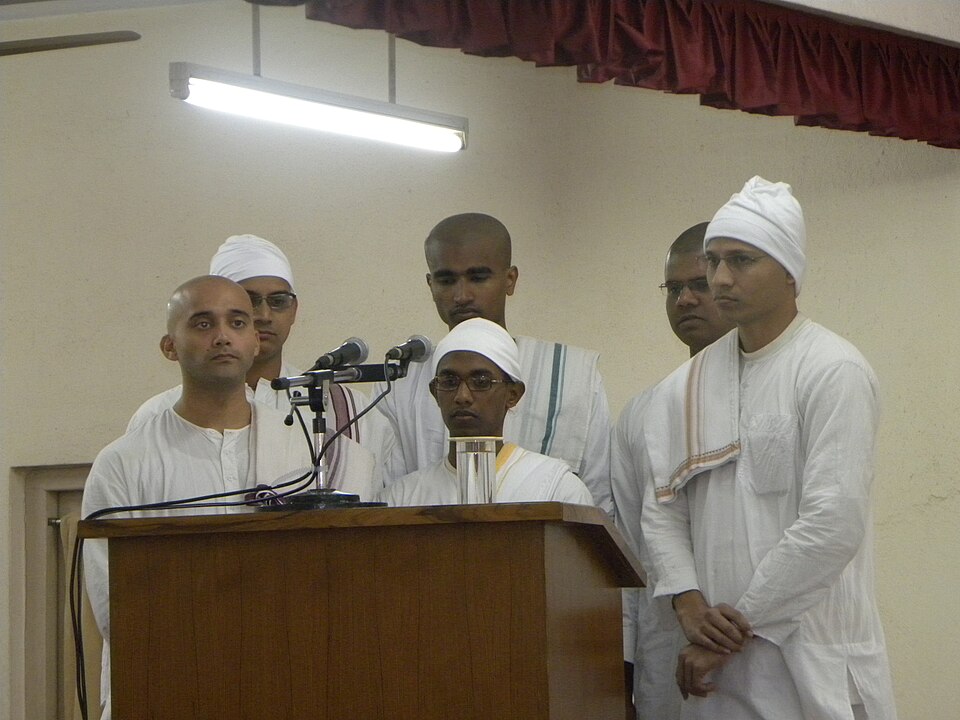
An oral tradition is sometimes imagined as a text repeated casually from memory. Vedic chanting asks us to reconsider that assumption. Its preservation involves trained attention to sound, accent and sequence, supported by relationships between teachers and students. Writing down the words alone does not capture everything involved in recitation.
Listen for precision
A beginner may first notice the rise and fall of the voice. With guidance, distinctions of accent, duration and pronunciation become more apparent. These are not decorative additions applied after the text is learned. They belong to the way the tradition transmits it.
Different Vedic schools have their own recitational practices. A recording should ideally identify the text and tradition, rather than simply carry the label “ancient Vedic sound.” That information allows listeners to understand what they are hearing and to compare like with like.
Repetition has a method
Traditional approaches include patterns that rearrange and repeat portions of text. Such methods help make the relationships between words explicit and support careful memorisation. They should be described accurately rather than transformed into a claim that no variation could ever occur anywhere in a long history.
The human work matters: repeated practice, correction and sustained teaching. Calling the tradition miraculous can unintentionally hide the effort of the people who maintain it. Precision is an achievement of training, not a reason to ignore the teacher’s role.
Oral and written forms coexist
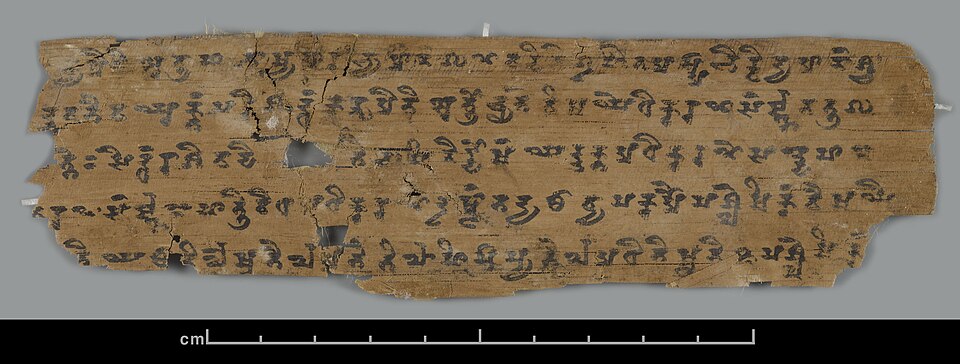
It is too simple to say that the Vedas were “never written down” as though manuscripts and oral transmission could not coexist. The importance of oral learning does not imply the absence of written copies in every later period. A manuscript is a physical object with its own date, even when the text it preserves is much older.
For this reason, captions need care. A photograph of a nineteenth-century manuscript should not be labelled as a surviving object from the second millennium BCE. The age of a textual tradition and the age of a photographed page are different facts.
How to begin learning
Choose a teacher who can identify the tradition and explain the learning process. Start with a manageable passage and accept correction. Trying to imitate a complex recitation from a short clip can establish errors that are difficult to notice without guidance.
For listeners who are not learning to recite, following a translation while hearing a clearly identified recording can still be rewarding. The purpose is attentive understanding, not a promise that a recording at a special frequency will cure illness. The tradition’s linguistic, religious and cultural value stands on firmer ground than such claims.
Sources & further reading
ich.unesco.org — reference and further reading. Interpretive reflections and practical reading suggestions in this article are the website’s own explanatory material. Check current official arrangements before travelling.