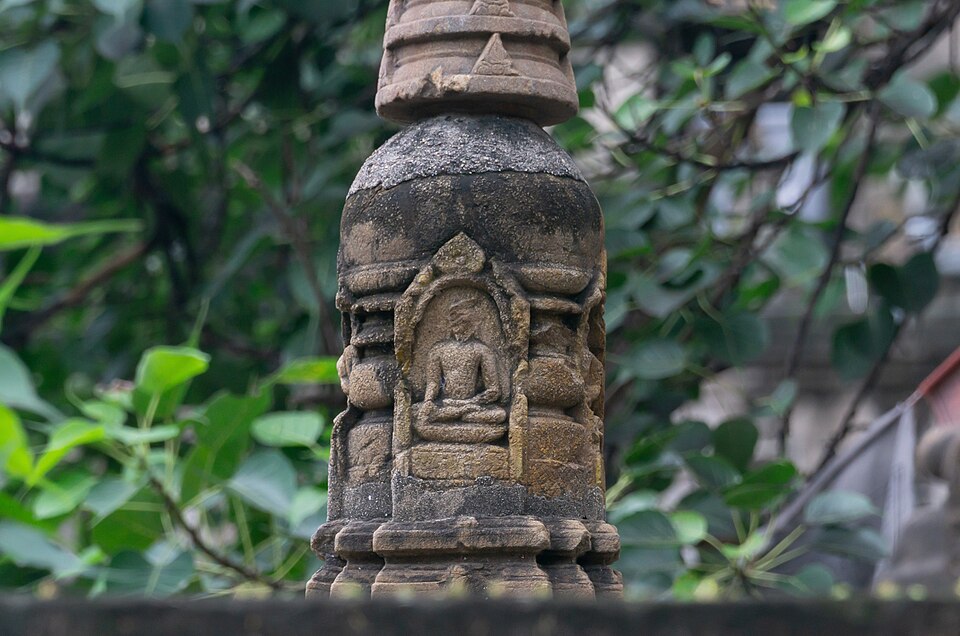
At Bodh Gaya, a visitor may arrive with a camera while the person beside them has travelled to pray. Both may stand before the same monument, but they are not having the same experience. Remembering this is a useful beginning for understanding the Mahabodhi complex as an active sacred place rather than only an architectural landmark.
Understand the association
Buddhist tradition associates Bodh Gaya with the Buddha’s enlightenment. The Mahabodhi complex contains architecture and sacred locations connected with that memory. UNESCO’s description also distinguishes early patronage from the date of the surviving temple structure, a reminder that a place’s religious association can be older than its present fabric.
Do not collapse those different histories into one construction date. Keep separate notes for the sacred narrative, the standing building and later conservation. The distinctions make a description clearer without reducing the importance the place holds for worshippers.
Look at the smaller monuments
The main temple naturally dominates photographs, but the surrounding votive stupas and other features deserve attention. Their variety can introduce the idea that devotion accumulates through many acts of giving and remembrance, not only through one major commission.
Choose a permitted viewpoint and compare scale, shape and spacing. Ask a guide which features are identified and which remain less certain. Small monuments do not become interchangeable simply because a visitor cannot yet recognise their differences.
Notice shared space without intruding
Different Buddhist communities may use languages, garments and forms of practice unfamiliar to you. Observation is welcome only within the boundaries of the setting. Avoid moving between someone and their devotional focus merely to improve a photograph.
If you want to ask about a practice, wait for an appropriate moment and accept a brief answer or a refusal. A person engaged in worship is not automatically a guide. Public visibility does not remove their need for concentration or privacy.
Prepare for a quiet visit
Check current entry and security arrangements before arriving, especially rules governing devices and bags. Bring only what the current guidance allows. A practical plan reduces the chance that a simple visit becomes a hurried negotiation at the entrance.
Give yourself a period with the camera put away. Listen to the changing sound of the space and observe how people move through it. You need not imitate a ritual to act respectfully. Sometimes the most thoughtful participation is to remain quiet, leave pathways clear and recognise that the monument continues to matter beyond your own visit.
Sources & further reading
UNESCO World Heritage Centre — site history and significance
.jpg)