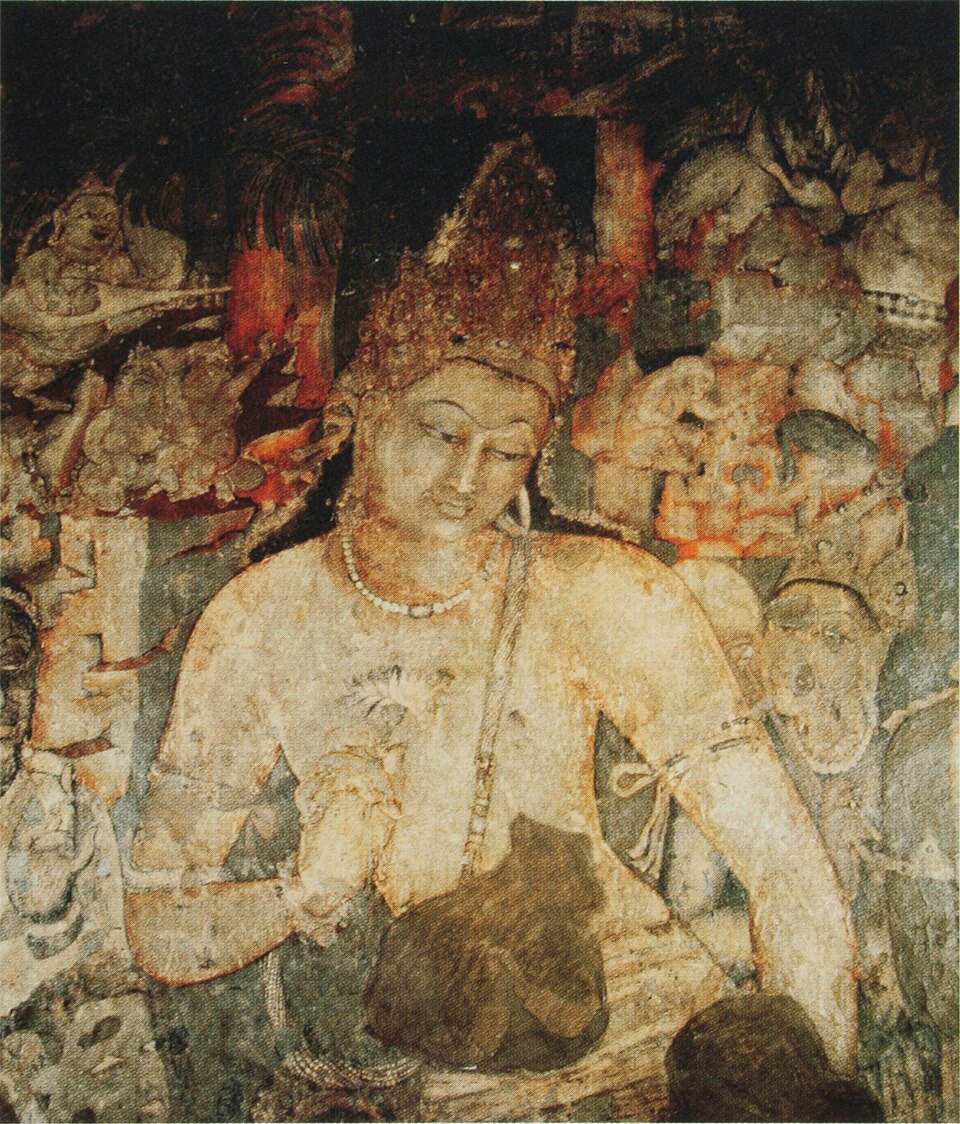
An Ajanta painting is easy to reduce to one famous face. Yet the face belongs to a wall, the wall to a cave, and the cave to a Buddhist setting. Restoring those connections makes even a familiar photograph feel less like an isolated masterpiece and more like part of a larger visual conversation.
Let the space come first
Ajanta’s rock-cut caves include worship and monastic spaces, with paintings and sculptures from different phases. The cave number matters when you read about an image: the decoration and layout of one cave should not be used as a description of all the others.
Before concentrating on a painting, look at the room’s shape and the position of its main architectural features. Ask how the decorated surface meets a doorway, column or ceiling. This helps you understand the painter’s choices within an existing space.
Follow gestures rather than isolated details
In a crowded scene, start with the direction of a hand or a face. Look for groups of figures, changes in scale and repeated characters. Narrative painting does not always arrange events in the single-frame manner of a modern photograph, so a familiar story may appear through several connected moments.
Use a reliable identification when naming a scene. A beautiful person holding a flower is not enough evidence for every possible divine or royal identity. Keeping the cave number beside your notes makes later checking much easier.
Notice what the surface allows
Colour, line and surviving patches of paint can be uneven. Do not treat every pale or missing area as an intentional effect. Some marks belong to the work’s history of deterioration, discovery and conservation rather than the original design.
Reproductions can help you study details later, but remember that screens change colour and contrast. A heavily enhanced online image is not a neutral record of what a visitor sees. Comparing a reproduction with a museum or conservation description can explain that difference.
Make a small, deliberate study
Choose one gesture, one garment detail and one relationship between figures. Describe each in ordinary words. This approach is manageable even if you do not know the specialist vocabulary for painting or Buddhist stories.
Follow the site’s lighting, photography and access rules, including restrictions on flash. Do not add light to improve a personal image of a fragile surface. Ajanta is not a place where the best visit is measured by the brightest photograph; it is a place where careful looking and a trustworthy reference can work together.
Sources & further reading
UNESCO World Heritage Centre — site history and significance