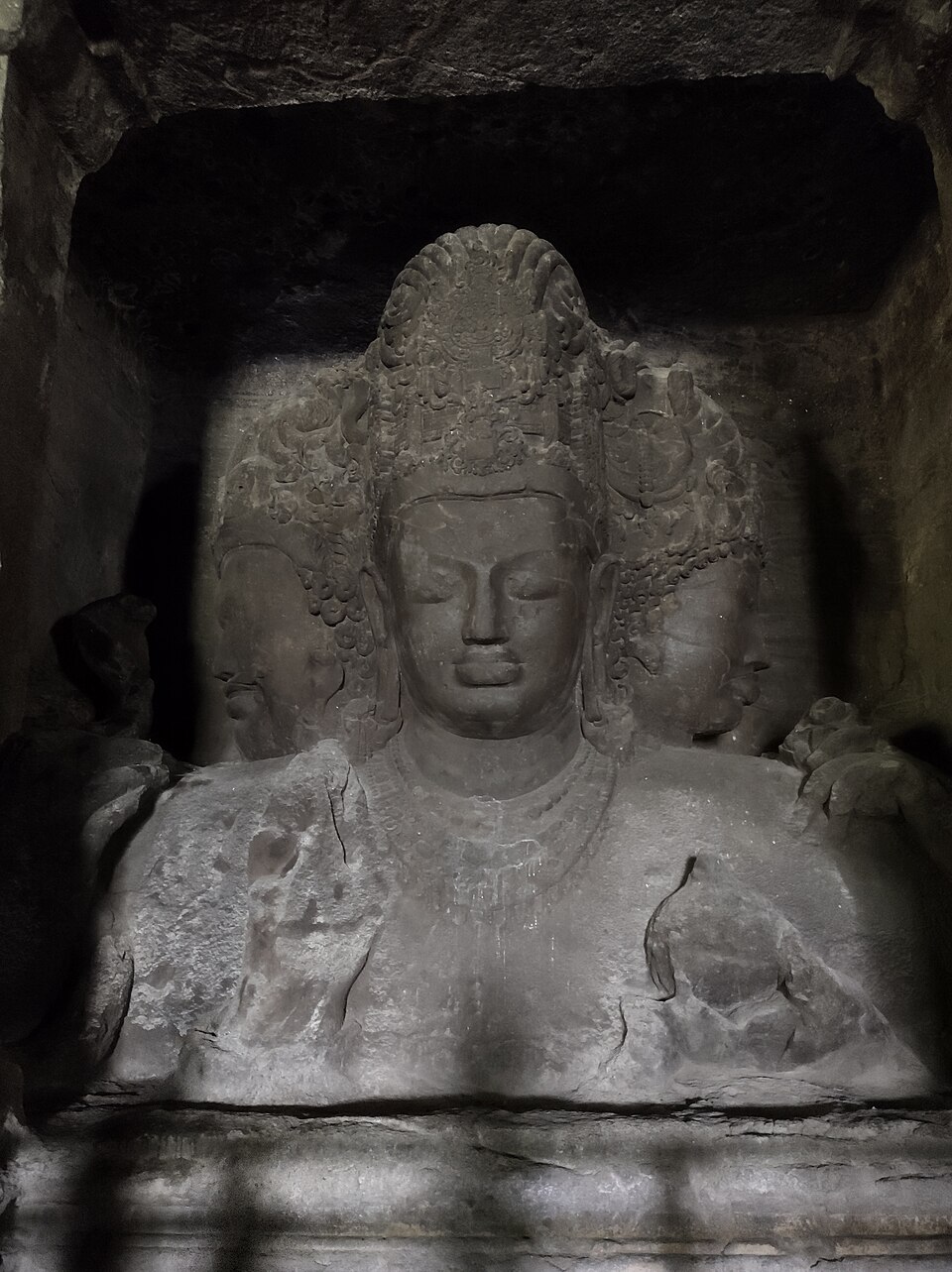
The large three-faced image at Elephanta draws attention immediately, but its scale can also distract from the room around it. Step back before studying the faces. The relationship between sculpture, columns and the approach through the cave is part of the work. A close-up alone cannot show how a visitor encounters it.
Recognise a rock-cut space
Elephanta’s principal cave is a rock-cut monument associated with Shiva. Unlike a hall assembled entirely from separate blocks, its spaces and major sculptural forms were cut into the existing rock. That difference changes the question from “how were these walls stacked?” to “how was material removed to produce this arrangement?”
Look at the point where a column meets the ceiling, then compare the free-standing appearance of the support with its relationship to the surrounding stone. You can appreciate the work without supplying an unsupported calculation of how many workers or years it required.
Read the central image carefully
The famous three-faced form is commonly called Maheshmurti or Trimurti in descriptions of the site. Names can carry different interpretive habits, so follow a source that explains the image in its Shaiva context rather than assuming it simply represents three unrelated deities.
Notice the contrast in expression and adornment. A useful first description might concern the calm central face and the different character of the side faces. Move from those visible distinctions towards a sourced interpretation; do not force the image into a meaning chosen before you looked.
Connect the surrounding panels
The cave includes other representations of Shiva that explore different relationships and actions. A visit becomes more coherent when you identify a few panels and ask how they differ from the stillness of the central image.
Choose two panels for comparison. Where does the composition gather attention? Are the figures balanced, crowded or in motion? These visual questions remain useful even before you know every character’s name. Keep uncertain identifications provisional until you can check them.
Allow for the island journey
The journey to Elephanta is part of the practical visit, but ferry arrangements and access conditions can change. Check the current service and return plan before setting out, rather than treating a heritage description as a transport timetable.
Within the caves, protect carvings by following barriers and photography instructions. Damage is not improved by touching an edge or tracing a form with a hand. Give the stone enough distance, and give the images enough time: a short list of well-understood panels is better than a camera full of unnamed details.
Sources & further reading
UNESCO World Heritage Centre — site history and significance