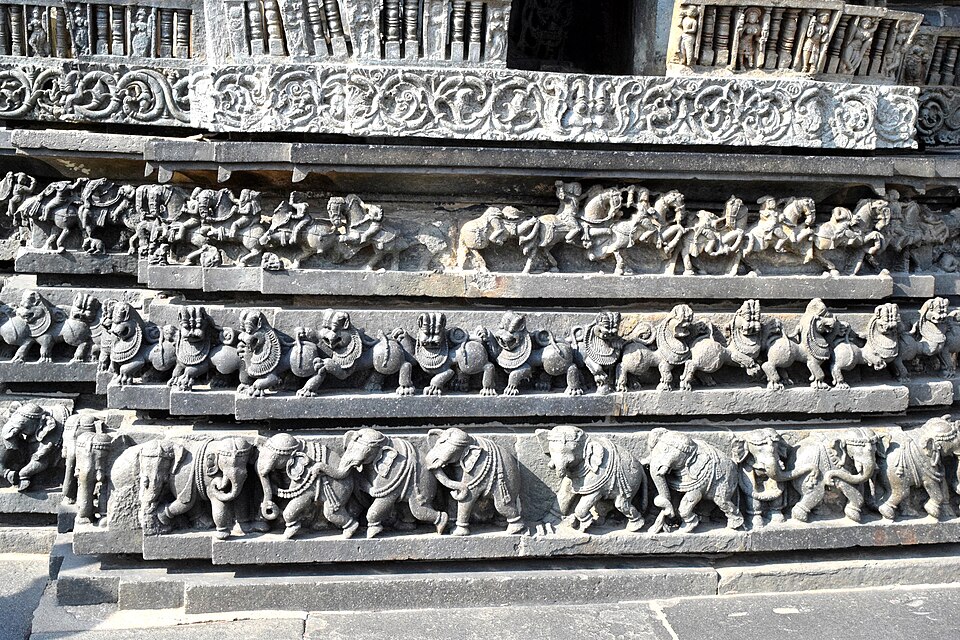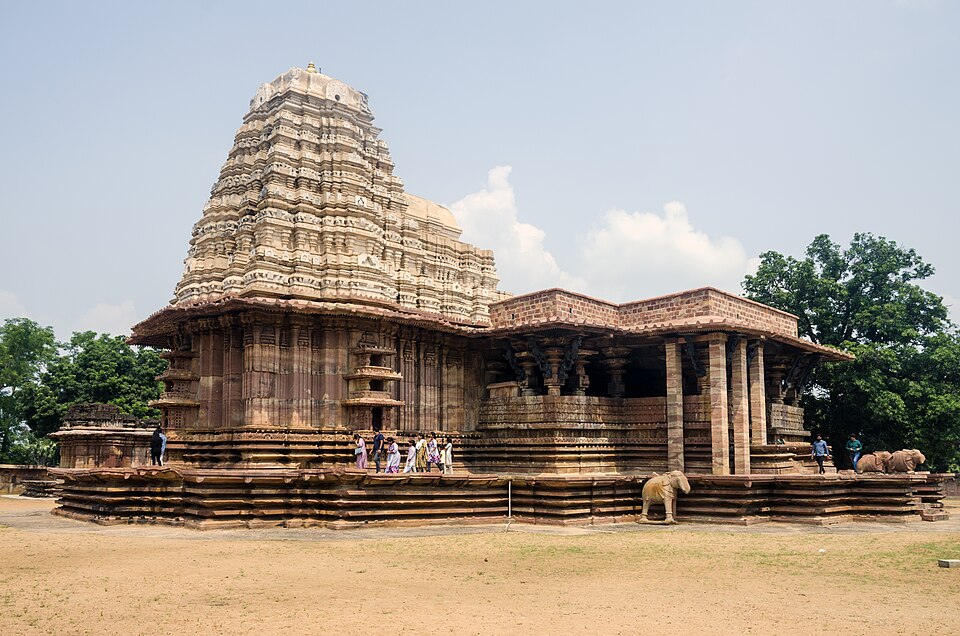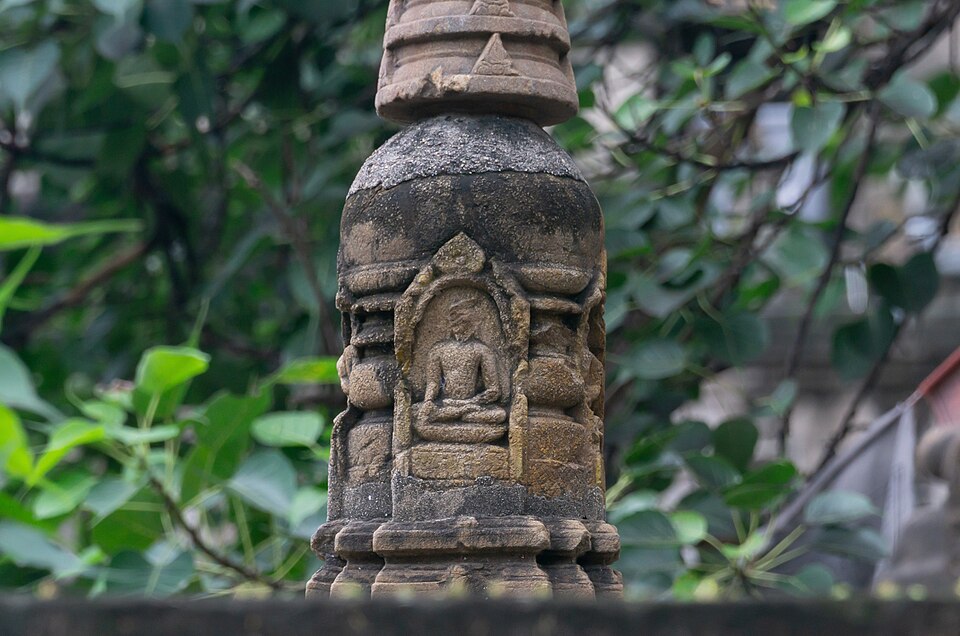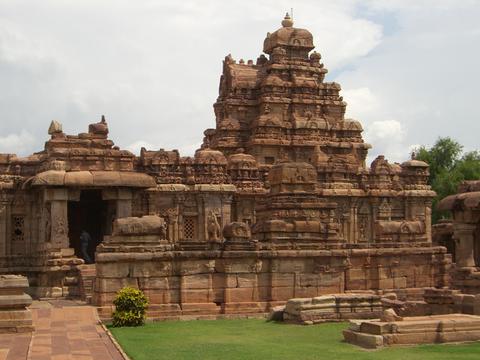
Pattadakal is particularly rewarding for someone who has heard the terms “northern” and “southern” temple style but cannot yet recognise them. Several temples can be compared within one setting. The aim is not to sort them instantly into boxes. It is to discover which features those broad labels actually describe, and where a building makes the comparison more complicated.
Compare silhouettes first
UNESCO places the ensemble within the architectural activity of the Chalukya period, especially the seventh and eighth centuries. Its significance includes the meeting of different temple-building forms. Begin at a distance where you can see more than one superstructure together.
Trace the outline with your eyes. Does it rise through clearly stepped levels, or create a more continuous curved profile? Use these as observations rather than complete definitions. The plan, porch and carved details deserve attention as well as the tower.
Move from outside to plan
Locate the entrance, hall and sanctuary using the permitted visitor route and the site’s explanatory material. A temple’s silhouette does not tell you everything about the sequence of spaces inside it. Two buildings that seem similar in a photograph may organise an approach differently.
An easy exercise is to draw a few connected rectangles for the spaces you can identify. Label only what you know. The sketch is a memory aid, not an architectural survey, and it should not require entering a restricted area.
Remember named patrons
The Virupaksha temple is associated with Queen Lokamahadevi in UNESCO’s account. Such information helps challenge the habit of reducing building history to a list of kings. Patronage could involve different people, political circumstances and devotional intentions.
Keep this temple distinct from the better-known Virupaksha temple at Hampi. Shared divine names do not make two buildings the same monument. Recording the place alongside the temple name prevents an easy mistake when organising photographs or searching for further reading.
Learn one detail well
After comparing whole buildings, choose one doorway or carved panel. See how its scale relates to the person approaching it and to the wall containing it. The shift from overall form to small detail makes the ensemble feel less like a row of monuments and more like a series of design decisions.
You do not need to leave with every stylistic term memorised. If you can explain two visible differences between two temples, you have gained a useful foundation. Later reading will have something concrete to attach to, which is often how architectural knowledge begins to last.
Sources & further reading
UNESCO World Heritage Centre — site history and significance