A familiar story contrasts a journey around the world with a journey around one's parents. Ganesha's choice is often remembered as a quick lesson about wisdom, but the story becomes more interesting when we ask which version is being told and what the task actually requires.
The task changes between tellings
Popular retellings sometimes make the contest about a fruit. In the Shiva Purana's account of Ganesha's marriage, the question concerns which son will marry first, and circling the Earth becomes the condition. Ganesha honours and circumambulates Shiva and Parvati, arguing for the significance of that act.
These versions should not be collapsed into one supposedly exact quotation. If sharing the fruit story, call it a popular retelling. If discussing the textual marriage episode, keep its setting visible. The difference is a useful example of how religious narratives circulate through books, performance and family storytelling.
What counts as completing the journey?
Ganesha does not merely move faster. He interprets the meaning of the task. The scene therefore invites a question about whether understanding a purpose can matter more than reproducing its most literal form.
That reflection has limits. It should not become permission to evade every obligation with a clever argument. The story works within a devotional relationship and a particular narrative situation. Asking why the argument is accepted is more useful than extracting a universal rule that shortcuts are always wise.
Keep the other brother in view
Kartikeya's journey can disappear from abbreviated versions, leaving him only as the person who loses. A fuller reading asks what effort and expectations he brings to the event. Stories about siblings can open discussion about recognition and fairness, rather than encouraging a family to assign permanent roles of clever child and foolish child.
When telling the story to children, let them describe both choices before offering an interpretation. Their questions about the task may be more revealing than a rehearsed moral at the end.
Read the family image accurately
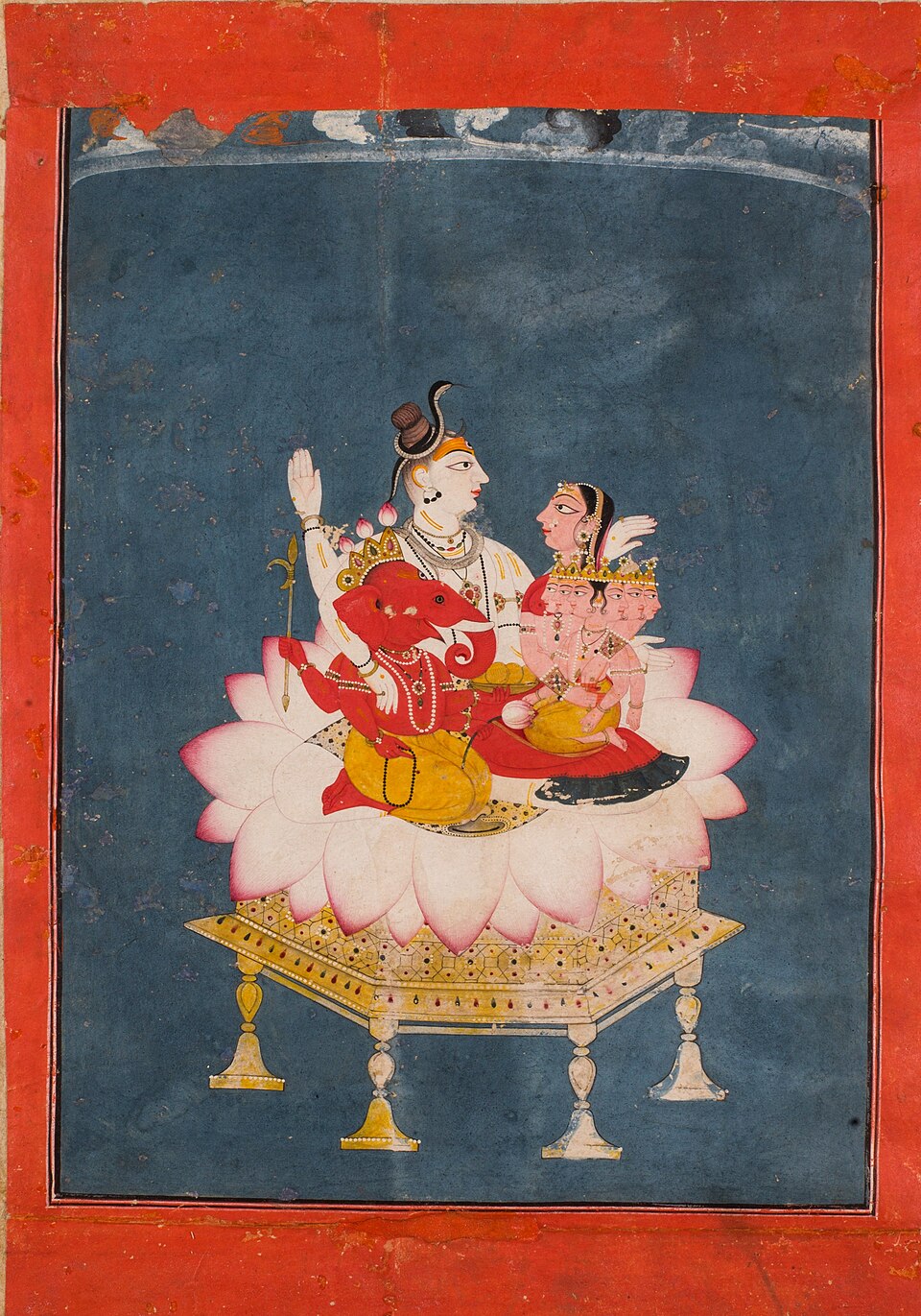
A picture of Shiva, Parvati, Ganesha and Kartikeya may depict the divine family without showing this particular episode. Its caption should say so. Do not describe a static family portrait as the moment of the contest unless the work's details or source support that identification.
This modest distinction makes the illustration more trustworthy and leaves room for the reader to enjoy both the family image and the story, without asking one to prove the other.