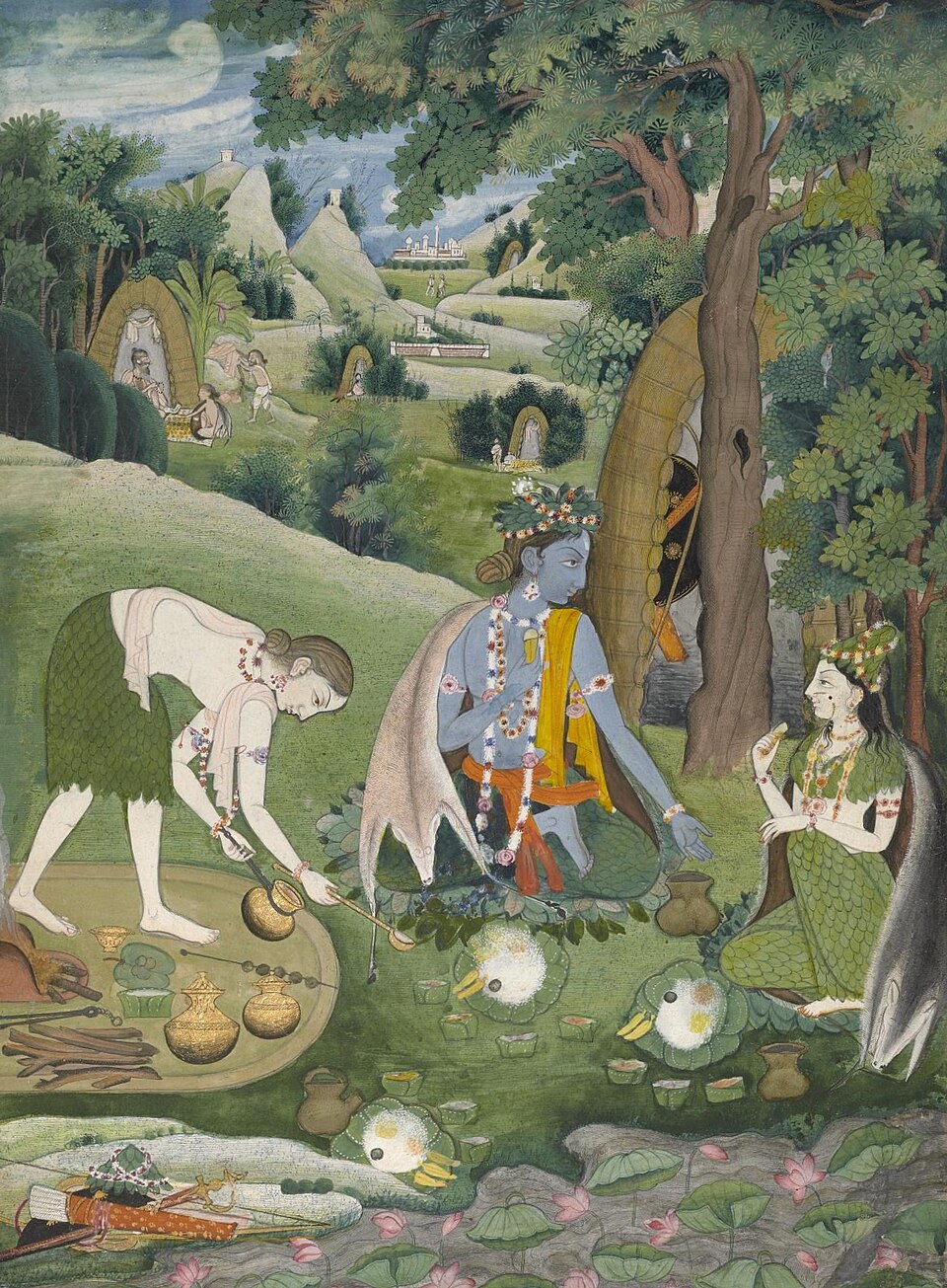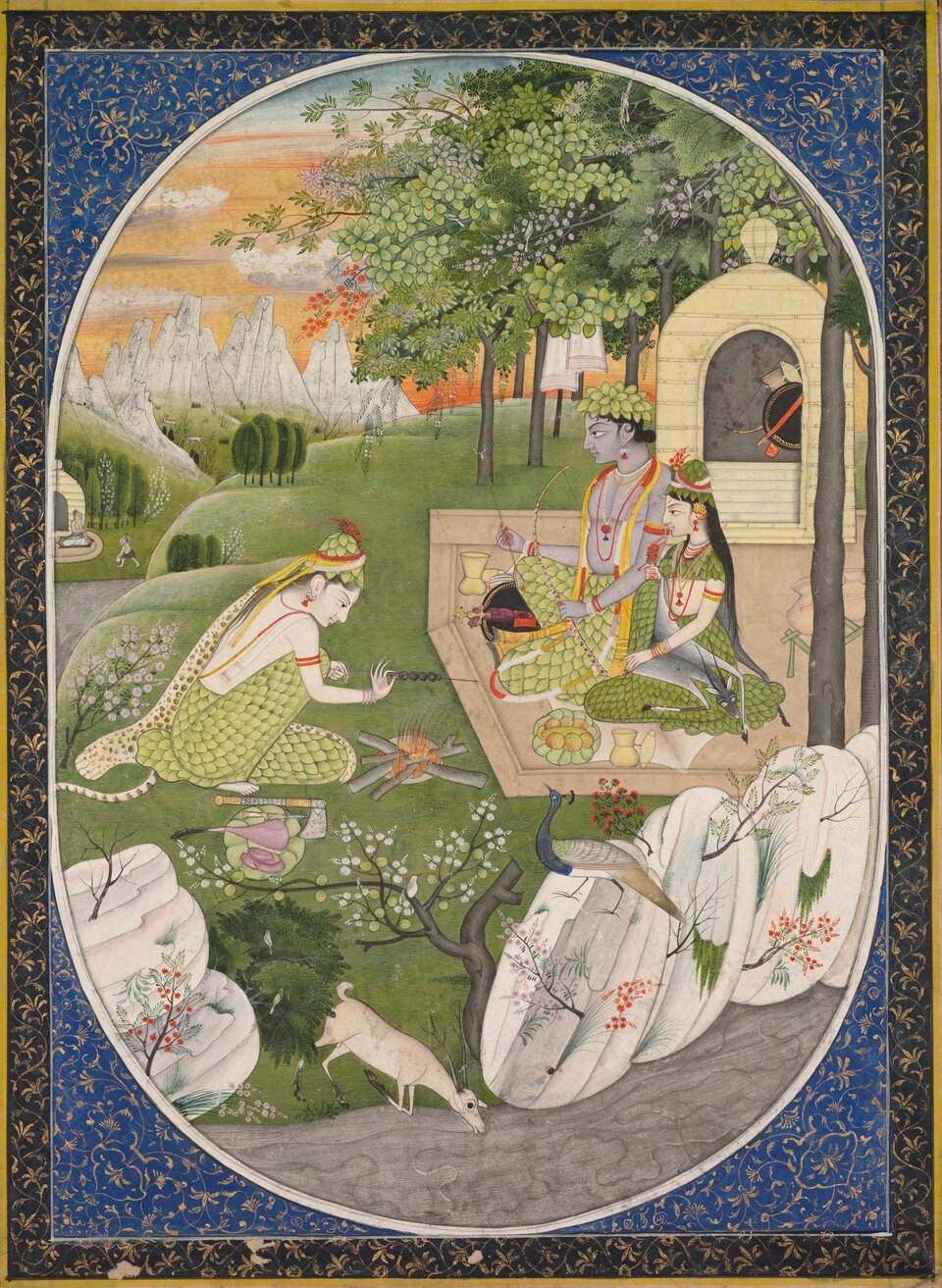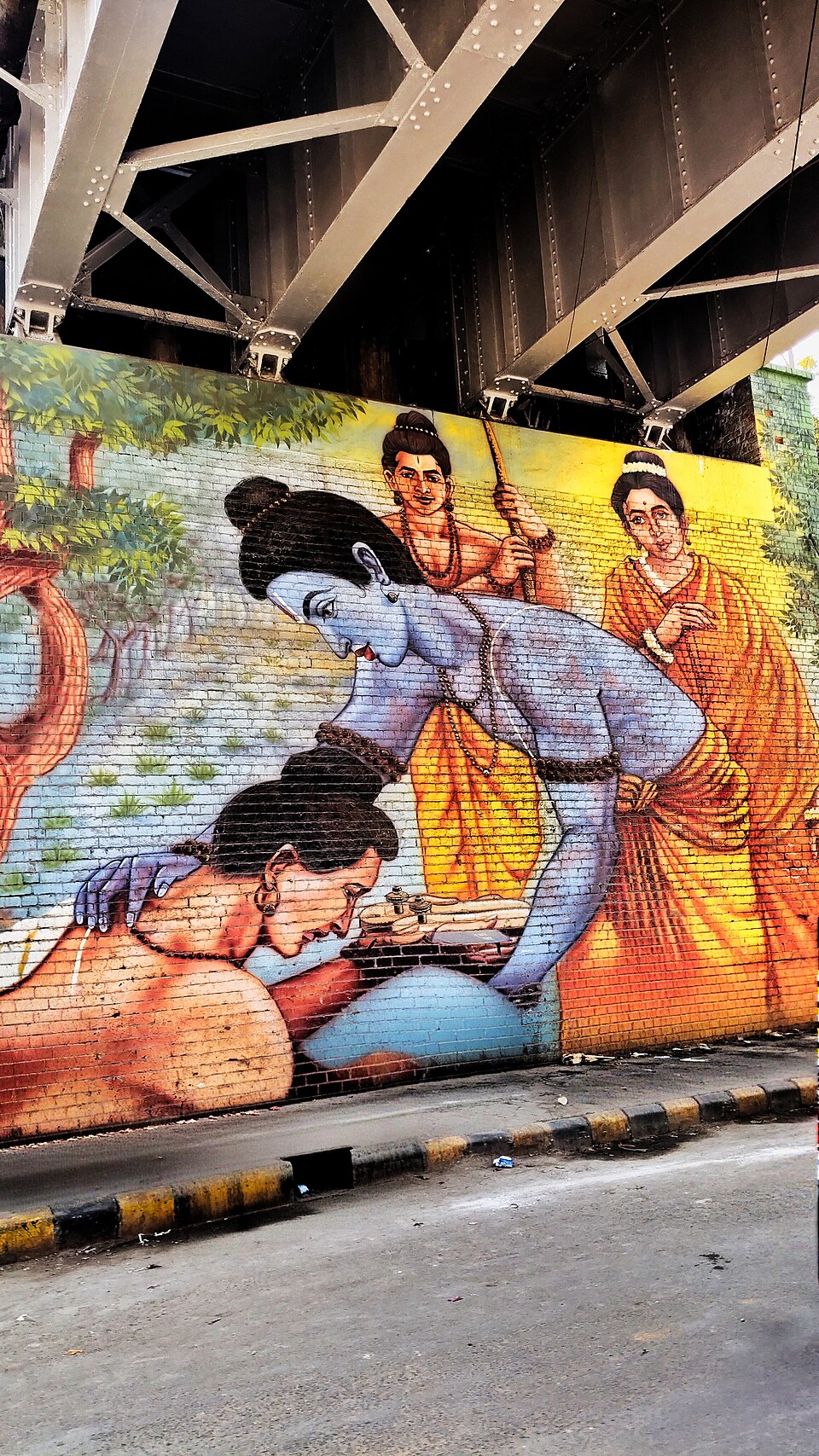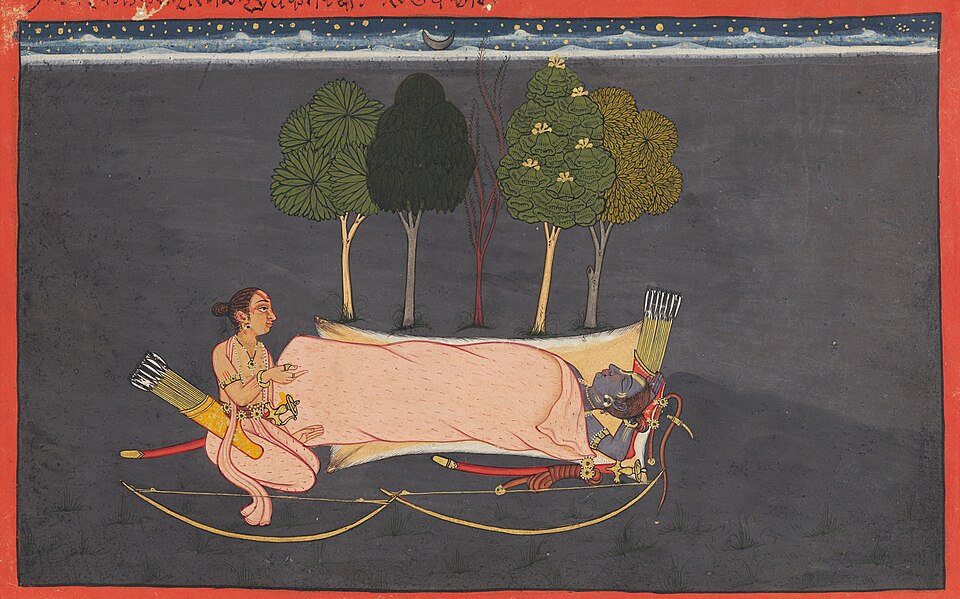
Lakshmana accompanies Rama and Sita into exile, but his role is more than that of a figure standing beside them in a painting. His decision raises questions about loyalty, service and the responsibilities left behind. The Ayodhyakanda gives him a voice in the discussion about who will go and who should remain.
Choosing to accompany Rama
Lakshmana asks to join the forest life and describes the assistance he can provide. The exchange also considers the family in Ayodhya. His loyalty is placed beside another obligation: care for people who will remain at home.
This tension makes the scene worth reading closely. Service is not simply a feeling of devotion; it involves deciding where one's presence is needed and accepting the work that follows.
The ordinary labour of companionship
The forest narrative depends on practical action: moving, finding shelter, preparing a place to stay and remaining attentive to the surroundings. Such work can be overlooked beside the epic's dramatic confrontations.
Lakshmana's presence invites a reader to notice how companionship becomes concrete. Someone must do the uncelebrated tasks that make another person's journey possible. A modern analogy might be the relative organising transport or the colleague preparing a shared workspace. These examples are reflections rather than equivalents of the epic situation.
Loyalty includes a temperament
Characters in the Ramayana do not all respond to distress in the same way. Lakshmana's urgency and protective concern can be compared with Rama's responses. Their differences make the relationship more interesting than a flat description of perfect agreement.
When discussing a speech or action, identify the episode. A general statement that Lakshmana always reacts in one way cannot capture the variety of a long narrative.
Be careful with later stories
Popular retellings add explanations of Lakshmana's wakefulness, vows or family relationships. These can have value within their own traditions, but they should not be attributed automatically to every version of the Ramayana.
Begin with the conversation in Ayodhyakanda 31 and follow his practical role in the forest. The result is a richer picture of devotion: not only affection expressed in words, but responsibility carried through changing circumstances.