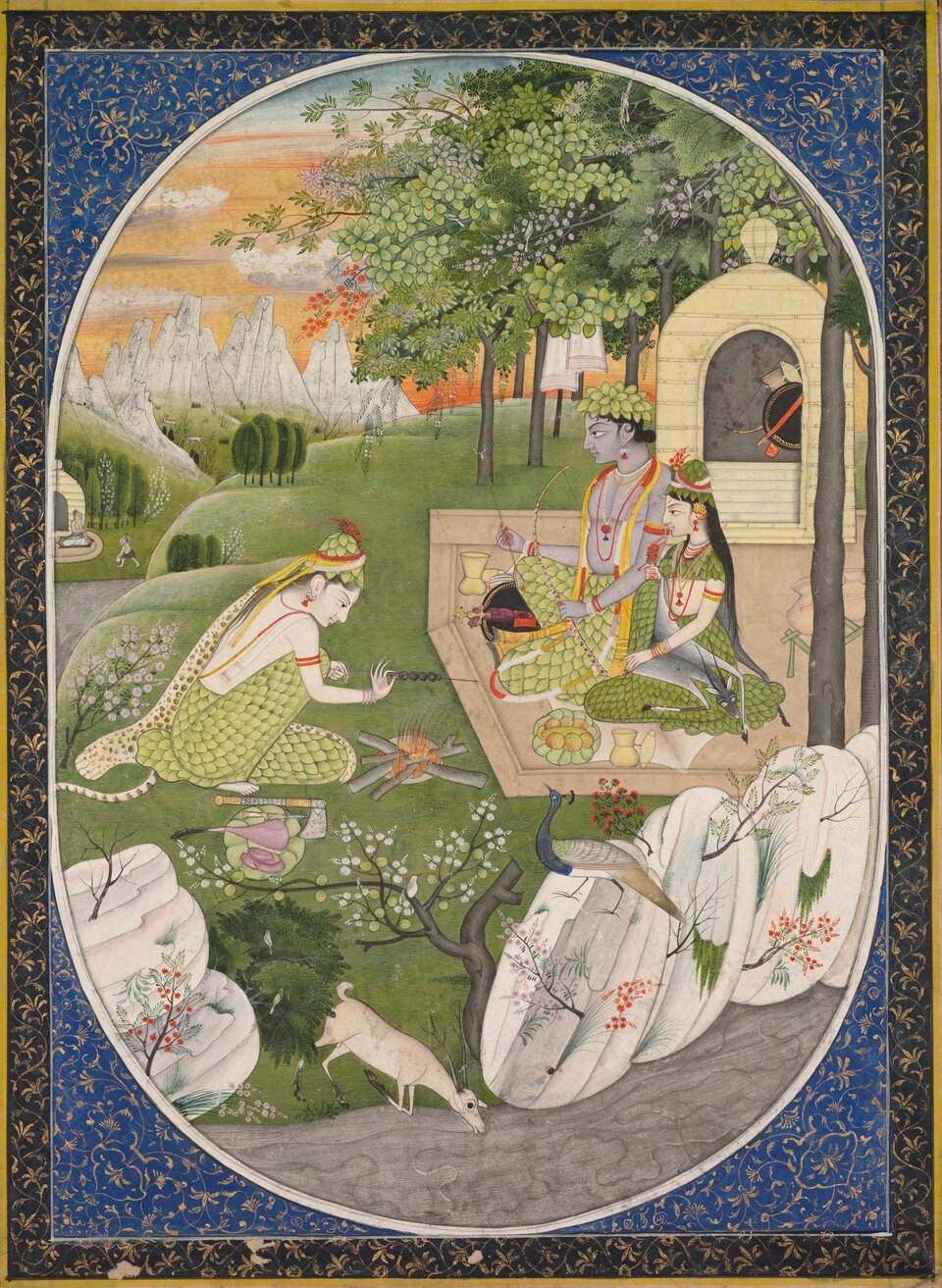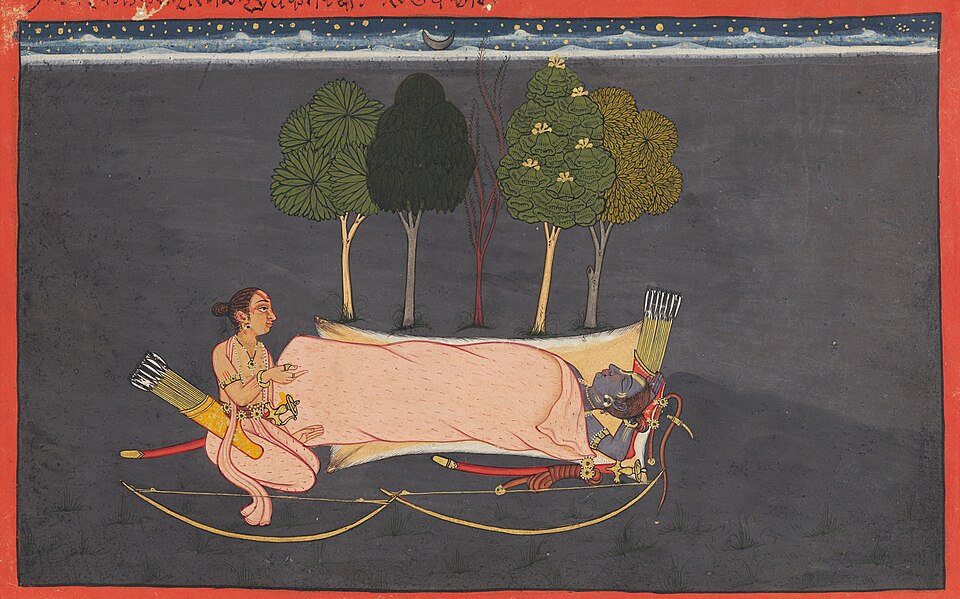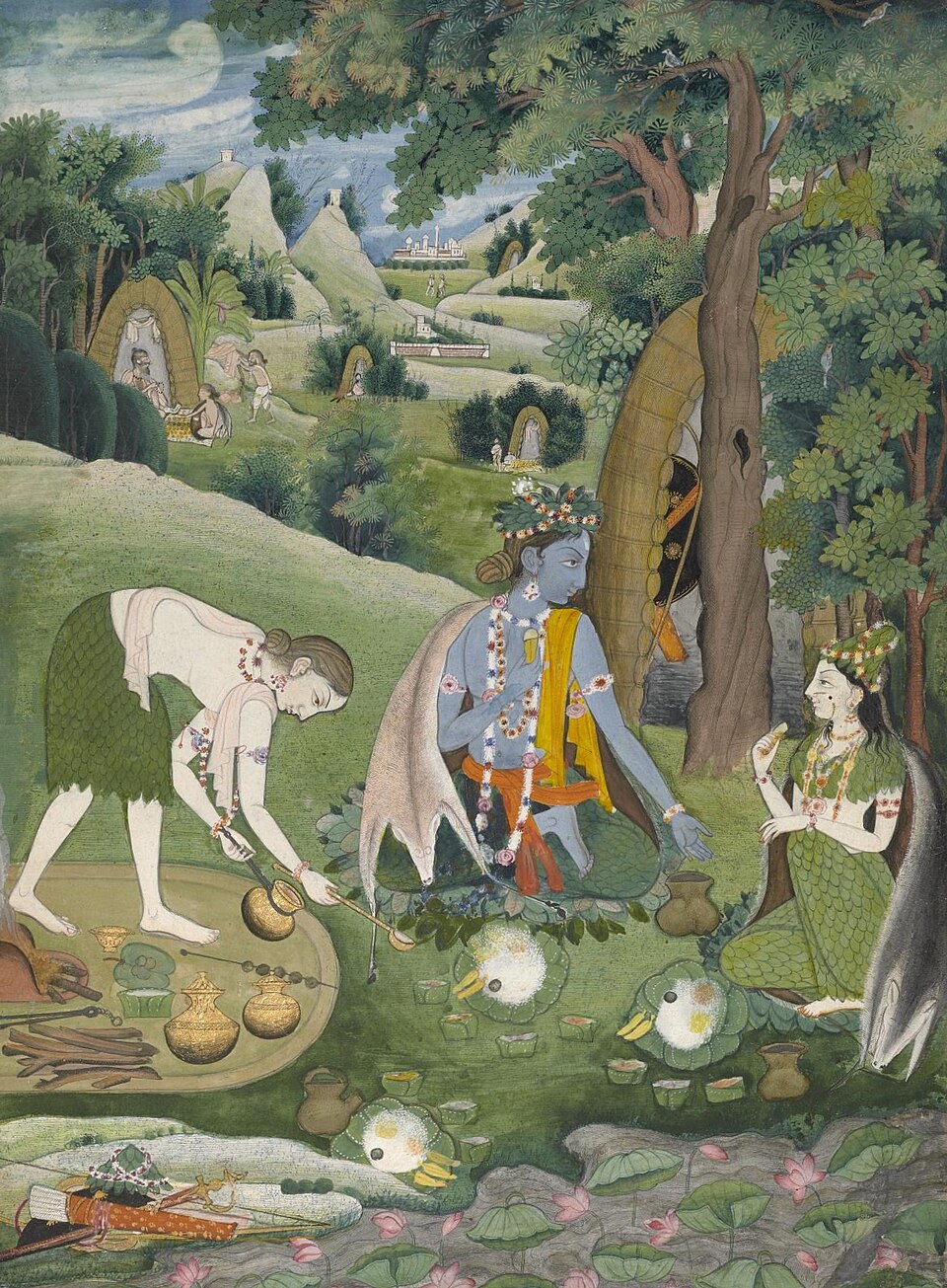
Rama's departure for the forest changes the direction of the Ayodhya story. A planned coronation becomes a separation, and a public expectation gives way to a promise made within the royal family. The episode is compelling because several responsibilities collide rather than fitting neatly together.
The two boons
In the Ayodhyakanda, Kaikeyi calls upon boons previously granted by Dasharatha: Bharata is to receive the royal position and Rama is to spend fourteen years in exile. Rama accepts the forest life in order to uphold his father's word. This is the narrative basis of the exile, not a punishment for a crime committed by Rama.
Keeping that distinction clear helps a new reader follow the story. The crisis arises from family relationships, royal succession and the binding force of a promise.
A promise with consequences for others
The decision affects Sita, Lakshmana, the queens, the people of Ayodhya and Bharata. Their responses give the episode its depth. It is useful to ask whose voice is being heard in each scene. A summary that says only that Rama obeyed can miss the arguments, grief and choices surrounding that obedience.
Reading the conversations in sequence reveals the human difficulty of the situation. The royal family's relationships do not disappear when one person announces a decision.
Why fourteen years should not be explained casually
Popular accounts sometimes attach elaborate political, legal or astronomical theories to the duration of the exile. Distinguish what the narrative states from an explanation supplied by a later storyteller. The stated period can be recorded without inventing a universal ancient law to account for it.
If a commentary offers a particular interpretation, name the commentary. This allows readers to appreciate the explanation without confusing it with the wording of the epic.
Reading the episode today
The story can prompt reflection on keeping one's word, but it should not become a simple instruction to accept every harmful demand. The epic presents a particular conflict in a particular world. Modern readers can examine the values at stake without pretending that every family dispute has the same answer.
Begin with Rama's conversation with Sita and follow the decisions of those who accompany him. The exile opens a narrative in which loyalty, judgement and responsibility are repeatedly tested.