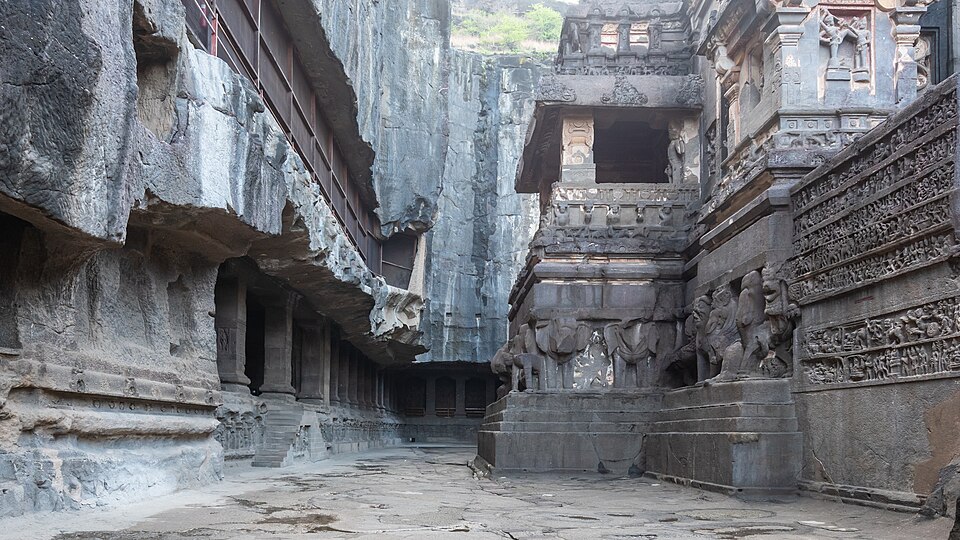
Kailasa, usually identified as Cave 16 at Ellora, can be difficult to understand from a single photograph. It is a substantial temple complex created through excavation of rock. The remarkable result is best appreciated by looking at its spatial relationships, not by beginning with claims that it could only have been made by impossible technology.
Rock-cut is different from assembled masonry
In a built stone temple, blocks are brought together. In rock-cut work, material is removed to leave architectural forms. That distinction changes how we think about planning and the consequences of a mistake. It does not mean that every detail was completed in one uninterrupted operation.
Popular accounts provide confident construction times and quantities of removed stone. Those figures should be supported by reliable research. A rough estimate should remain an estimate rather than becoming a fact through repetition.
Look at the surrounding space
Notice how the main form relates to the courtyard and the rock around it. Then look at bridges, subsidiary elements and carved surfaces where accessible. The sense of a free-standing structure within an excavated setting is part of the achievement.
UNESCO places Ellora within a wider sequence of Buddhist, Hindu and Jain monuments. A visit to Kailasa benefits from that context. It is one extraordinary part of a larger site, rather than an isolated object without neighbours or history.
Sculpture rewards a slower pace
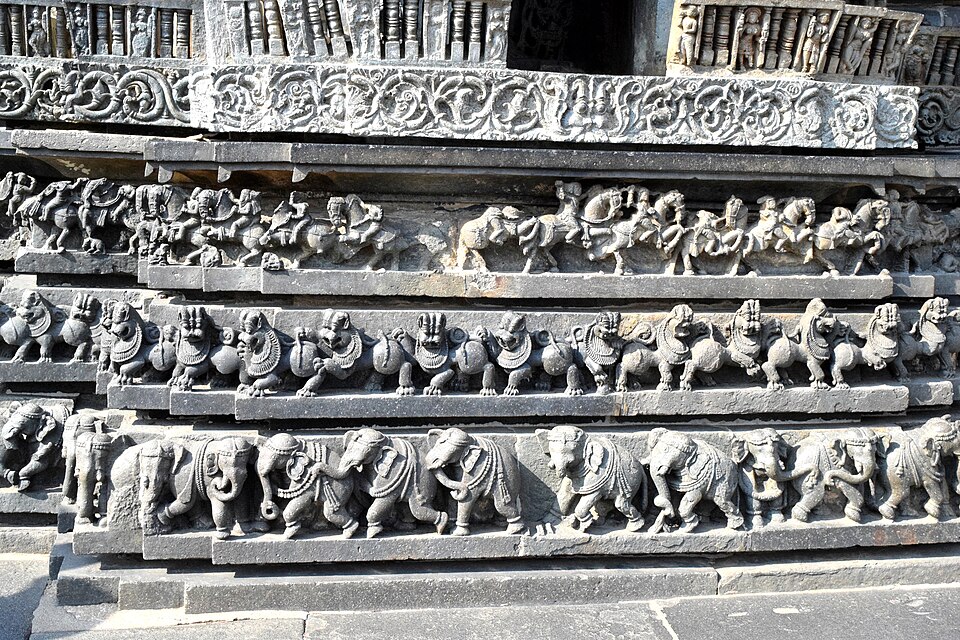
Choose a relief and identify the figures and action before reading an interpretation. Some scenes require knowledge of an epic or Puranic narrative. A guide or museum resource can help, but an uncertain identification should not be disguised as certainty.
Do not climb onto a carving or cross a barrier to improve the angle of a photograph. The same surface that holds visual detail can be damaged by repeated contact. Conservation is part of responsible appreciation.
Plan beyond the headline
Check current access and allow for walking, weather and rest. A visit rushed between distant attractions may leave little time to understand the layout. It is better to examine a few areas attentively than to collect many photographs without orientation.
Afterwards, try explaining the difference between cutting away and building up to someone who has not seen the site. That concrete distinction conveys more of Kailasa’s achievement than a claim that modern people cannot understand it. Wonder and clear explanation can coexist.
Sources & further reading
whc.unesco.org — reference and further reading. Interpretive reflections and practical reading suggestions in this article are the website’s own explanatory material. Check current official arrangements before travelling.