Dhruva's story links a child's determination with the enduring image of a fixed star. It is often told as an example of devotion, but its emotional beginning is also important: a young person seeks recognition after an experience of rejection. Reading that beginning carefully prevents perseverance from becoming a simple demand that children endure hurt in silence.
The search for a place
In familiar Bhagavata Purana retellings, Dhruva leaves the royal household and undertakes devotion to Vishnu, with guidance associated with Narada. Vishnu appears, and Dhruva is eventually linked with an enduring celestial station. The narrative moves from a desire for recognition toward a different understanding of what is worth seeking.
It is a sacred story rather than a scientific explanation of how a star formed. The image of constancy has its own poetic and devotional force without being converted into an astronomy claim.
Watch how an artist shows devotion
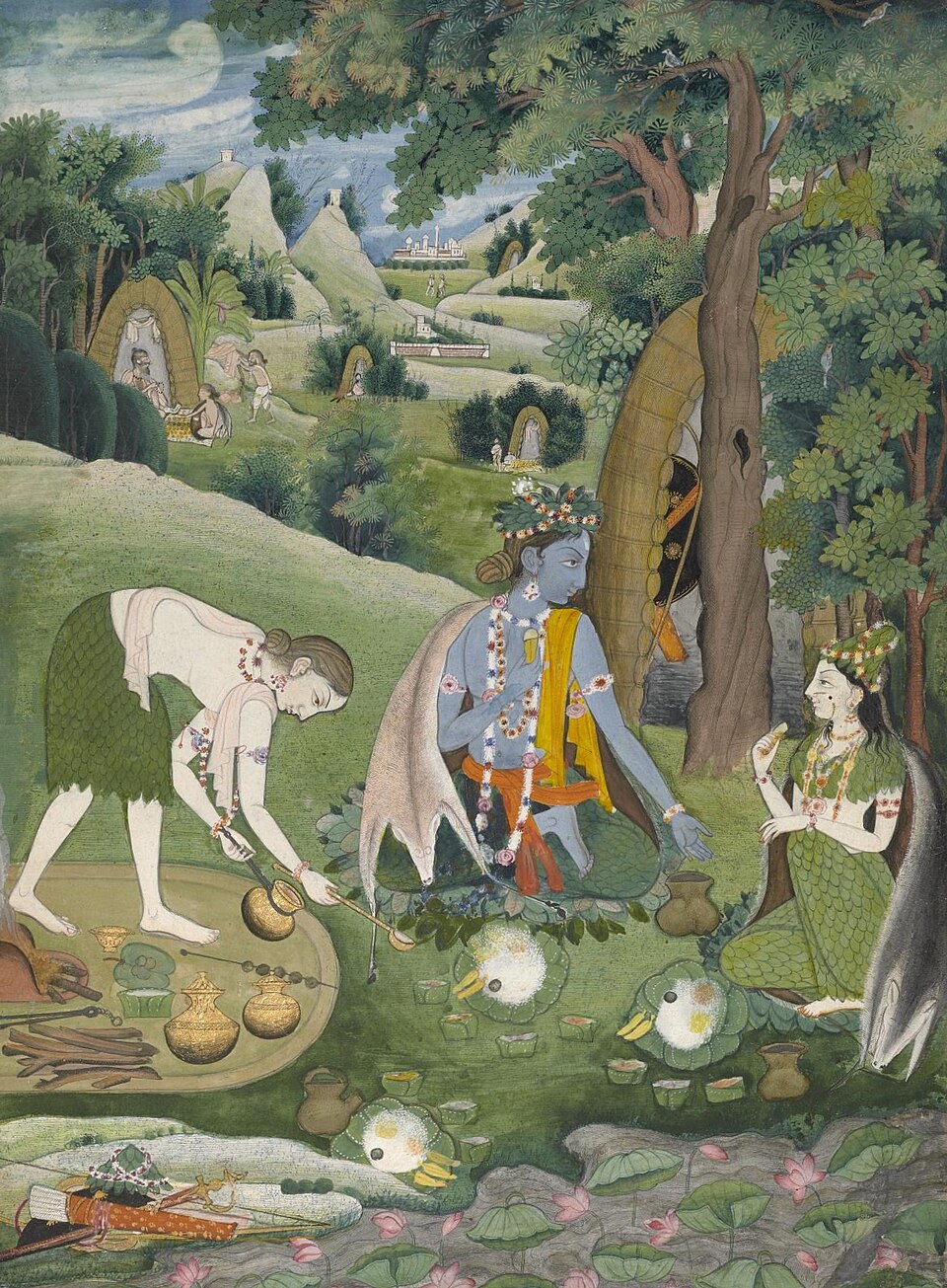
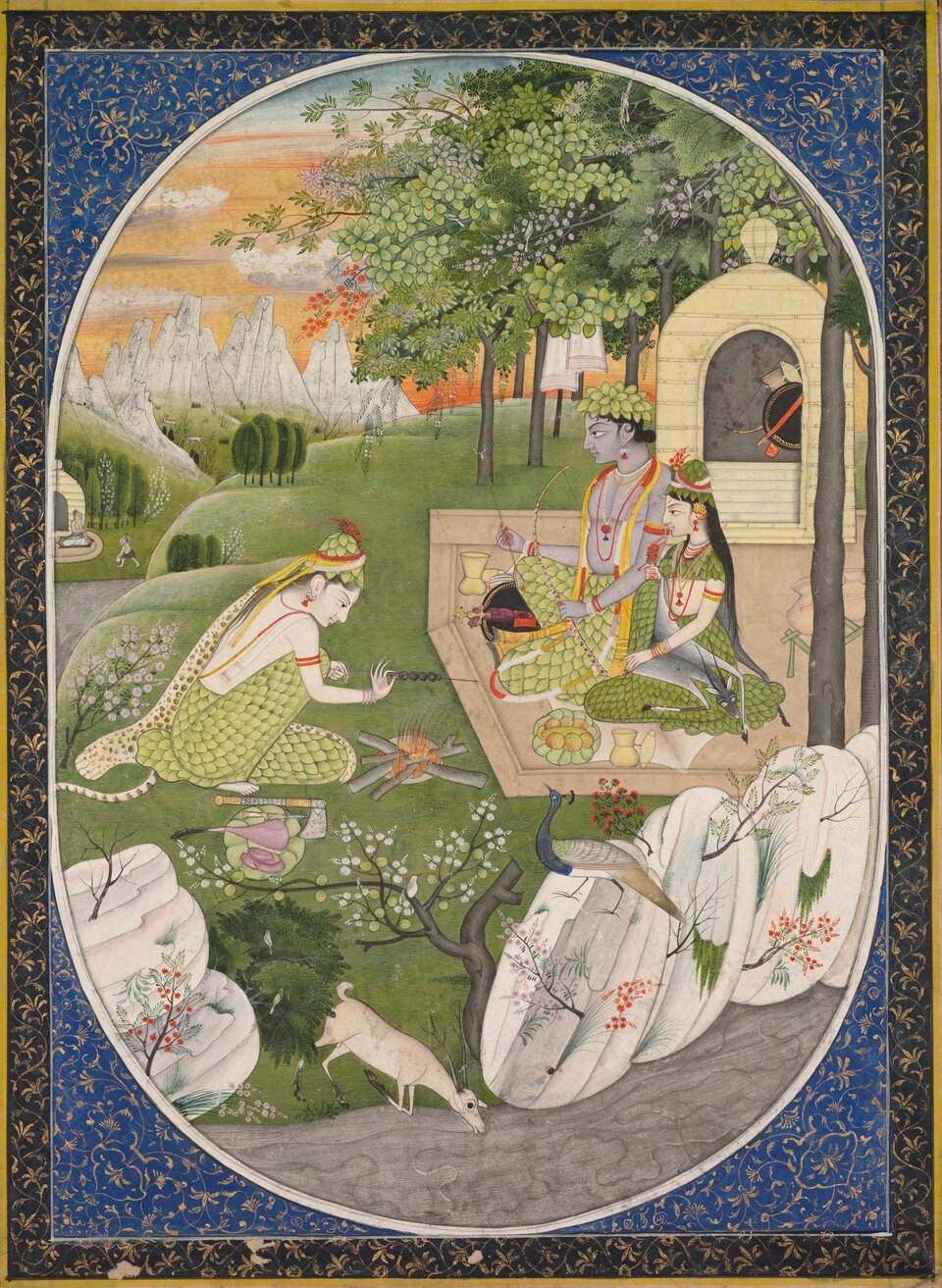
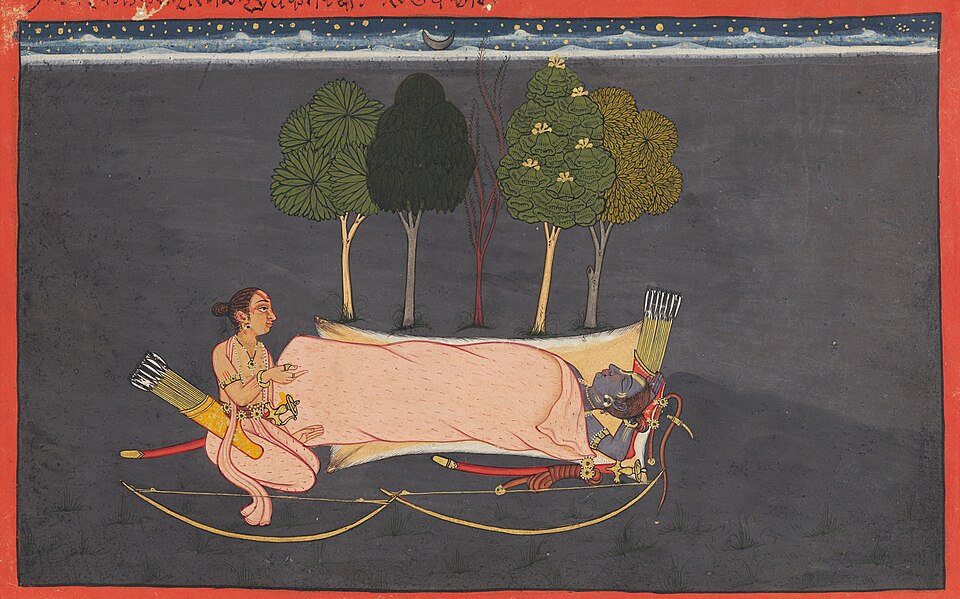
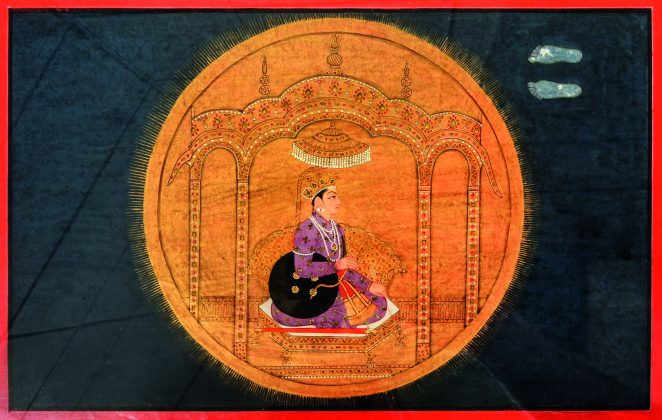
A painting may show Dhruva before Vishnu, absorbed in worship, or placed within a cosmic arrangement. Compare the scale of the figures and the direction of their attention. Does the child look upward? Does the deity lean toward him? Those choices help express a relationship that a plot summary alone can miss.
A museum record can identify the work's region, period and medium. Such information belongs to the artwork, not automatically to the time of the event narrated. A nineteenth-century print of Dhruva is evidence of how the story was represented then, not a portrait made during the story's setting.
Resolve is not the same as isolation
A useful discussion can ask how determination differs from refusing all help. Narada's presence in familiar tellings complicates the picture of a child succeeding entirely alone. Guidance and relationship remain part of the journey.
When sharing the story with children, keep the ascetic episodes within their narrative setting. They are not instructions to leave home, refuse food or prove devotion through hardship. A child's need for affection and safety should not be dismissed by turning Dhruva into an ideal of silent endurance.
Read the ending against the beginning
Return to the desire that starts the story. Has the meaning of recognition changed by the end? The question can produce a richer conversation than simply praising an unbreakable will. Dhruva remains memorable because the narrative joins hurt, effort, guidance and a transformed aspiration, not because every reader is expected to reproduce its extraordinary events.