
Chitrakuta is an important setting in the early forest narrative of the Ramayana. It is associated with the establishment of a forest dwelling and with Bharata's meeting with Rama. These episodes give the place two different moods: the attempt to make a home and the return of unresolved family concerns.
Reaching a place to stay
The Ayodhyakanda describes movement through river and forest landscapes, including an encounter with Bharadvaja and the journey towards Chitrakuta. The setting is not an empty background. Rivers, paths and shelter shape what the characters can do.
Following the sequence of places can clarify the story. It is less useful to turn every narrative location immediately into an exact modern distance or a GPS point without additional evidence.
A home under changed circumstances
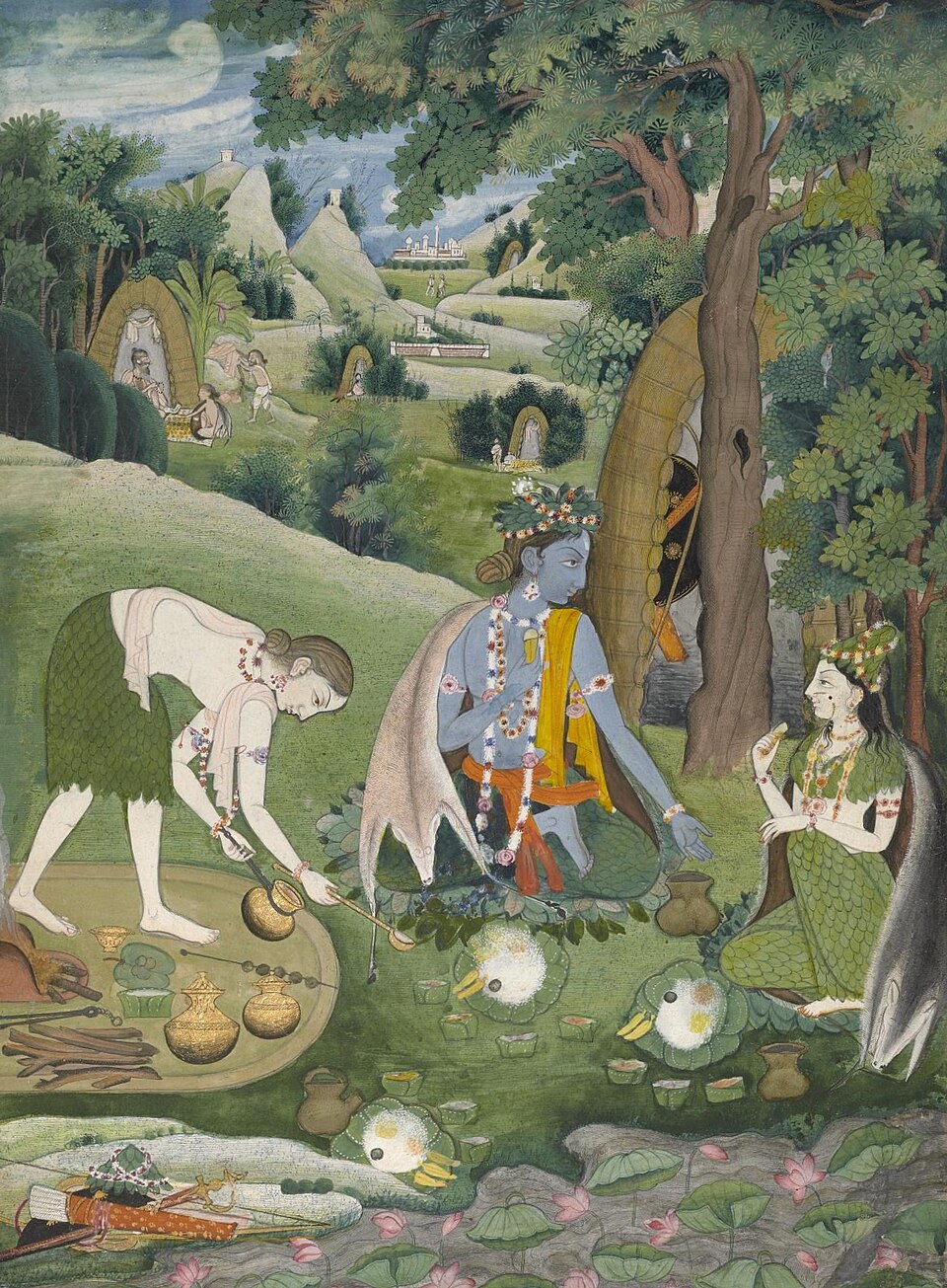
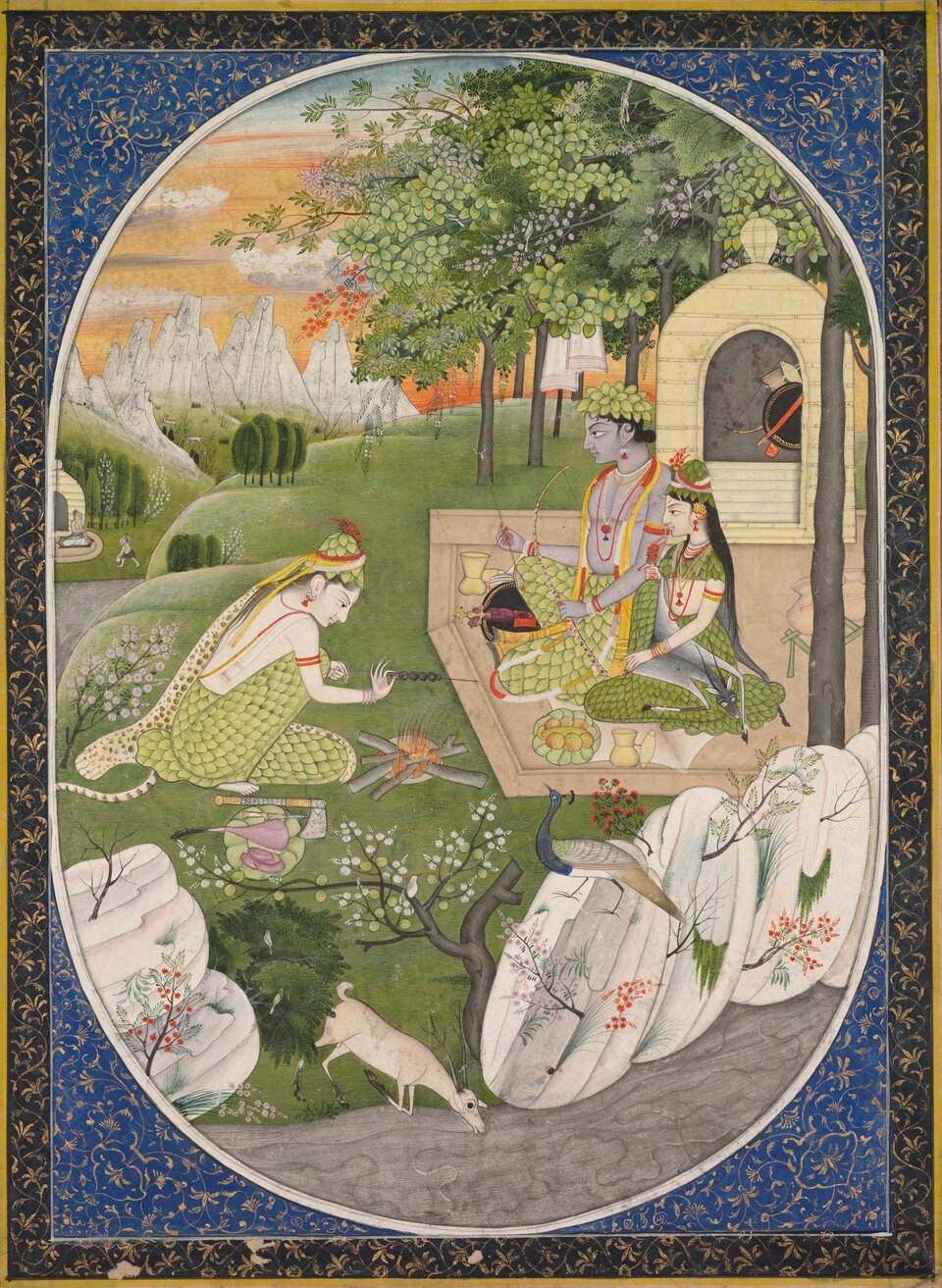
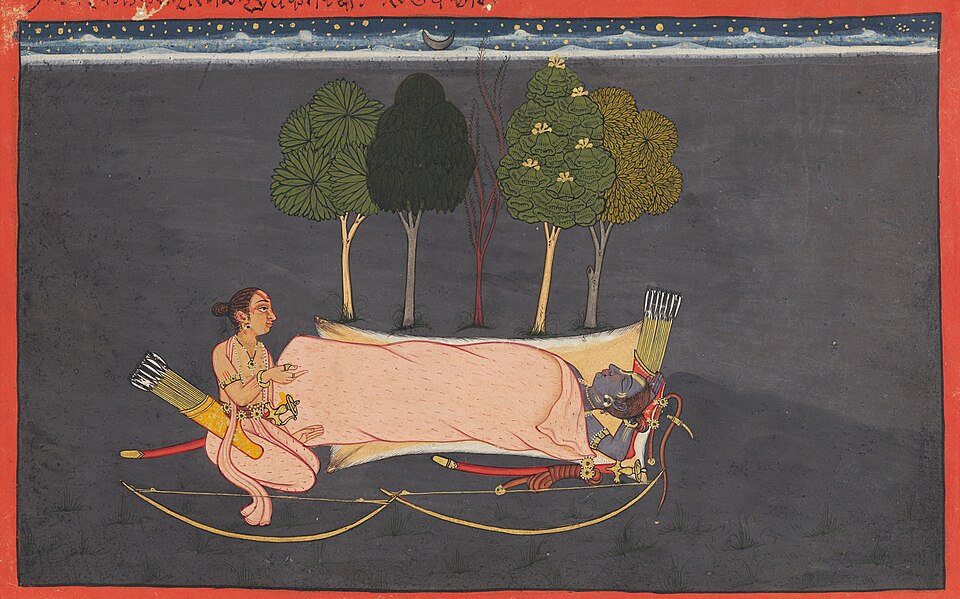
The forest dwelling represents a major change from Ayodhya. The characters establish everyday life with different resources and expectations. Reading these quieter passages helps prevent exile from becoming only a chain of dramatic incidents.
Ask what is required to make a place habitable and who contributes to that work. This draws attention to companionship and adaptation, themes that disappear when a summary rushes directly to later events.
Bharata's arrival changes the scene
The family meeting brings the question of the kingdom into the forest. Chitrakuta becomes the setting for arguments about return, obligation and authority. Distance from Ayodhya has not removed the relationships that bind the brothers.
This helps explain the location's strong place in devotional memory. It is associated with both residence and a difficult, affectionate exchange about how each person should act. Reading those episodes together reveals the contrast between finding temporary peace and facing continuing responsibilities.
Reading and visiting
Present-day Chitrakoot contains places identified through living pilgrimage traditions. Learn each site's local name and account without treating every identification as an archaeological conclusion drawn directly from the epic.
When visiting, note what a temple, guide or information board actually says. When reading, record the kanda and sarga. Bringing those notes together enriches understanding when the literary passage, devotional association and physical monument remain distinguishable.
.jpg)