Sita's place in the exile story is sometimes reduced to the sentence that she followed Rama into the forest. In the Ayodhyakanda, however, her departure is preceded by conversation. She argues for accompanying him. Reading that exchange gives her a voice and a decision, rather than treating her as part of the scenery of Rama's journey.
Listen to the exchange
Rama initially speaks of leaving and of the responsibilities that would remain in Ayodhya. Sita responds from her understanding of their shared life and marriage. Their conversation continues through the difficulties of forest living and her insistence on going.
Read the episode across its connected sections rather than through one isolated sentence. An argument develops over several speeches, and the force of a reply may depend on what has just been said.
The forest is not a holiday setting
The contrast with palace life matters. The decision concerns uncertainty, physical hardship and separation from familiar support. Calling the forest merely a peaceful retreat weakens the stakes of Sita's choice.
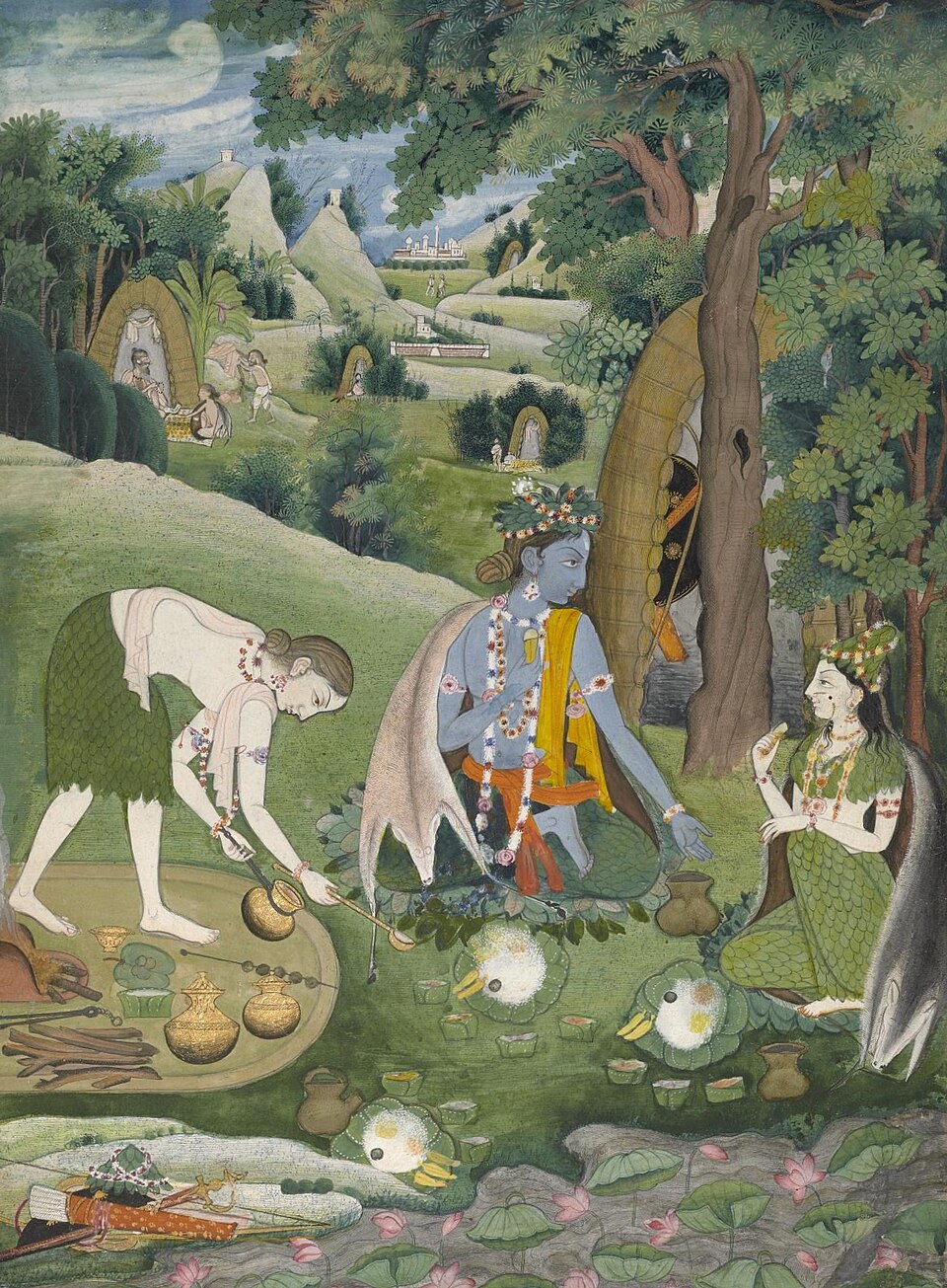
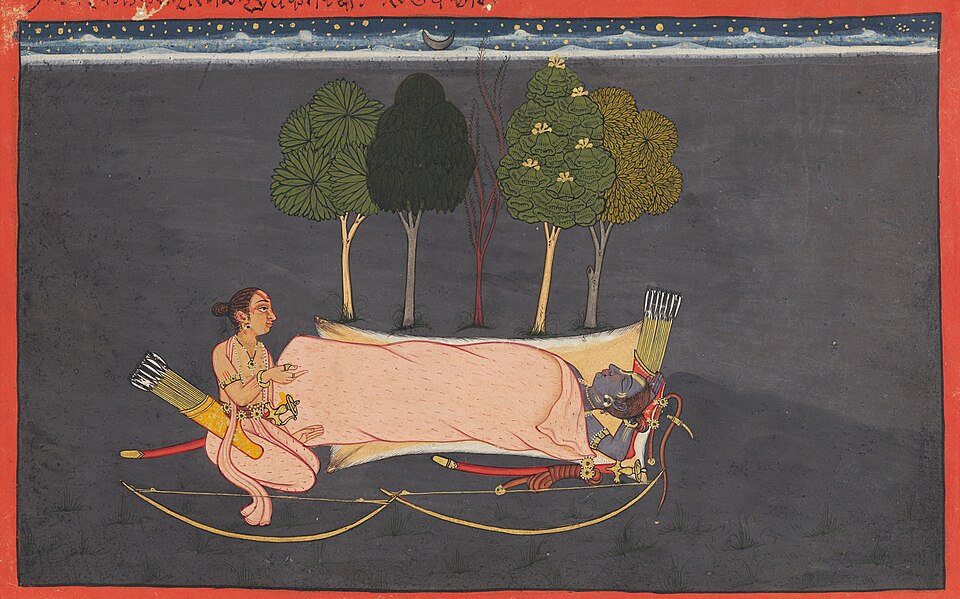
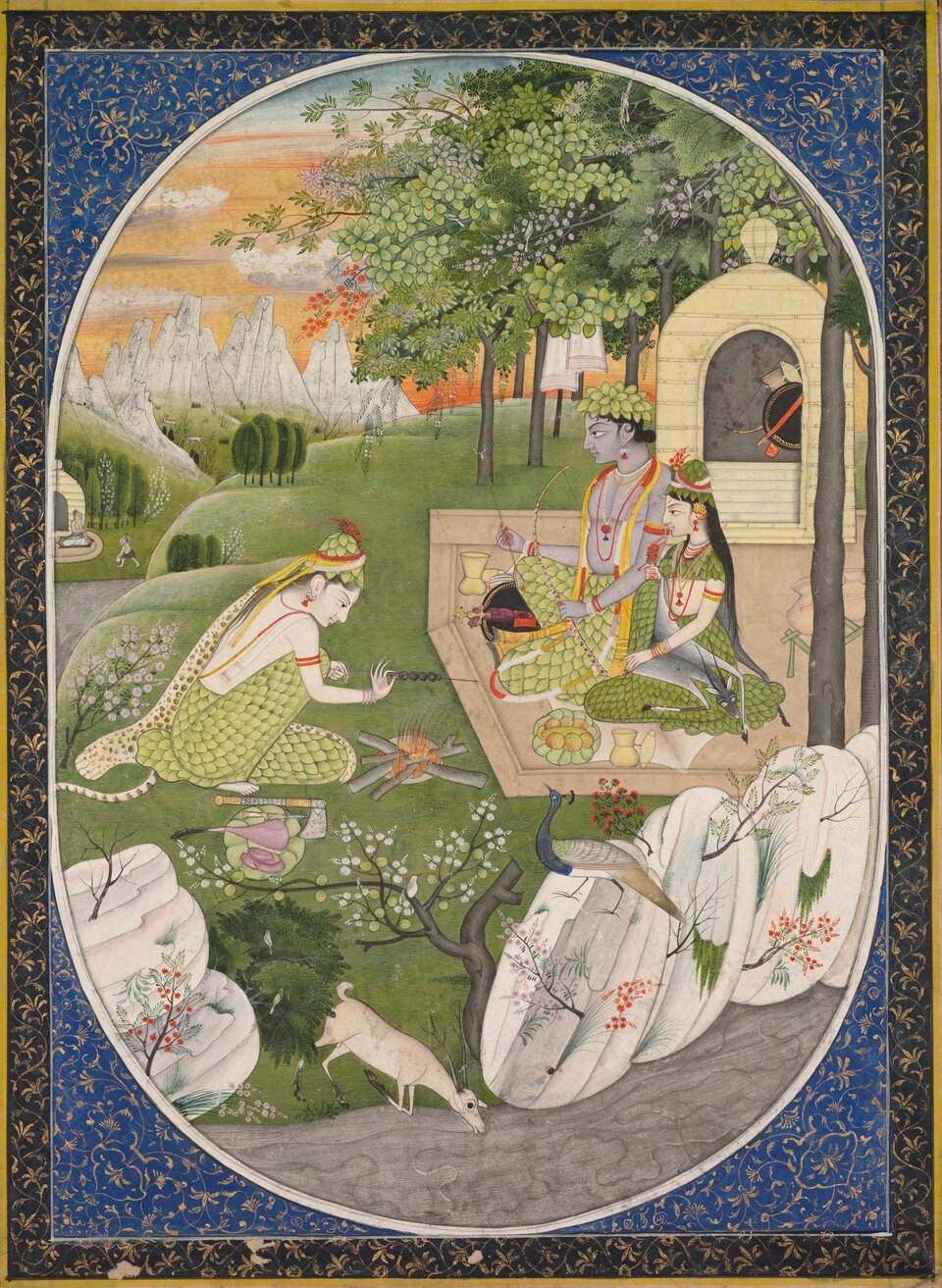
Paintings may show Rama, Sita and Lakshmana in a beautiful landscape. The beauty of the artwork does not mean that the narrative presents exile as an easy excursion. Artistic composition and the conditions described in the story serve different purposes.
Agency within the story's world
Sita's reasoning uses the relationships and ideals of the epic's setting. A modern reader can notice her determination while examining the assumptions within that setting. Appreciation need not require pretending that the text uses contemporary language about independence or partnership.
Equally, her decision should not be used to pressure a present-day spouse into accepting danger or mistreatment. A literary and religious episode deserves more careful reading than a slogan applied to someone else's life.
Questions for a reading group
Ask what Rama fears, what Sita values and how the dialogue changes the outcome. Notice whether a translation makes a speech sound gentle, forceful or ironic, and compare it with the Sanskrit and commentary where possible.
The aim is to let the conversation become audible. Sita's role emerges more fully when readers attend to what she says before they summarise what she does.