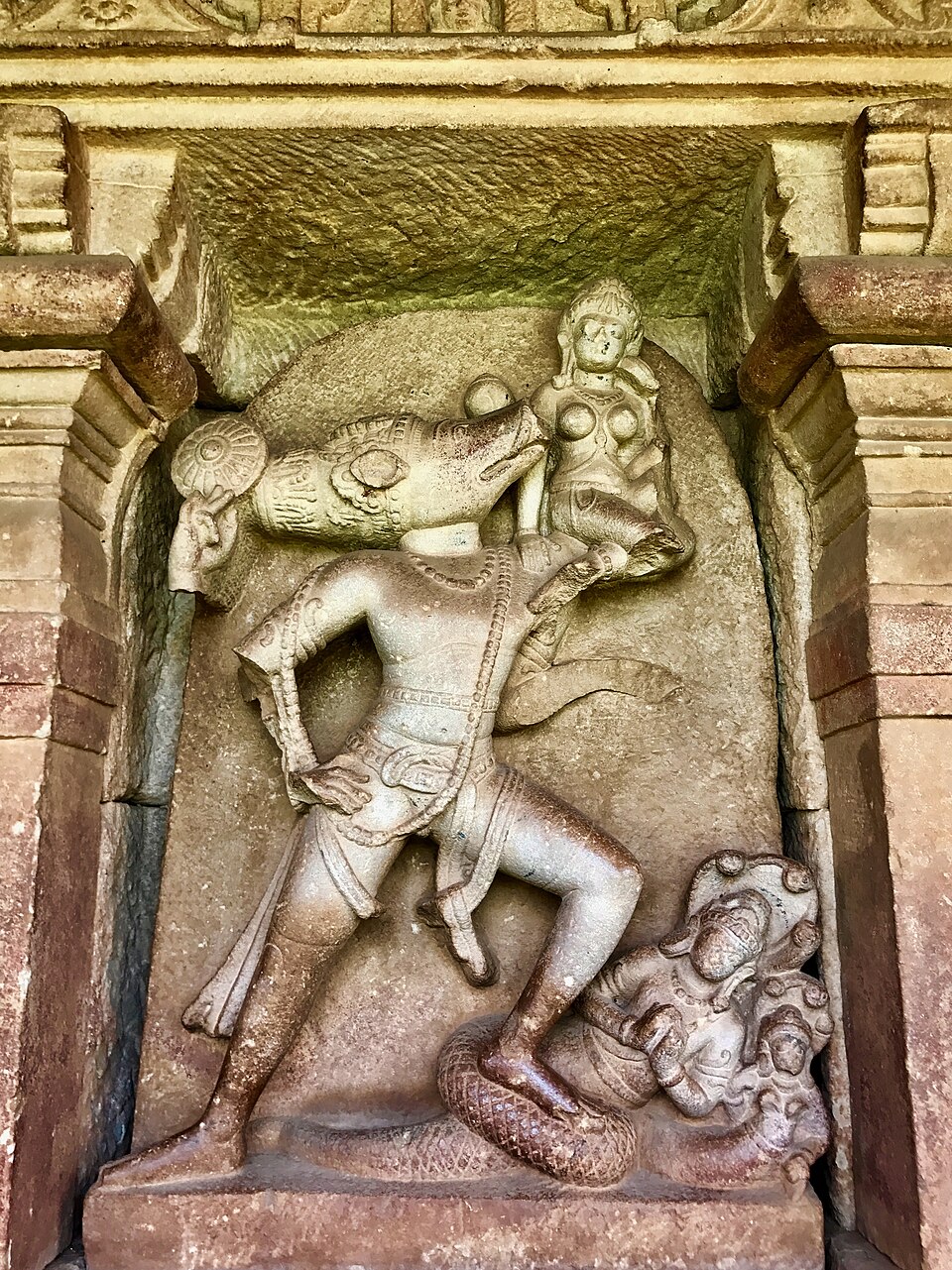
In Varaha imagery, the Earth may appear as a goddess lifted beside a boar-headed form of Vishnu. The scene is often crowded with other figures, making it tempting to glance at the recognisable head and move on. Slower looking reveals how an artist gives form to rescue and restored order.
Find the Earth in the composition
Bhudevi is the personified Earth. Her placement can differ among representations: she may be supported near a tusk or arm, and her size may be much smaller than Varaha's. The scale expresses a relationship within the sacred scene; it should not be read as a literal diagram of planetary dimensions.
Varaha may be shown with a human body and boar's head or in a more fully animal form. Context and accompanying figures matter when identifying a weathered sculpture. A museum or site description is more reliable than a quick guess from one damaged feature.
Rescue rather than an isolated portrait
The narrative concerns the raising of the Earth from the waters and, in familiar accounts, conflict with Hiranyaksha. A particular artwork may choose the act of lifting, the aftermath or another moment. The Metropolitan Museum's Varaha Triumphant illustrates that not every work selects the same instant.
Look around the central figure. Attendants, sages or water-related beings can locate the action within a larger cosmic setting. A tight crop that removes them may make a striking picture while also discarding part of the story.
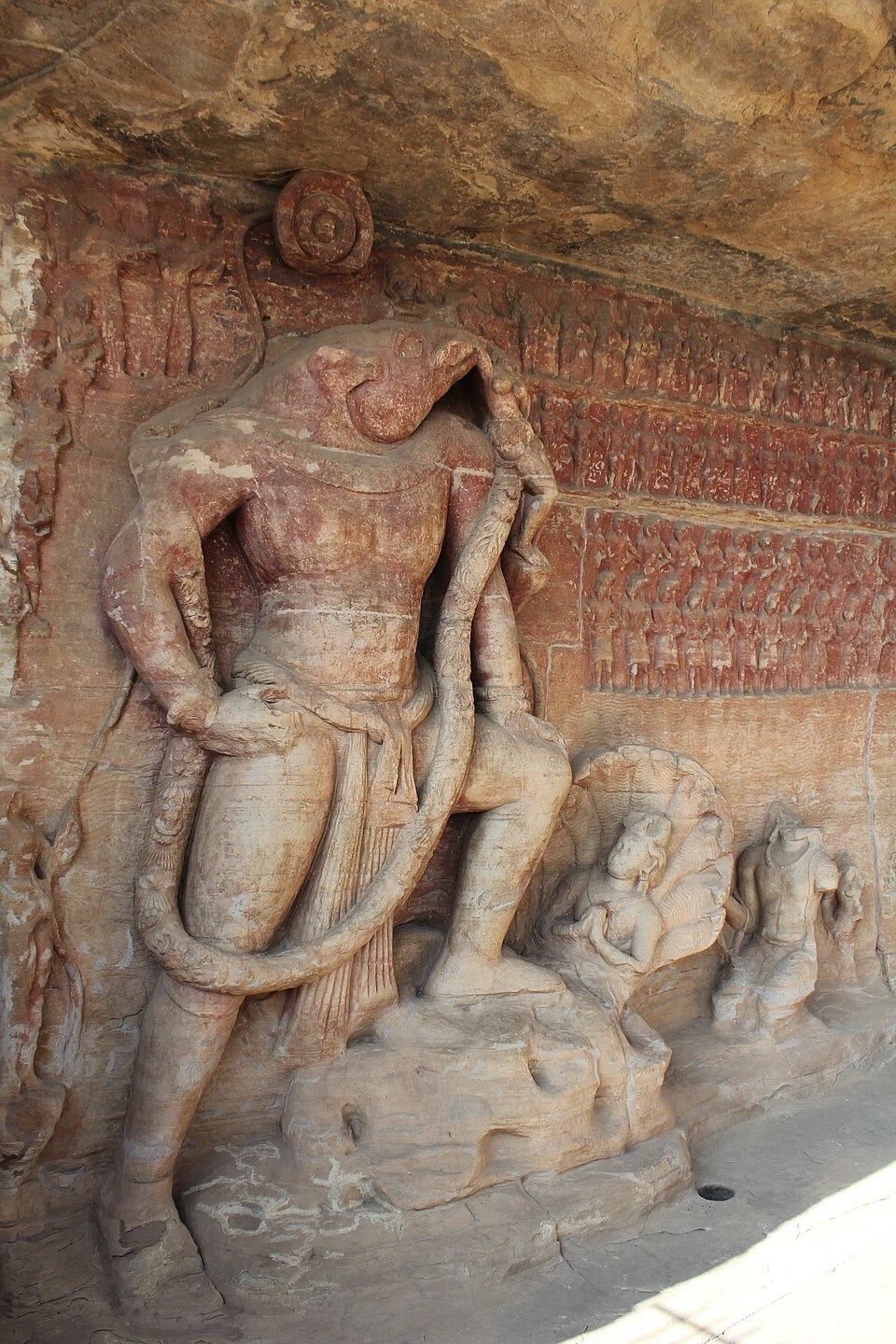
Read material and placement
A relief on a temple wall is encountered differently from a small painting. Its position, surrounding panels and the route a visitor takes can influence how it is read. If you are recording a site, take a wider photograph as well as a detail, where photography is permitted.
Avoid touching or tracing a carving to make its lines easier to see. Note the source of the identification and any uncertainty in the caption. A respectful visit records what can be observed without treating the monument as a prop for a personal performance.
A modern reflection, clearly named
The image of the Earth being protected can invite discussion of care for the environment. That is a contemporary reflection, not proof that every modern environmental policy is encoded in the sculpture. Keeping the distinction clear allows the older narrative and present concerns to meet without reducing either one.
For a first encounter, the most rewarding question may be simple: how did this artist make the act of lifting visible in stone or paint? The answer is often in the relationship between figures, not in the boar's head alone.

.jpg)