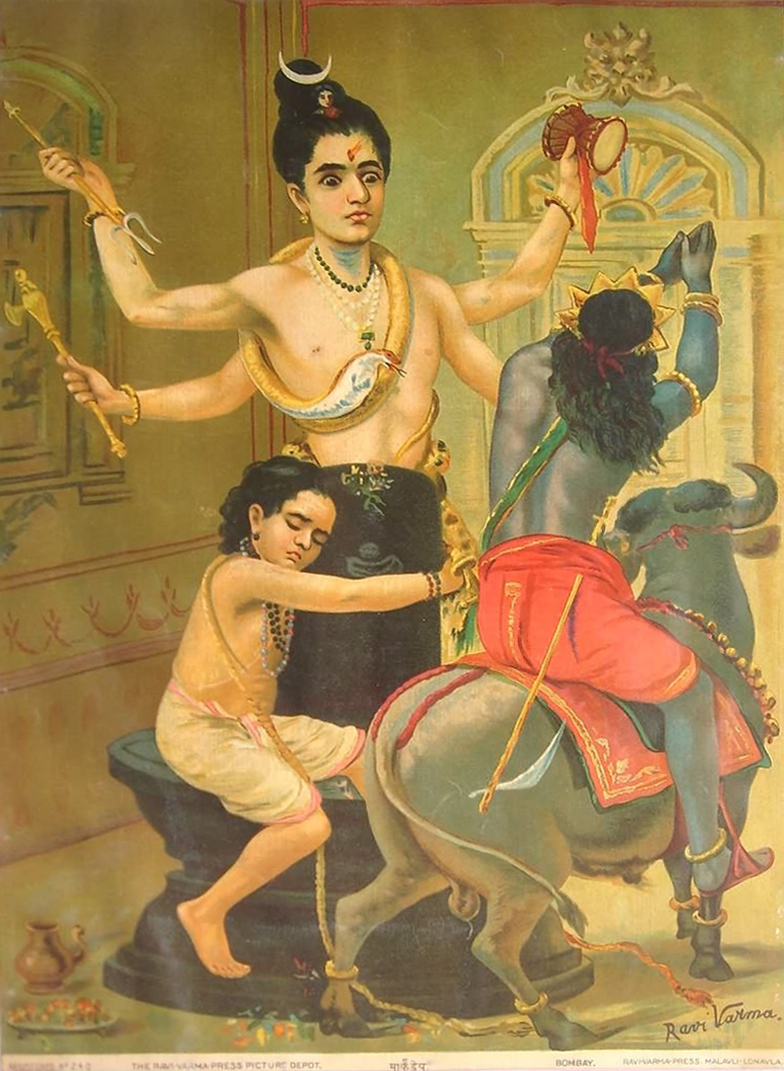
Images of Markandeya often show a young devotee embracing a linga while Shiva confronts Yama. The scene gathers fear, devotion and protection into a small space. Its force comes partly from the contrast between the vulnerable figure holding on and the divine action unfolding around him.
Time enters the story
In familiar tellings, Markandeya is destined for an early death and turns to Shiva. When Yama approaches, the devotee clings to the linga; Shiva intervenes. Retellings differ in details, including the age given for Markandeya. A careful account should not pretend that every version uses the same number.
The Metropolitan Museum's description of an early twentieth-century print relates the story to Thirukadaiyur in the South Indian tradition. This is a useful example of a narrative living both in an image and in a place of worship.
Read the crossing lines
Look at the noose, the linga and the direction of Shiva's movement. The noose may visually connect the devotee's danger with the object he embraces. The linga is therefore not just scenery; it is central to the way the artist explains the intervention.
Notice also whether Markandeya looks frightened, absorbed or composed. Different works can give the same episode a different emotional centre. A caption should describe the work's actual details before supplying a broad explanation about victory over death.
A story is not a guarantee
Devotees may understand the narrative as an expression of Shiva's grace. It should not be presented as a promise that a particular prayer prevents death or replaces medical care. Nor should it imply that bereavement reveals a failure of faith.
This distinction leaves room for a more humane reflection: people seek companionship and meaning when facing limits they cannot control. The image of holding on can be discussed without prescribing how another person ought to grieve or what they must believe.
Compare the telling with the image
Read one clearly identified account, then look again at the artwork. Which moment did the artist choose? What came before it, and what has been left outside the frame? The exercise makes a familiar devotional image less automatic. It also reminds us that a print, sculpture or performance is an interpretation of a story, carrying choices about emphasis as well as recognisable figures.