Kalighat in Kolkata is closely associated with worship of Kali. The Goddess’s image can be startling to a viewer encountering it for the first time. A good introduction should explain that striking details belong to a religious visual language, rather than treating them as sensational curiosities.
Avoid a single explanation for every image
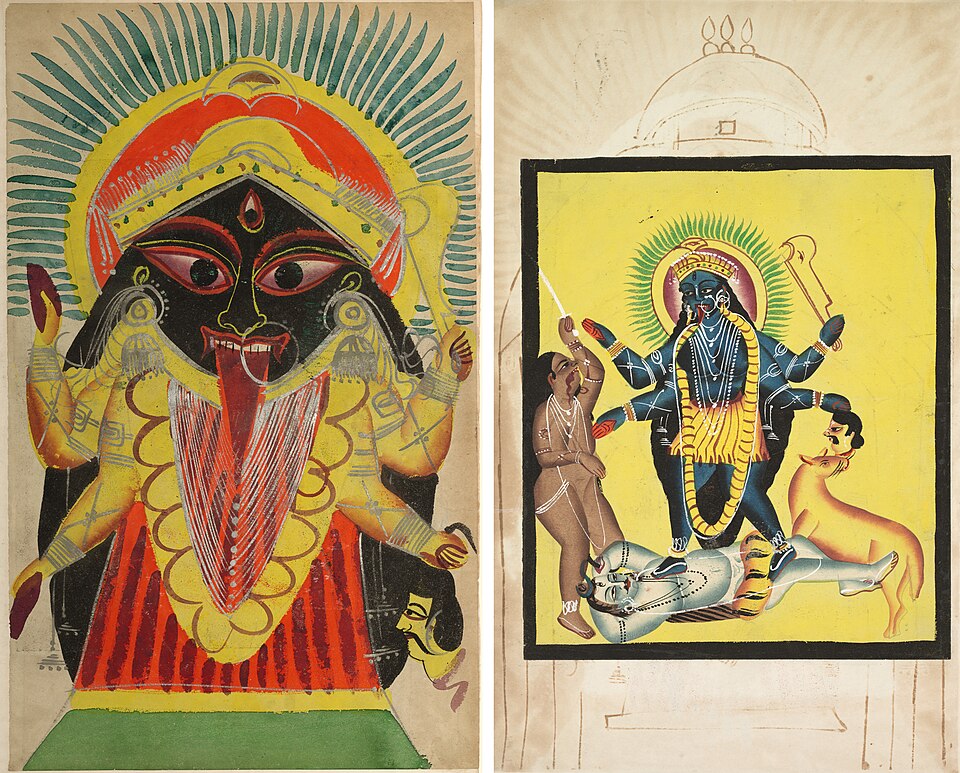
Kali’s extended tongue receives several interpretations in devotional storytelling. A familiar explanation relates it to the moment she recognises Shiva beneath her feet. Other readings emphasise power, fierce protection or the limits of ordinary social appearance. An interpretation should be linked to its context rather than declared the sole meaning of every Kali image.
Images also vary. A painting, a festival image and the sacred representation in a particular temple need not share every detail. Before explaining a feature, make sure it is actually present in the image under discussion.
Fierceness and maternal devotion
For devotees, a fierce appearance does not exclude a relationship with Kali as Mother. Protection, vulnerability and surrender can be part of the same devotional experience. A reader need not resolve that relationship into a simple contrast between a “good” and a “bad” form.
Nor should the image be turned into a diagnosis of the worshipper. Religious art can express ideas that exceed ordinary emotional categories. Listen to how devotees describe their relationship with the Goddess rather than assuming that an unfamiliar appearance tells the whole story.
Kalighat as a place
The temple exists within an active urban neighbourhood. Queues, vendors, transport and everyday work shape the visit alongside worship. Plan with that setting in mind and use current local information for access arrangements. An atmospheric photograph does not describe all the practical conditions of a visit.
Ask about any offering or service before agreeing to it. Clarify costs calmly and avoid feeling obliged by an unsolicited approach. Respectful participation includes the freedom to understand what you are being asked to do.
Looking at Kalighat painting
The term Kalighat also names a distinctive painting tradition associated with the area. Such paintings can depict religious subjects as well as social life. Do not assume that every image labelled “Kalighat” is a photograph of the temple deity or an object used in worship.
Check a museum or collection label for the date, medium and subject of the individual work. That small step prevents confusion between a sacred site, a deity and an artistic tradition. Each is connected with the others, but each deserves to be understood in its own terms.
Sources & further reading
www.wbtourism.gov.in — reference and further reading. Interpretive reflections and practical reading suggestions in this article are the website’s own explanatory material. Check current official arrangements before travelling.