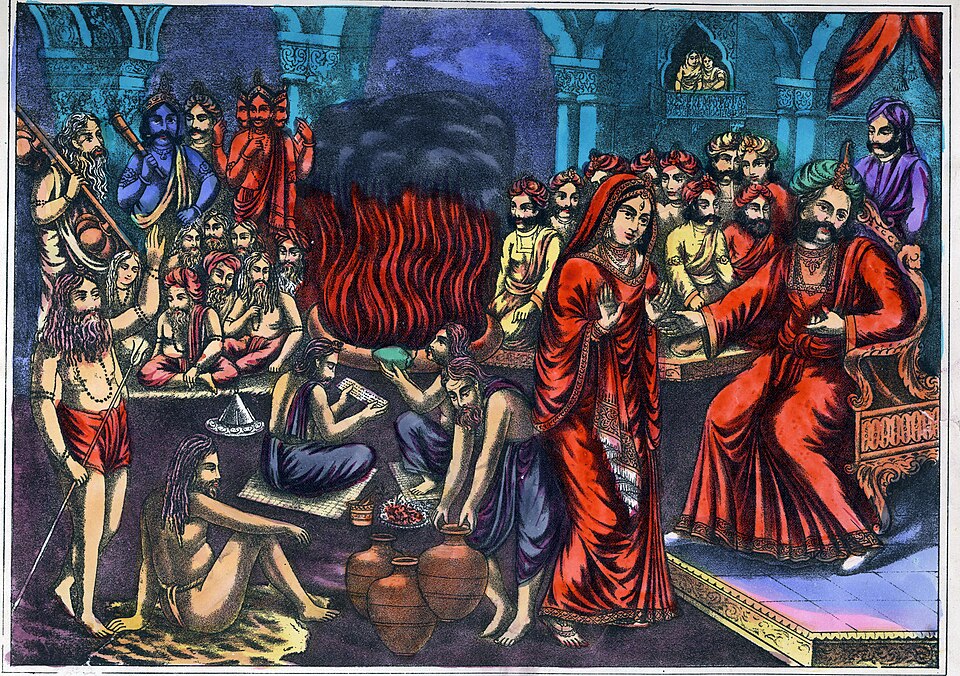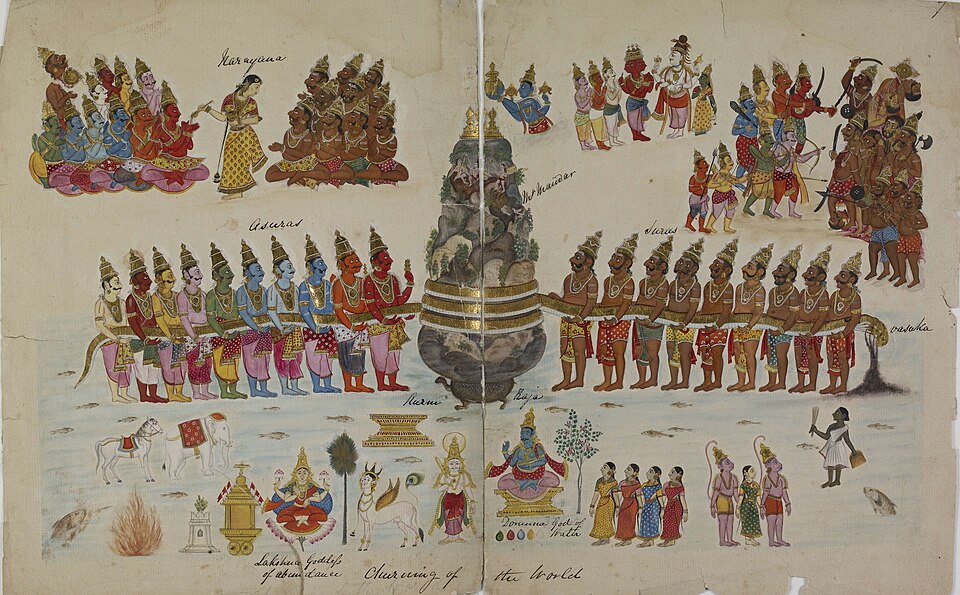
The churning of the ocean is one of the most recognisable scenes in Hindu narrative art. A mountain, a serpent, gods and asuras take part in an extraordinary effort to obtain amrita, the nectar of immortality. The story is rich enough to support several readings, but no single moral should be mistaken for its entire meaning.
Follow the sequence before interpreting it
In familiar Puranic tellings, the opposing groups cooperate to churn the ocean. Mount Mandara and the serpent Vasuki take central roles, while Vishnu’s tortoise form provides support. The work produces more than the desired nectar. Its emerging gifts and dangers shape the narrative.
Details and sequences differ between sources. When retelling it to children or including it in a talk, identify the version you are following. This is more useful than insisting that a remembered family telling must match every illustrated book exactly.
Why the poison matters
The appearance of halahala interrupts a simple story of effort rewarded. Shiva’s response to the poison is an important episode in the narrative. A reflective reading may see here the need to face consequences that cannot be wished away when pursuing a desired result.
That is an interpretation, not an instruction to absorb every harmful situation in one’s own life. Stories of divine action should not be used to pressure someone into tolerating abuse or refusing help. The distinction between reflection and literal personal instruction matters.
Cooperation does not end conflict
The participants share a task without sharing every intention. The struggle over the nectar makes desire and rivalry visible. This complexity is part of the story’s appeal: cooperation can be necessary and still remain fragile.
In a modern discussion, one might compare this with a team working towards a valuable outcome while disagreeing over credit. The comparison can make a question accessible, but the ancient narrative should not be reduced to an office-management lesson. Its religious characters and purposes remain part of the text.
Reading an image of the churning
First identify the mountain and serpent. Then notice how the groups are arranged and which episode the artist has chosen. A painting may combine moments that occur separately in a written account. Visual storytelling follows its own conventions.
Ask what is absent as well as what is shown. Does the image focus on labour, poison, nectar or divine support? Such questions help the viewer move beyond merely naming characters. A familiar story can become fresh when attention is given to the choices made by a particular narrator or artist.
Sources & further reading
www.wisdomlib.org — reference and further reading. Interpretive reflections and practical reading suggestions in this article are the website’s own explanatory material. Check current official arrangements before travelling.