The Cosmic Tragedy That Forged Sacred India
Few narratives in Sanatan Dharma carry the emotional intensity, philosophical profundity, and geopolitical significance as the legendary sacrifice of Prajapati Daksha (Daksha Yajna). It is the origin story of the 51 sacred Shakti Peethas—the divine pilgrimage matrix that has bound the cultural consciousness of the Indian subcontinent together for millennia.
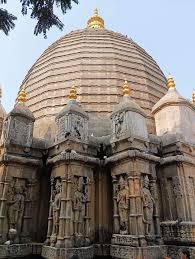
Kamakhya Devi in Assam—the sacred epicenter where the womb (Yoni) of Mata Sati descended.
The Hubris of Prajapati Daksha
Daksha, one of the mind-born sons of Lord Brahma, was appointed the supreme progenitor of creation. Proud of his ritualistic mastery and royal status, Daksha harbored deep disdain for Lord Shiva. To Daksha’s orthodox mind, Shiva—who smeared his body with funeral ashes, meditated in lonely cremation grounds, and wore snakes as ornaments—was an outcast ascetic unworthy of Vedic society.
Yet, Daksha’s youngest and most spiritually radiant daughter, Sati (an incarnation of Adi Parashakti), loved none other than Mahadeva. Defying her father’s wishes, she performed intense penance in the wilderness and won the heart of the ascetic Lord. Daksha’s ego was grievously wounded, setting the stage for cosmic confrontation.
The Insult and Sati’s Supreme Sacrifice
To demonstrate his supremacy over Shiva, Daksha organized the greatest fire sacrifice (Brihaspatisava Yajna) at Kankhal near modern-day Haridwar. Invitations were dispatched to all Devas, Rishis, Gandharvas, and celestial beings—deliberately excluding Shiva and Sati. Hearing of the festival, Sati insisted on attending despite Shiva’s gentle warning that an uninvited guest receives only disrespect.
Upon her arrival at the sacrificial arena, Daksha openly insulted Lord Shiva in front of the assembled assembly. Overwhelmed by anguish that her mortal body was born from a father who blasphemed the Supreme Lord of the Cosmos, Sati sat down in deep yogic meditation (Samadhi), ignited the internal mystic fire of Agni within her Prana, and consumed her mortal form in self-immolation.
Shiva’s Rudra Tandava and Vishnu’s Sudarshana
When news of Sati’s death reached Mount Kailash, Lord Shiva’s grief transformed into terrifying fury. Tearing a lock of hair from his matted locks, he created the fierce warrior Virabhadra and the dark goddess Bhadrakali, who marched upon Kankhal, destroyed the sacrificial arena, and decapitated Daksha. Yet Shiva’s sorrow could not be extinguished. Gathering the burnt remains of Sati’s body upon his shoulders, he began the Rudra Tandava—the cosmic dance of dissolution that threatened to shake the three worlds apart.
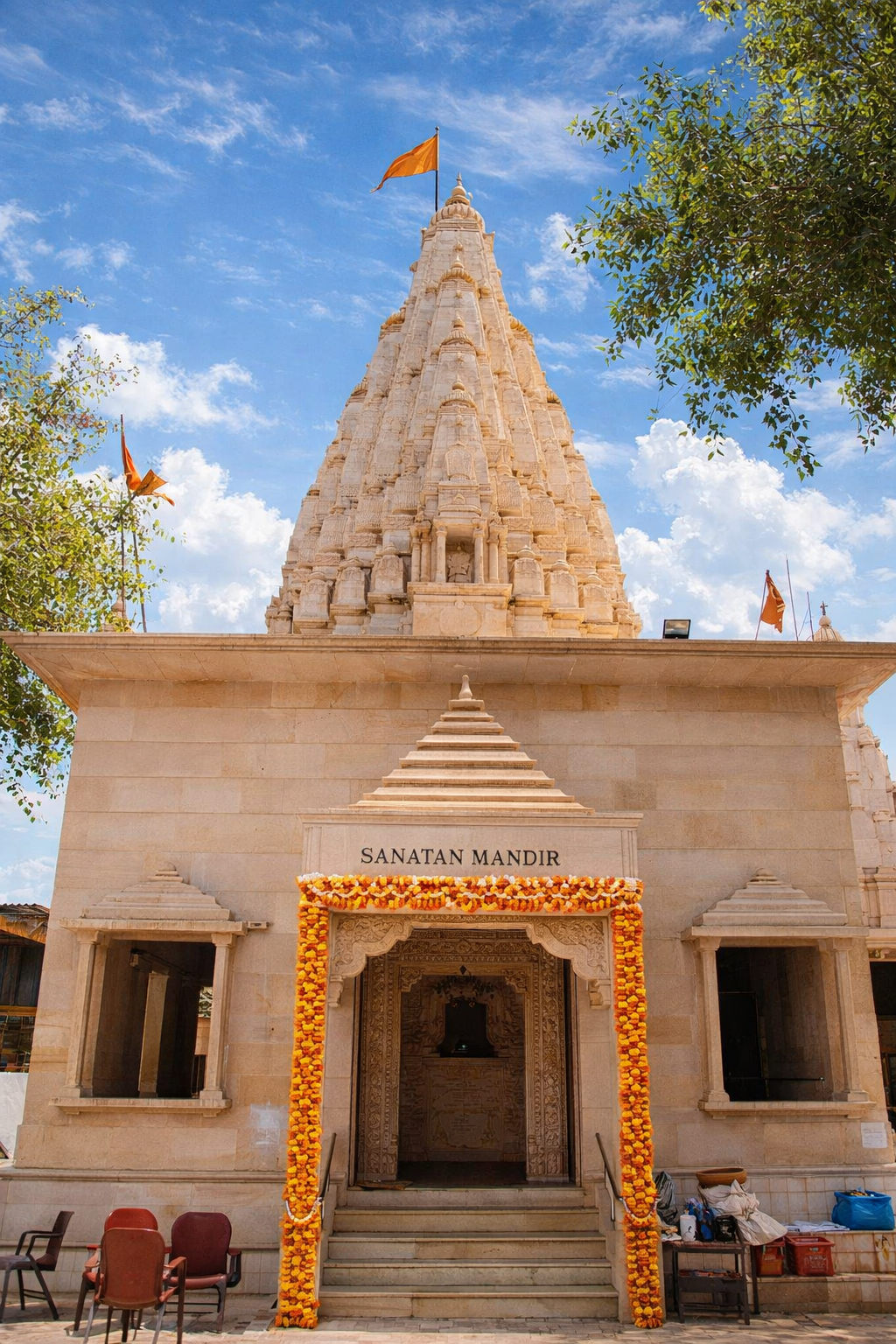
Alopi Devi in Prayagraj where the fingers of Mata Sati fell at Triveni Sangam.
Witnessing the universe on the precipice of destruction, the preservation deity, Bhagwan Vishnu, released his celestial discus, the Sudarshana Chakra. With surgical precision, the Chakra severed the body of Sati into 51 sanctified pieces as Shiva moved across the subcontinent. Wherever a limb, organ, or sacred ornament fell, the soil was sanctified, establishing an eternal Shakti Peeth guarded perpetually by a localized manifestation of Lord Shiva as Bhairava.
Geographical Matrix of the 51 Shrines
The distribution of the 51 Shakti Peethas is a masterwork of sacred geography. From Hinglaj in the rugged deserts of Balochistan to Kamakhya in the lush tea hills of Assam, from Amarnath in the snowy glaciers of Kashmir to Nainativu on the island of Sri Lanka, the entire geographical landmass of Bharatvarsha was sanctified as the living body of the Divine Mother.