Khajuraho is frequently introduced through a small selection of erotic sculptures. That narrow focus can leave a visitor unprepared for the architecture itself: platforms, porches, towers and extensive bands of figures. Looking at the whole building first restores proportion and makes the famous details part of a much larger artistic setting.
Begin at a distance
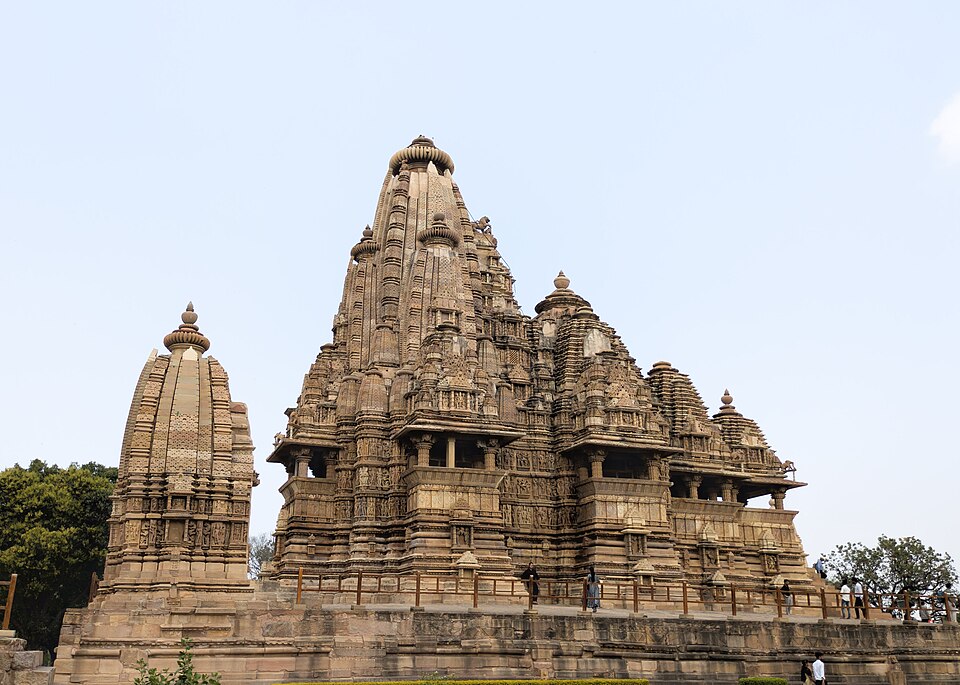
The surviving temples are associated with Chandella patronage, and the ensemble includes Hindu and Jain monuments. Before examining individual figures, notice how the building rises from its base and gathers smaller forms around the main tower.
Try describing the silhouette without specialist vocabulary. Does it seem clustered, stepped, sharply vertical or rhythmically repeated? These impressions can become questions for a guide rather than substitutes for historical explanation. They give you a visual starting point.
Follow the sculpture’s placement
A carved figure has a location within an architectural scheme. Look at the band, projection or recess containing it, and compare adjacent figures. Divine images, attendants and other subjects should not disappear from attention because a guide or camera gravitates towards one sensational detail.
Avoid making one universal claim about the meaning of every erotic image. Interpretations vary and require evidence. A responsible account can explain a proposed reading while acknowledging that a photograph alone cannot prove the original intentions of all patrons and sculptors.
Compare two temples
Select two buildings and ask the same small set of questions. How is the entrance approached? What happens between porch and sanctuary? How densely is the exterior articulated? A consistent comparison is easier to remember than a rapid sequence of unrelated facts.
Keep the names and locations with your images. Photographs from different temples are often mixed together online, which makes later study confusing. A picture of the identification board can prevent you from describing one temple through the sculpture of another.
Make room for several kinds of visitor
Some people arrive for art history, others for religious reasons, and others with children encountering Indian sculpture for the first time. Clear, matter-of-fact discussion is more useful than either sensationalism or embarrassment. Answer the question being asked and retain the wider context.
Respect restrictions around carved surfaces and active worship. When choosing what to share afterwards, include a full-building view as well as a detail. That small editorial choice can help the next reader understand Khajuraho as a rich architectural ensemble rather than a collection of images selected to provoke attention.
Sources & further reading
UNESCO World Heritage Centre — site history and significance