The Great Sacrifice of Sati & The Cosmic Tandava
The primordial origin of Muktinath / Gandaki Shakti Peeth (Nepal) is deeply consecrated in the ancient scriptures of Sanatan Dharma, most notably the Shiva Purana, Kalika Purana, and Srimad Devi Bhagavatam. When Prajapati Daksha convened the great Brihaspatisava Yajna at Kankhal, his unbridled pride led him to deliberately exclude Mahadeva, the supreme ascetic Lord of dissolution. Mata Sati, unable to endure the insolent slander directed toward her eternal consort, entered the sacrificial assembly and relinquished her mortal vessel through the inward awakening of Yogagni—the internal yogic fire of supreme consciousness. The catastrophic immolation ignited Mahadeva’s terrifying grief and cosmic fury. Lord Shiva unleashed Virabhadra to dismantle the sacrificial enclosure and, lifting Sati’s sacred physical form upon His shoulders, commenced the cosmic Rudra Tandava that shook the pillars of the three realms.
To prevent the unravelling of creation and liberate Mahadeva from His trance of inconsolable grief, Bhagwan Vishnu released the luminescent Sudarshana Chakra. The spinning solar discus bisected Sati’s sanctified form into fifty-one divine fragments across the geography of Bharatvarsha. At Mustang District, Annapurna Himalayas, Nepal, Sati’s sacred Forehead / Temples (Ganda / Mastak) descended to the earth, immediately transforming the coordinate into a glowing spiritual vortex of cosmic energy. The earth at this holy spot absorbed the primordial essence of the Mother of the Universe, consecrating it as an unshakeable bridge between human aspiration and transcendent divine grace.
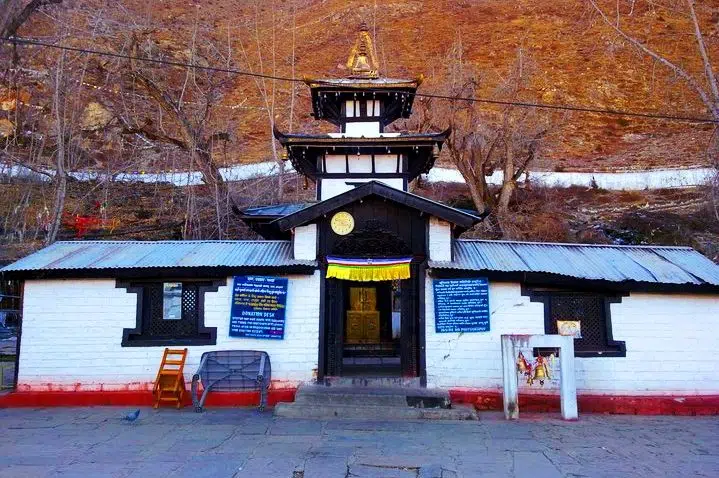
ॐ ह्रीं श्रीं क्लीं परमेश्वर्यै नमः । Mata Gandaki Chandi देव्यै नमस्तुभ्यं भैरवेण समन्विते ॥
Om Hrīṁ Śrīṁ Klīṁ Parameśvaryai Namaḥ | Mata Gandaki Chandi devyai namastubhyaṁ bhairaveṇa samanvite ||
Mata Mata Gandaki Chandi & Lord Chakrapani
The presiding deity of this sacred shrine is worshipped under the exalted manifestation of Mata Gandaki Chandi. In Shakta metaphysical philosophy, She represents the unconstrained kinetic potency through which Brahman creates, maintains, and transforms the cosmic tapestry. Radiating transcendental motherly love and sovereign dignity, Mata Gandaki Chandi is depicted adorned in sacred crimson vestments, holding divine emblems of fearlessness (Abhaya Mudra) and spiritual boons (Varada Mudra). Worshippers who cross the threshold into Her presence describe a profound sensation of peace that instantly stills the turbulent mind, dissolving fear and awakening spontaneous devotion in the heart.
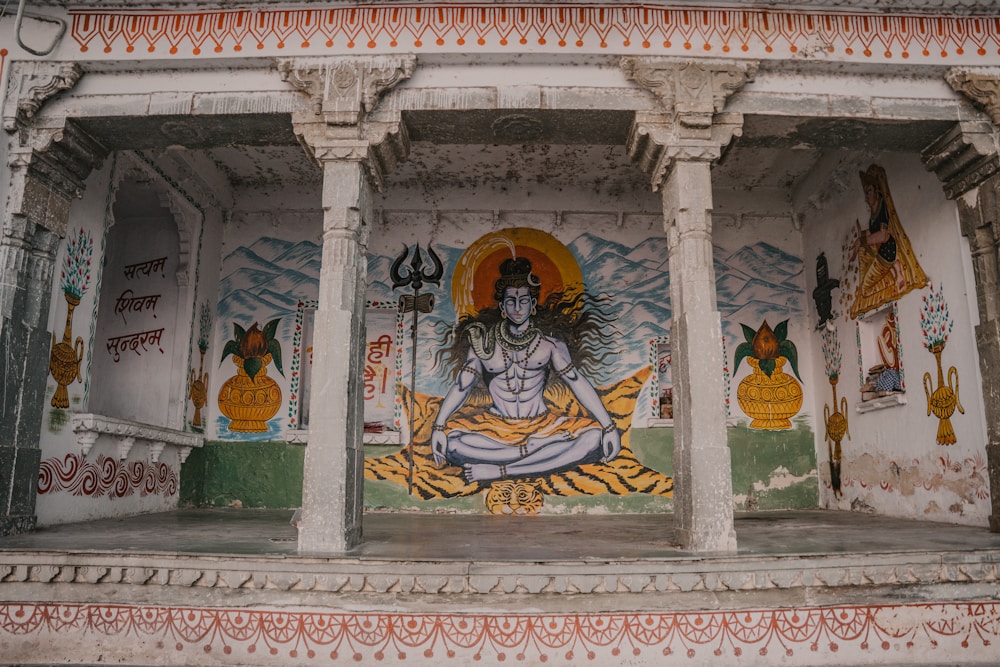
Guarding this sacred sanctuary with unwavering vigil is Bhagwan Shiva manifested as Chakrapani. According to Tantric theology, Shakti and Shiva are non-different—as heat is inseparable from fire, and radiance is inseparable from the sun. As the eternal Kshetrapala (guardian of the sphere), Chakrapani safeguards the energetic boundaries of the peetha, filtering out discordant influences and anchoring the high-frequency vibration of the Mother’s relic. In traditional pilgrim protocol, the pilgrimage is declared complete only after devotees pay reverent homage to Chakrapani, harmonizing the dual principles of pure consciousness and kinetic power.

Kundalini Chakra Alignment & Sacred Vastu Geometry
In the subtle cartography of Tantric Kundalini Yoga, the 51 Shakti Peethas correspond precisely to the fifty-one Matrika syllables inscribed upon the petals of the human chakras. The descent of the Forehead / Temples (Ganda / Mastak) at Muktinath / Gandaki Shakti Peeth (Nepal) establishes this temple as an external energetic counterpart to the corresponding inner spiritual center of the seeker. Meditation and mantra japa performed within the sanctum naturally stimulate the flow of Prana through the central Sushumna canal, transmuting mundane worldly tendencies into higher intuitive insight and serene equanimity.
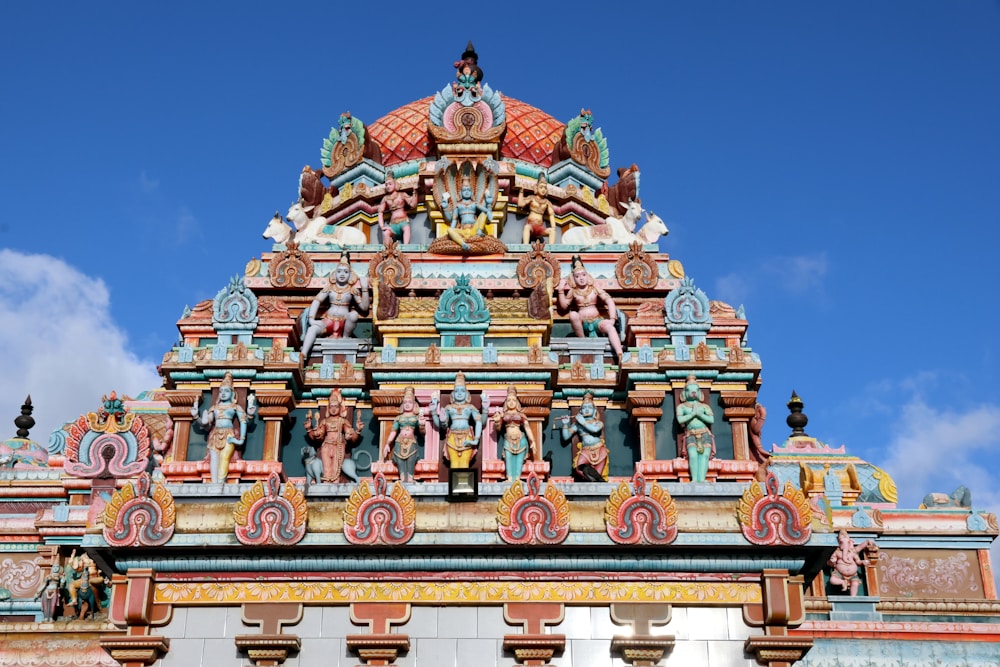
The architectural sanctuary of Muktinath / Gandaki Shakti Peeth (Nepal) stands as an enduring monument to ancient Indian temple geometry and Vastu Vidya. Orientated along sacred cardinal lines, the sanctum sanctorum (Garbhagriha) channels ambient geomagnetic currents toward the central shrine. The soaring stone Shikhara tower mimics the sacred Mount Meru, drawing celestial cosmic energy downward into the sanctum. Surrounding pillared mandapas, intricately carved stone friezes depicting Puranic episodes, and sacred pradakshina circumambulation pathways guide pilgrims through a deliberate architectural ascension from the mundane world into the transcendent heart of reality.
शरणागतदीनार्तपरित्राणपरायणे । सर्वस्यार्तिहरे देवि नारायणि नमोऽस्तु ते ॥
Śaraṇāgata-dīnārta-paritrāṇa-parāyaṇe | Sarvasyārti-hare devi Nārāyaṇi namo’stu te ||
Universal Grace: O Divine Mother, who is ever compassionate to the surrendered and the humble, O Destroyer of all distress, salutations to You, O Narayani.
Historical Chronology, Daily Rites & Spiritual Merits
A wealth of historical chronicles, copper-plate royal inscriptions, and ancient devotional travelogues affirm the unbroken continuity of worship at Muktinath / Gandaki Shakti Peeth (Nepal) across centuries. Successive royal dynasties—from ancient imperial monarchs to regional rulers—bequeathed vast endowments of land, gold, and artisanal talent to renovate the temple towers, build sacred pilgrim inns (Dharmashalas), and support continuous scriptural chanting. Adi Shankaracharya, along with celebrated medieval saints and mystics, visited this sanctum, composing immortal hymns in praise of the Mother and reaffirming Her universal presence.
The daily liturgical rhythm of the sanctum unfolds with rigorous Vedic and Tantric disciplines that have endured unchanged across millennia. From the early dawn Mangala Aarti—when the sanctum is awakened to the resounding echo of conch shells, brass bells, and Sanskrit hymns—to the midday Raja Bhog offering of pure sattvic delicacies, every ritual honors the living presence of the Goddess. The evening Sandhya Aarti, celebrated with towering multiple-tiered brass lamps (Deepams), fills the temple halls with golden radiance and rhythmic chanting, creating an atmosphere charged with living divinity.

During the auspicious festivals of Chaitra Navratri and Sharad Navratri, Mustang District, Annapurna Himalayas, Nepal transforms into a vibrant hub of festive and devotional celebration. Hundreds of thousands of devotees gather from distant corners of India to observe sacred fasts, participate in nine-day Chandi Homas, and offer red silk vestments, coconuts, and fragrant flowers to the Divine Mother. Traditional folk melodies, night-long devotional vigils (Jagrans), and vast community kitchens (Annadanam) feeding thousands exemplify the sacred Sanatan spirit of selfless service and collective devotion.
The ancient scriptural Phalashruti (fruit of devotion) affirms that even a single step taken toward Muktinath / Gandaki Shakti Peeth (Nepal) with an earnest, humble heart incinerates deep-rooted karmic obstacles accumulated across lifetimes. Devotees who undertake pradakshina (circumambulation) around the sanctum and engage in quiet contemplation of Mata Gandaki Chandi and Chakrapani are blessed with domestic tranquility, physical vitality, unclouded intellect, and righteous prosperity (Dharma, Artha, Kama), ultimately attaining the supreme blessing of liberation (Moksha) from the cycles of mortal existence.