Rasayana and ojas often appear in discussions of Ayurveda, vitality and ageing. They also appear on products promising stronger immunity or a longer life. These uses should be read separately. A traditional concept may be culturally significant without establishing that a commercial preparation produces the benefits advertised on its label.
What is being discussed?
Rasayana is associated in Ayurveda with rejuvenation and the cultivation of vitality. Ojas belongs to its account of sustaining strength and life. Their meanings come from a wider system of medical thought; translating ojas simply as immunity can hide that context and imply a scientific equivalence that has not been demonstrated.
Before accepting a claim, identify its subject. Is the author discussing a passage in a classical text, a named formulation, a single plant, an experiment or a commercial product? These are different things. Evidence for one ingredient cannot automatically establish the effects of every preparation containing it.
Look past the list of famous herbs
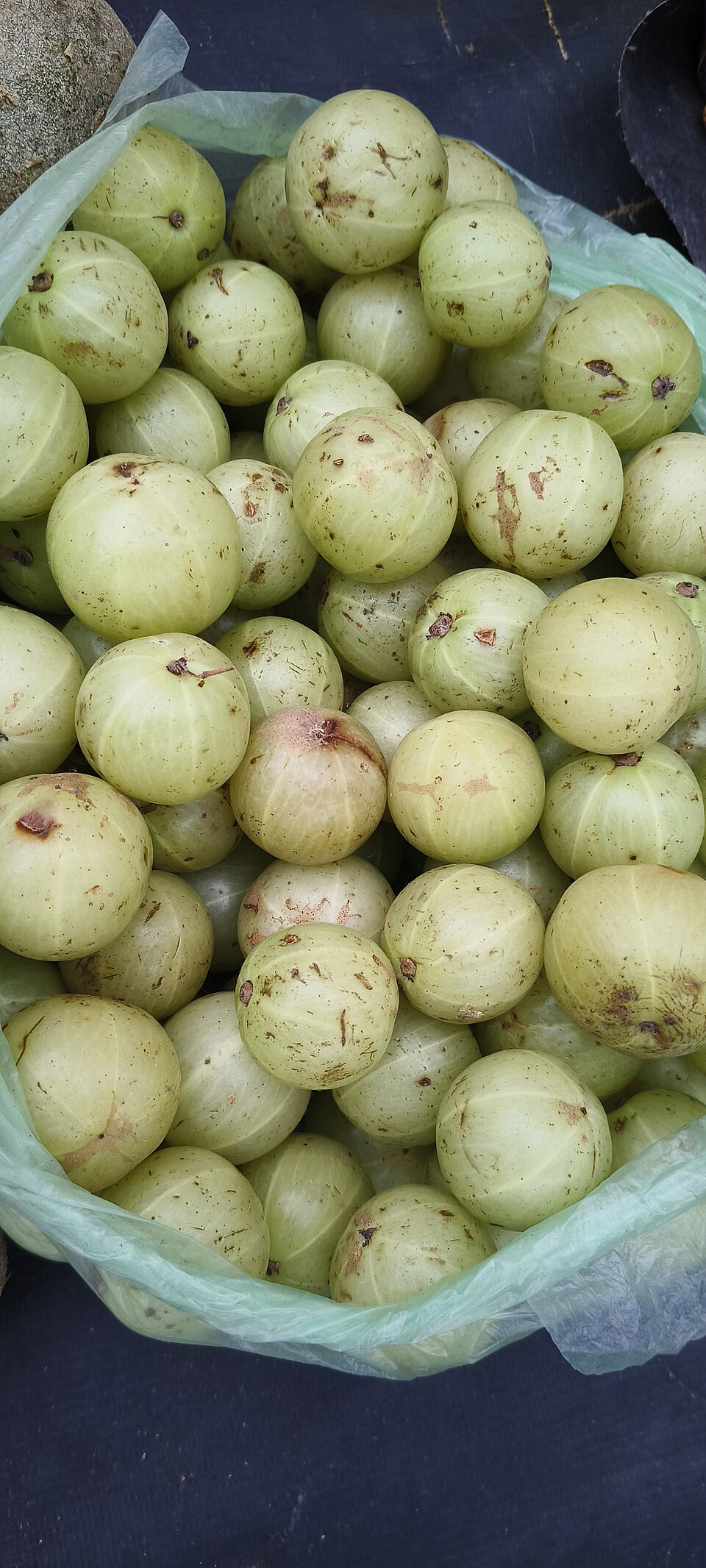
An article may place amla, ashwagandha, brahmi and other plants under a single heading. That does not make them interchangeable. Plant identity, the part used, preparation and the amount all matter. A photograph of an amla fruit illustrates a plant associated with the tradition; it is not evidence that an extract extends human life.
For a product being considered for health reasons, write down its complete ingredient list and take it to a clinician or pharmacist. Mention other medicines and supplements. A practitioner should be able to explain uncertainties as well as expected benefits, rather than relying on the word natural as a guarantee.
Longevity claims need a precise outcome
Ask what was actually measured. A change in a laboratory marker, an animal experiment and a demonstrated improvement in people's daily functioning are not the same result. Nor does any of them by itself prove a longer lifespan. Small studies can raise useful questions without settling them.
The earlier page claimed that ethical behaviour and selected herbs directly protected telomeres, repaired the nervous system and prevented immune disorders. Those statements exceeded the evidence presented and have been removed. A cultural publication should be particularly careful when scientific language makes an attractive promise appear settled.
Keep the human questions in view
Discussions of vitality can still invite reflection on care, companionship, purposeful work and how families support older members. These are worthwhile subjects without a promise of rejuvenation. If tiredness or declining function is the concern, seek an assessment rather than explaining everything through depleted ojas. Respect for a tradition and careful evaluation of a health problem can coexist.
Sources & further reading
This educational article discusses cultural context and how to assess health claims. It does not provide a diagnosis or an individual treatment plan.
.jpg)