A stepwell changes the usual direction of architectural attention. Instead of looking first for a tower rising above the ground, the visitor encounters a sequence descending towards water. At Rani ki Vav in Patan, Gujarat, that movement is combined with a rich sculptural programme. The result rewards more than a quick photograph from the entrance.
Begin with the whole arrangement
Stand in a permitted viewing area and notice the relationship between the long approach, levels and supporting structures. Before identifying individual figures, understand where they belong. An isolated image of a sculpture can be beautiful, but the setting helps explain how it is encountered.
Gujarat Tourism describes Rani ki Vav through its craftsmanship and Maru-Gurjara architectural character. Use such an overview as orientation, then look for the details it discusses. A label is most useful when it sends you back to the object with a more precise question.
Water and architecture belong together
A stepwell is connected with access to water, but it need not be reduced to a purely utilitarian hole in the ground. The investment in space and carving invites attention to how practical needs and cultural meaning can share an architectural form.
At the same time, avoid assuming that every story told about water at the site is a documented fact. Ask whether an explanation concerns its original purpose, a later tradition or a modern interpretation. These layers can coexist if they are identified clearly.
Look at one sculptural panel carefully
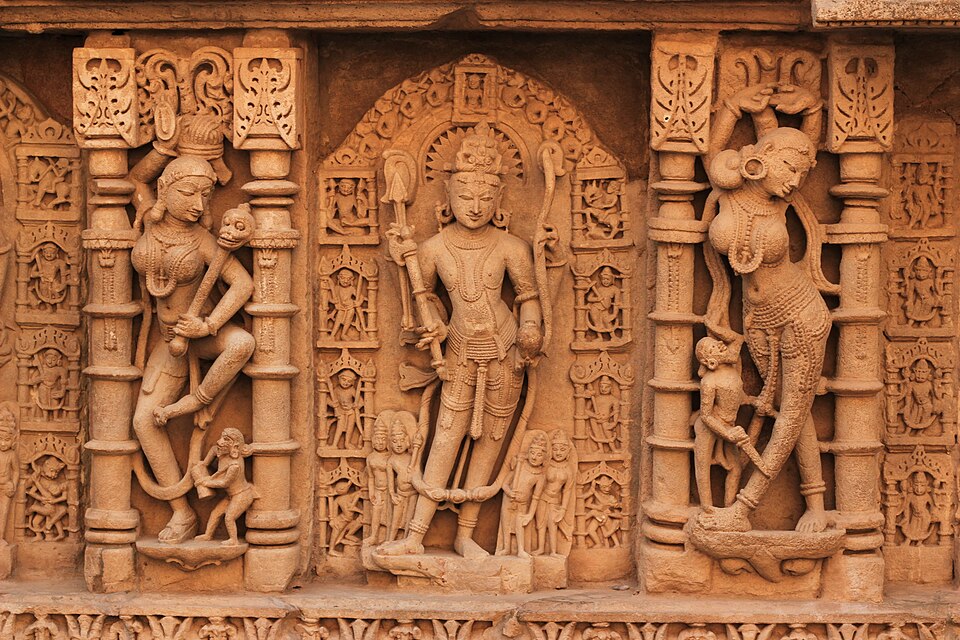
Choose a figure or group that is visible without crossing a barrier. Notice posture, objects held, accompanying figures and placement. A guide can help identify the subject, but begin by describing what you actually see. This habit reduces the temptation to accept an elaborate explanation without checking whether the visible details support it.
If the identification remains uncertain, record the uncertainty. It is better to leave a question open than to publish a confident but incorrect caption. Cultural writing improves when the image and its description are treated as a pair.
Conservation shapes the visit
Some areas may be restricted. Those limits protect the site and visitors; they are not obstacles to be bypassed for a better angle. Do not climb onto sculptural surfaces or touch them to pose. Repeated contact can damage details that have survived for generations.
Check current opening and ticket arrangements before leaving. Plan for an outdoor visit, taking account of heat and the needs of your companions. A short distance within a heritage site can still involve steps or uneven ground, and access should not be assumed from a photograph.
If combining Patan and Modhera
The destinations are often considered together, but check travel time and leave enough room at each. A schedule that allows only ten minutes for a major site may technically include it while offering little opportunity to understand it. Choose fewer stops if that makes the day more comfortable.
Keep captions distinct: a sculpture from Rani ki Vav should not illustrate an article about Modhera as though it came from that temple. Both may share stylistic relationships, but they remain different places.
Bring home a clearer description
After the visit, try describing the sequence of spaces in a few sentences. Then add one detail you learned from a reliable source and one question you still have. This creates a useful account for another reader and a more durable memory for yourself. The stepwell becomes a place understood, rather than merely an image collected.
Sources & further reading
gujarattourism.com — reference and further reading. Interpretive reflections and practical reading suggestions in this article are the website’s own explanatory material. Check current official arrangements before travelling.