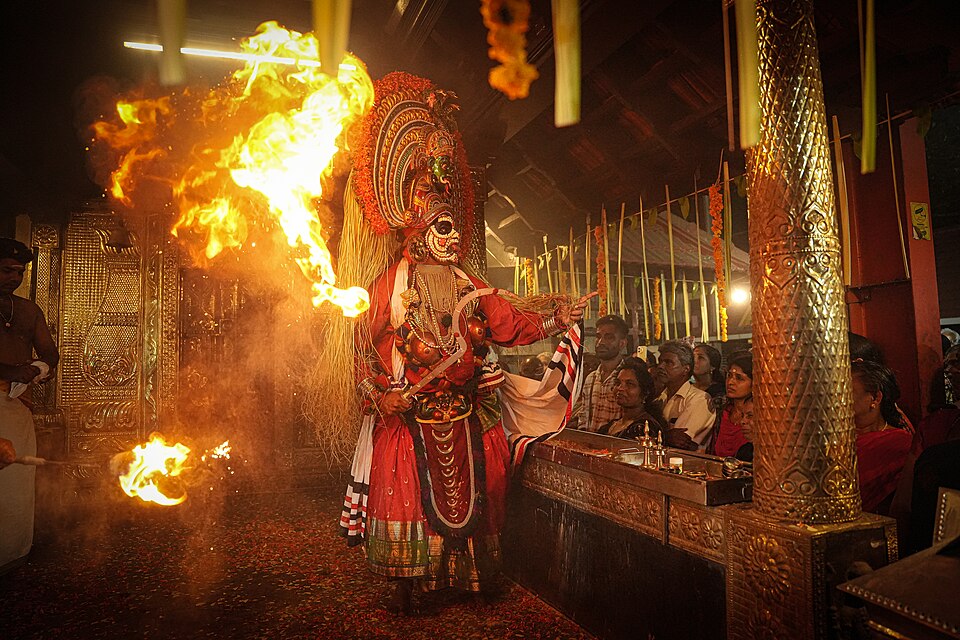
Mudiyettu is easier to appreciate when the audience sees more than the final dramatic appearance of a costumed performer. Preparation, ritual setting, music and the participation of a community belong to the event. A camera that records only an imposing face can miss the relationships that make the performance meaningful.
Begin with the narrative and setting
Mudiyettu is a ritual theatre tradition of Kerala associated with the story of the conflict between Kali and Darika. The sacred narrative provides a framework, but attending an event also means entering a particular local occasion with its own responsibilities and expectations.
Ask the organiser what a visitor may observe and where to stand. Do not assume that access to the performance area includes access to preparation or ritual spaces. A place that appears open may still have a role that is not intended for casual viewing.
Notice how anticipation is made
Pay attention to the sounds and movements that precede a major entrance. How does the audience’s attention gather? What changes in the relationship between performers, musicians and the surrounding space? These questions direct attention towards the event’s unfolding rather than only its most photogenic moment.
If you do not know the characters, a short introduction can help. Keep names with your notes rather than assigning a generic identity to every elaborately costumed figure. The particular role matters to understanding the action.
See preparation as skilled work
Costume and makeup require time, knowledge and material. They should not be treated as free accessories for an audience selfie. Ask permission before photographing preparation, and accept that a performer may need concentration or privacy.
When a maker or performer explains a detail, listen to their specific account. Avoid turning one explanation into a universal rule for every presentation. Living practices can have local differences that deserve to remain visible.
Be a guest in the occasion
Follow guidance about movement, footwear, photography and the appropriate use of space. If there is a public explanation or discussion, use it to ask questions after the relevant activity rather than interrupting the ritual sequence.
A thoughtful account might describe one change in sound, one entrance and one piece of preparation you were allowed to understand. That is more grounded than an attempt to explain every symbol from a brief encounter. Mudiyettu’s intensity can be appreciated without separating it from the community and skilled labour that sustain the occasion.
Sources & further reading
UNESCO Intangible Cultural Heritage — tradition and community context