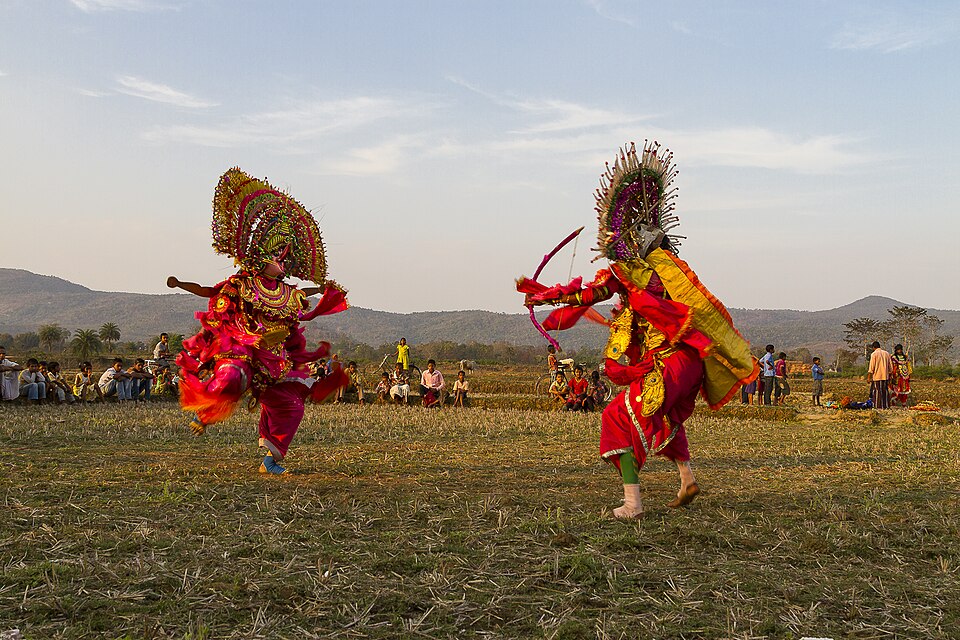
A Chhau mask can be spectacular enough to dominate a photograph. In performance, however, the body must carry expression through space. Weight, rhythm and direction matter alongside the mask. A newcomer gains more by watching a complete movement phrase than by waiting only for the most dramatic leap.
Recognise the regional distinctions
Chhau is associated with the traditions of Purulia, Seraikella and Mayurbhanj. These names are important because the forms differ. Masks are central to Purulia and Seraikella presentations, while Mayurbhanj Chhau is known for performance without masks.
Check which tradition the artists identify with instead of labelling every example simply “masked tribal dance.” Such a label obscures training, regional history and the differences an audience could learn to recognise. A programme or introduction can provide the necessary starting point.
Watch the body complete the character
Where a mask fixes the visible facial form, the direction of the head and the organisation of the body become especially interesting to observe. Notice how a character enters, pauses and turns. Does a change in level or speed alter the impression?
Try following the feet for one phrase and the torso for another. Then watch the whole figure again. The exercise can reveal coordination that a still image cannot convey, without requiring you to interpret every movement as a fixed word.
Include the musicians and makers
The performance depends on music as well as dancers, and masked forms also involve the work of mask makers. Ask who made the objects and who is playing, where information is available. Their names belong in an account of the event.
A mask bought for display is not automatically identical in purpose or construction to one used in performance. Ask the maker about materials, intended use and care. Avoid assuming that visual similarity establishes the full history of an object.
Keep the performance in context
An excerpt on a festival stage may have a different duration and setting from a community performance. Learn what has been selected and how the artists describe it. A short presentation can be valuable without being treated as a complete representation of all Chhau.
When sharing a permitted recording, identify the regional tradition and the troupe. That small act of precision makes it easier for other viewers to find the artists and continue learning. It also helps the art remain connected with the people whose training brings the mask, movement and music together.
Sources & further reading
UNESCO Intangible Cultural Heritage — tradition and community context