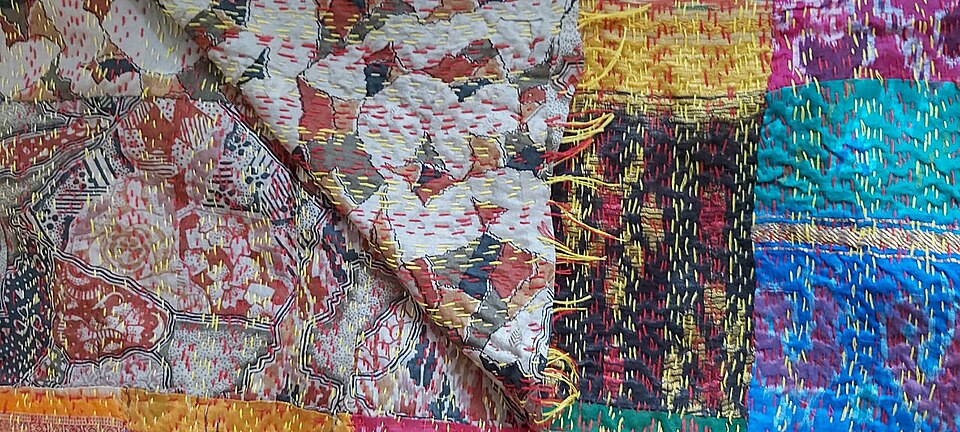
A running stitch can look modest on its own. Across a Kantha textile, many such stitches create texture, direction and images. The eye may follow a border, pause at a figure and then notice the gently gathered surface of the cloth. This is an art in which the smallest repeated action can shape the entire experience of an object.
Begin with cloth and use
Kantha is associated with Bengal’s textile traditions, including the reuse of cloth and the making of embroidered coverings. Contemporary Kantha work also appears on garments and decorative textiles. These objects do not all have the same construction or purpose, even when a similar stitch vocabulary connects them.
Ask whether a piece is layered, what the ground fabric is and how the embroidery relates to it. A new embroidered sari should not automatically be described as a reused-cloth quilt, and an older domestic textile deserves its own account.
Follow the stitch’s direction
Look at a small area where the stitching changes direction. Notice how it defines a figure, fills a shape or creates a ripple across the surface. Then step back to see how the local decision contributes to the larger composition.
The reverse can sometimes help explain construction, but inspect it only with permission and gentle handling. An old textile may be fragile. Pulling at a thread or sharply folding a section to see better can damage the very evidence you want to understand.
Give personal imagery room
A textile may contain flowers, animals, people or scenes of daily activity. Ask the maker about the work when possible rather than assigning a fixed meaning from a general motif chart. An image can have a personal association as well as a place in a wider tradition.
For an older piece, an unknown maker should remain unknown. Inventing a detailed household story may make a sales description attractive, but it does not improve provenance. Record the information that actually accompanies the object and distinguish it from interpretation.
Care for both the object and its record
When buying, obtain material and care information suited to the specific textile. Do not assume that every piece can be washed because some forms were made for ordinary use. Age, dyes, fibre and condition affect what is appropriate.
Keep the maker’s name and any supplied history with the cloth. Those notes preserve a human connection that can otherwise disappear when a textile changes hands. Appreciating Kantha means seeing the stitch, but also recognising that patient repetition can carry individual choices, practical needs and memories across a much larger surface.
Sources & further reading
Official cultural reference — background and further reading