Alandi, Apegaon and Nevasa appear in accounts of Sant Dnyaneshwar, but they should not be treated as interchangeable names for one pilgrimage stop. Each belongs to a different part of the remembered geography of his life and work. Keeping them distinct makes both a biography and a journey easier to understand.
Apegaon and the family's background
Maharashtra's state gazetteer discusses the family's connection with Apegaon near Paithan and the Godavari. Biographical accounts and later devotional narratives do not always agree on every detail or date. It is better to identify the source being followed than to present a complicated historical question as settled by one caption.
When reading a life of Dnyaneshwar, separate information about the family residence from claims about the precise birthplace of each family member. Similar-sounding place names and repeated summaries can otherwise create confusion.
Nevasa and the Dnyaneshwari
The Ahilyanagar district heritage guide connects Nevasa with the Dnyaneshwari and the memorial called Pais Khamb. This is the literary association to keep in mind when visiting or reading about the place.
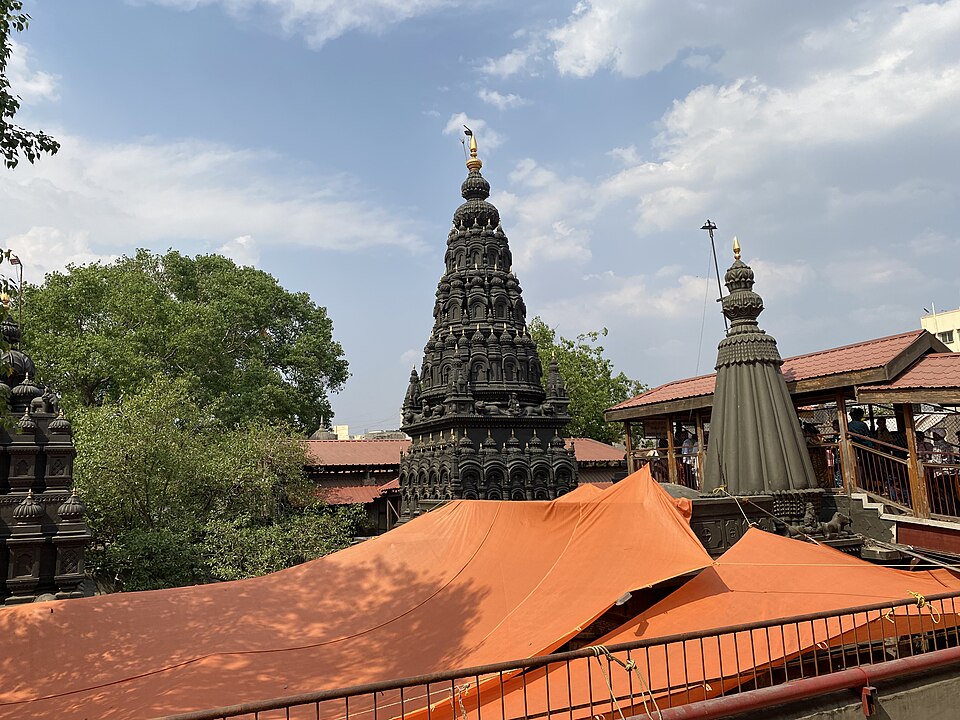
A photograph of a memorial shows how a tradition is honoured at that location. It does not by itself demonstrate the age of every part of the present building. Architectural history and the remembered event deserve their own explanations.
Alandi and the continuing devotional tradition
Alandi is especially associated with Dnyaneshwar's samadhi and with the palkhi tradition. Its place in living worship is different from Nevasa's connection with the composition of the commentary.
Allow time to understand the temple's local arrangements rather than treating Alandi only as a name to tick off on a biographical route. A quiet visit and a festival gathering can offer very different experiences of the same place.
Make a route from a map, not a paragraph
Before arranging travel, locate each destination and confirm transport independently. A sentence grouping three sacred places does not mean that they are nearby or comfortably visited in one short outing.
For a reading group, a simple map with one verified association beside each place can be enough. Leave uncertain details labelled as uncertain. The result is a more useful introduction to Dnyaneshwar's world than a crowded itinerary built from unexamined claims.