A walk through an Ahmedabad pol is most interesting when the lane stops looking like a corridor between attractions. A doorway, shaded corner or small courtyard belongs to somebody’s daily surroundings. Recognising that changes the pace of the visit: you begin to notice how buildings support neighbourhood life, while leaving enough room for that life to continue around you.
A historic city is more than its monuments
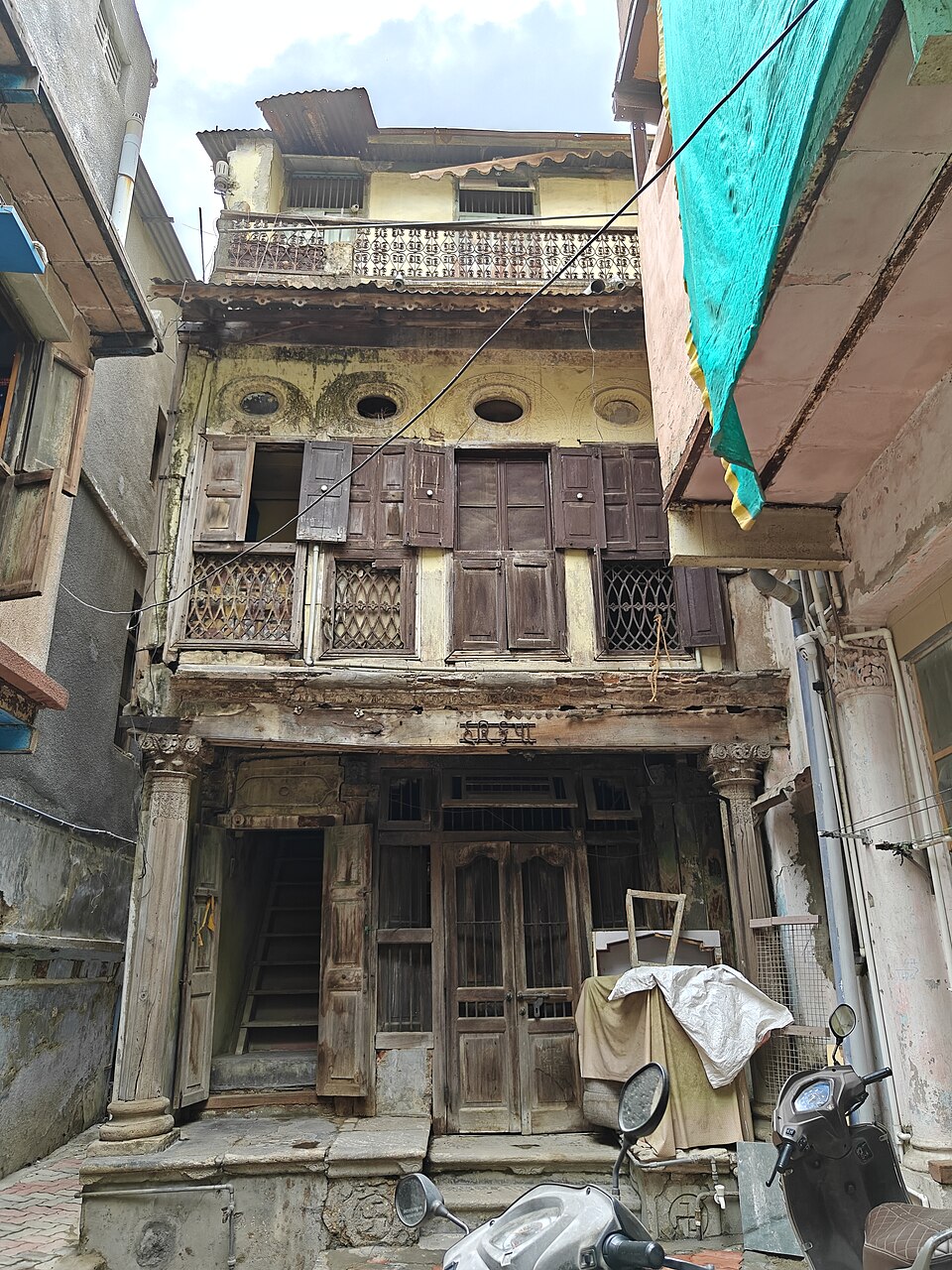
The UNESCO account of historic Ahmadabad includes its dense traditional neighbourhoods, timber domestic architecture and religious buildings. The city’s heritage is therefore not confined to a single palace or temple. Houses, streets and shared spaces contribute to the larger picture.
A pol is often described as a traditional residential cluster. That is a starting definition, not a promise that every lane has the same layout or community history. Ask a local guide which neighbourhood you are entering and what makes its organisation distinctive.
Look from the street inward
Begin with the threshold. Notice whether a house has a raised sitting edge, a deeply recessed entrance or carved wooden members. Then look upward at openings and projecting elements. Comparing two houses can reveal variation more clearly than trying to decode every motif on one elaborate facade.
Courtyards are important to understanding domestic space, but a courtyard is not automatically public. If a guided walk includes an interior, follow the owner’s conditions. A closed door is not an obstacle to a photograph; it is a boundary worth respecting.
Listen for ordinary uses
Ask how residents describe their shared spaces. Where do people pause to talk? How do deliveries move through a narrow lane? Which parts of the house are maintained, adapted or difficult to repair? These questions connect architectural appreciation with the demands of living in an old building.
Avoid assuming that a picturesque surface means a building is easy to conserve. A resident may need plumbing, privacy and reliable access just as much as a visitor values a carved balcony. Heritage discussions become more useful when those needs remain visible.
Photograph a neighbourhood considerately
Frame a doorway without requiring the person using it to become part of your picture. Ask before photographing identifiable residents, home interiors or private devotional spaces. Do not block entrances while arranging a group shot, and keep conversations quiet in the early morning.
After the walk, organise your notes around one street feature, one building detail and one question you could not answer. This produces a more honest account than claiming to have understood an entire city in an hour. Ahmedabad rewards returning to familiar streets with better attention each time.
Sources & further reading
UNESCO World Heritage Centre — site history and significance