The Seat of Unconditional Compassion
High among the ancient, weather-beaten granite crags of the Aravalli range in northern Gujarat sits Ambaji, one of the most venerated of the 51 Shakti Peethas. According to Puranic scripture, when Lord Vishnu severed the divine form of Mata Sati, her sacred heart (Hridaya) descended upon this high hill, making it the supreme terrestrial anchor of the universal Anahata Chakra.
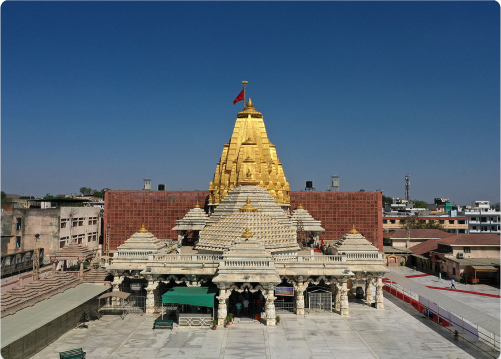
Ambaji Temple in Banaskantha, Gujarat—where the sacred heart of Mata Sati fell.
The Temple Without a Murti: The Mysterious Shree Viso Yantra
Perhaps the most extraordinary feature of Ambaji is that within its gold-domed sanctum sanctorum, there is no stone or metal idol of the Goddess. Devotees instead bow before the sacred Viso Yantra—a pristine geometric brass plate inscribed with ancient bija mantras, covered in silk finery and jewelry. Even the chief priests are required to tie a blindfold over their eyes while performing the sacred shringar and cleaning of the Yantra, preserving the formless, transcendental nature of the Divine Mother.
The Gabbar Hill: Perpetual Flame of the Aravallis
A few kilometers from the main temple complex stands Gabbar Hill, an ancient volcanic crag believed to be the exact spot where Sati’s heart struck the earth. Pilgrims climb 999 stone steps to reach the cave where a perpetual holy flame has burned without interruption for centuries. During Bhadrapad Purnima, over two million devotees walk hundreds of miles barefoot across Gujarat and Rajasthan on their annual Padyatra, chanting “Bol Mari Ambe, Jai Jai Ambe!”