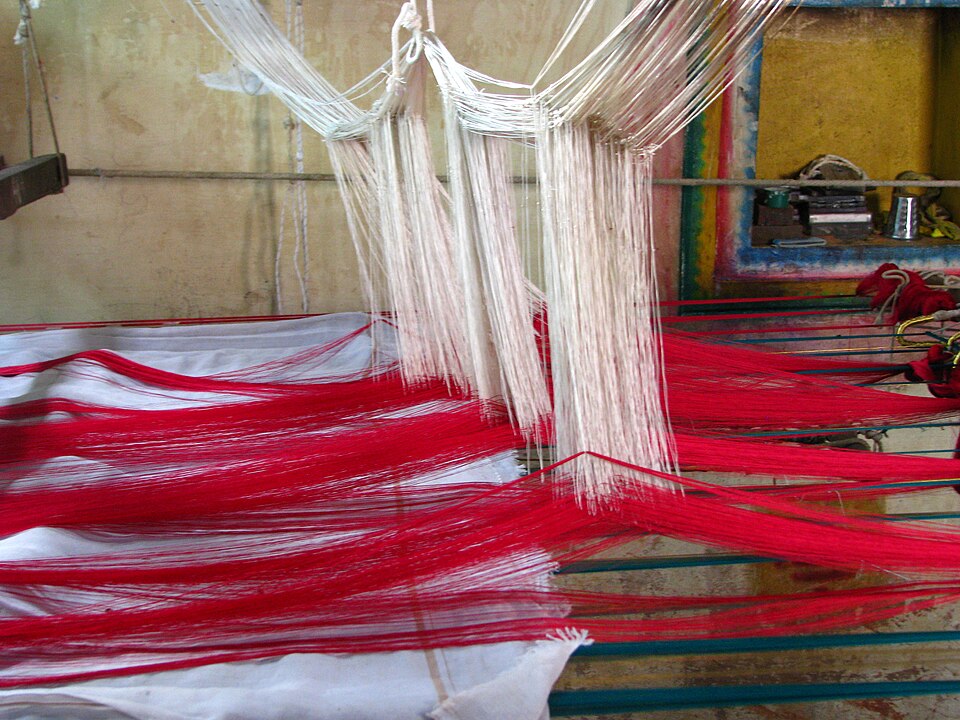
A Kanchipuram silk sari is usually first noticed through colour: the body, border and pallu can create a striking relationship. Choosing one thoughtfully means looking beyond that first impression. The fibre, weaving, metallic thread, provenance and intended use all matter, especially when several very different products are presented under a familiar place-name.
Begin with the particular sari
Kanchipuram in Tamil Nadu is associated with a distinguished silk-weaving tradition. That background is useful, but it does not answer every question about a cloth offered in a shop. Ask where it was woven and how the seller describes the material and technique.
Look at the body and border together, then examine the pallu. Which elements are woven into the cloth, and are there any later additions? A seller should be able to explain the specific product without relying only on broad claims about traditional quality.
Ask what the zari contains
The term zari can cover products with different material compositions. Do not infer precious-metal content from shine or colour. Ask for the description in writing when it affects the price, and retain the invoice with the sari.
Avoid destructive tests involving burning threads or applying chemicals. They can damage the purchase and may still fail to establish all the facts you want to know. Clear information from a credible source is more useful than a dramatic shop-floor demonstration.
Let the intended use guide the choice
Consider when the sari will be worn, how it will be draped and whether its weight and feel suit the wearer. An impressive border does not automatically make a garment comfortable for a long occasion. If possible, view the colour in more than one appropriate light.
Set a budget before comparing options. A buyer can appreciate demanding craftsmanship without being pressured into treating the highest price as the only respectful choice. The important comparison is between accurately described products that suit the person who will use them.
Keep a record for the future
Ask for material, weaving and care information, and note the producer or cooperative where provided. Different labels and certifications address different claims; a statement about fibre should not be assumed to prove every claim about geographic origin or hand weaving.
Follow the maker’s guidance for storage and cleaning, and keep the purchase details with the garment. Over time, a sari can gather family associations of its own. Beginning with a clear account of what it is and who made it gives those future memories a reliable foundation as well as a beautiful cloth.
Sources & further reading
Official cultural reference — background and further reading