Somnath stands on the Gujarat coast at Prabhas Patan, near Veraval. For devotees, it is one of the twelve Jyotirlingas associated with Shiva. For a visitor interested in history, it also raises an important question: how should a place with a long sacred reputation and a modern reconstructed temple be described without confusing the two?
Begin by separating the layers
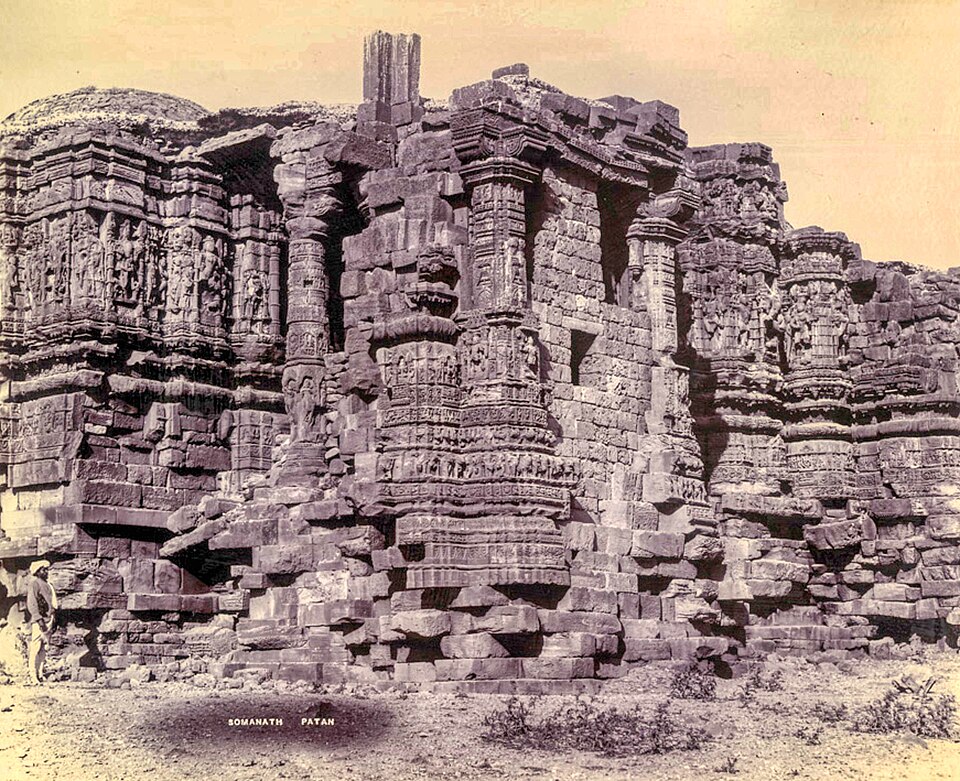
The site’s devotional narratives, accounts of earlier temples, episodes of destruction and the present building belong to connected but distinct layers. A photograph of today’s temple does not show an unchanged structure surviving from remote antiquity. Equally, the comparatively recent date of a building does not erase an older religious relationship with its location.
This distinction helps avoid dramatic but misleading summaries. Claims about the exact number of times a temple was destroyed or rebuilt often compress complicated events into a memorable slogan. A careful history identifies its sources and explains what is being counted. Visitors should be cautious with confident numbers that arrive without such context.
The meaning of the name
Devotional accounts connect Somnath with Soma, the Moon, and Shiva’s grace. These stories help explain the temple’s place in worship and why pilgrims approach it with particular expectations. They should be introduced as sacred narratives rather than presented as contemporary historical reporting.
The Jyotirlinga tradition places Somnath within a wider group of Shiva shrines. The temples in that group have different settings, buildings and local customs. Visiting one is not a lesser form of visiting all twelve; a thoughtful journey can centre on a single place and still be meaningful.
Give the setting some attention
The sea is a strong part of the experience. From permitted public areas, notice how the temple is encountered against the horizon and how the coastal setting differs from an inland or mountain shrine. Avoid reducing the visit to a photograph of the most familiar exterior view.
Prabhas Patan also has other places connected with local religious memory. If you plan to include them, use a current map and a realistic schedule. Do not assume that a label such as “nearby” means a place is comfortably walkable for every visitor. Heat, traffic and the needs of older family members can change what a short distance feels like.
Practical arrangements
Check the Somnath Trust’s current information before travelling. Darshan arrangements, photography restrictions, items permitted inside and accommodation procedures can change. An old blog post should not be the final authority for a booking or a security rule. Use official channels when a payment or reservation is involved.
Keep essential contact details available offline. If travelling in a group, agree on a meeting point before entering an area where phones or bags may be restricted. A little preparation avoids unnecessary anxiety and allows the visit to proceed at an easier pace.
How to read its history fairly
Historical conflict can be discussed without turning the actions of past rulers into accusations against present communities. Be specific about the event and the evidence. Religious memory and historical inquiry can sit alongside each other, provided one is not substituted for the other.
After the visit, consider recording three things separately: what you saw, what the temple’s tradition says, and what a historical source establishes. That habit gives a clearer account than a sequence of superlatives. Somnath’s significance is substantial enough to be presented with care rather than exaggeration.
Sources & further reading
somnath.org — reference and further reading. Interpretive reflections and practical reading suggestions in this article are the website’s own explanatory material. Check current official arrangements before travelling.