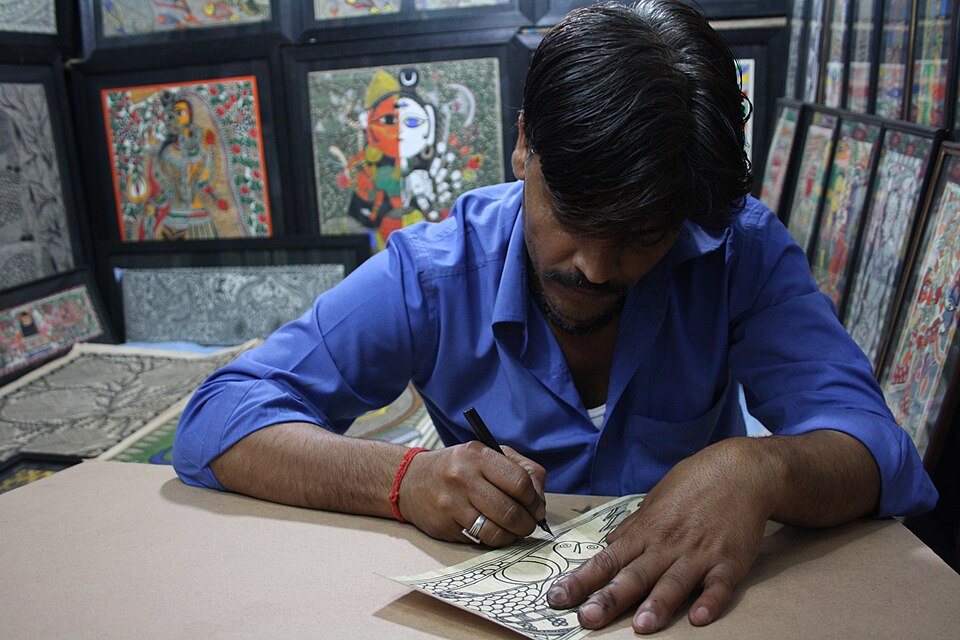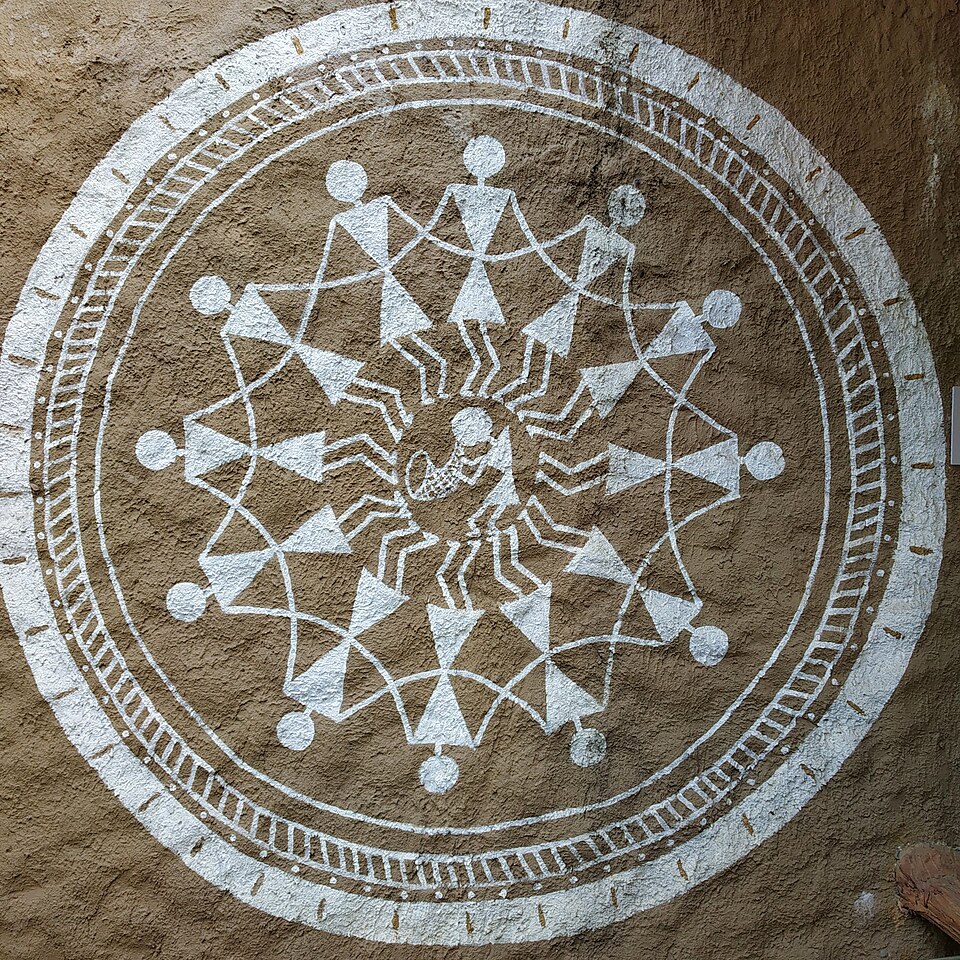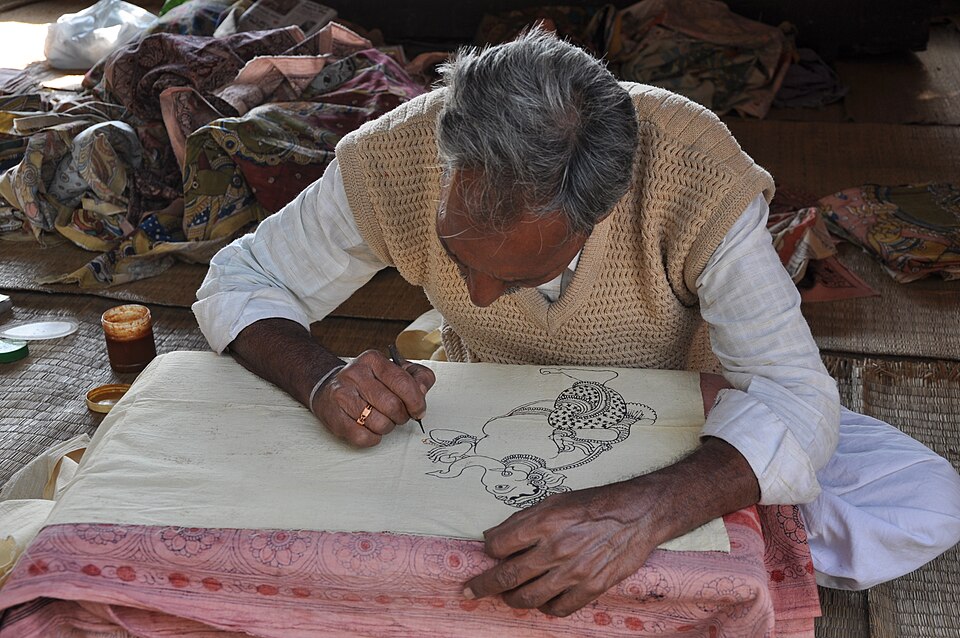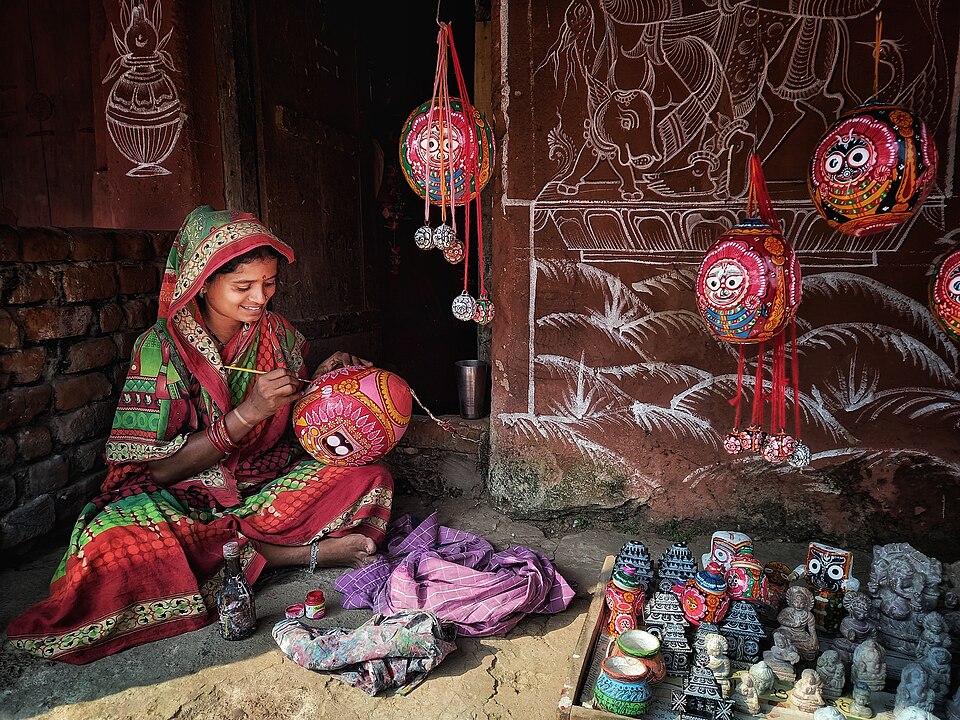
In an Odisha Pattachitra, a border can be as carefully organised as the central scene. The eye moves through outlines, repeated motifs and closely arranged figures, finding a visual order before it understands every narrative detail. A useful introduction begins with that movement through the painting rather than with a long list of symbols to memorise.
Keep the regional tradition clear
Odisha’s Pattachitra tradition is closely associated with artists known as chitrakars and with places such as Raghurajpur. Related names are used for other painting traditions elsewhere, so the region and maker should remain part of an artwork’s identification.
Ask about the support and process of the particular work in front of you. A painted cloth, a contemporary decorative object and an engraved palm-leaf work may be displayed together, but they should not be described as if their making were identical.
Follow the line
Choose a small section where a figure meets a background or border. Notice how the outline establishes a clear edge and how internal patterns fill the space. Then step back to see how that detail fits into the whole.
If several narrative moments appear, ask the artist how to follow them. The order may not match the left-to-right reading habit you bring from a page of text. Learning the intended route through a scene can transform a crowded image into a connected account.
Ask about the painting, not only the tradition
Which story is shown? Why did the artist choose this arrangement? Is the work based on a familiar composition or a new treatment? Specific questions make room for an individual artist’s decisions within an established visual language.
Avoid assuming that every pigment is natural or that every object in a craft village is made by the person selling it. A clear explanation of materials and authorship is more useful than a general claim of authenticity that cannot be traced.
Keep the maker’s name with the work
If you purchase a painting, ask for the artist’s name, title or subject, materials and care instructions. Keep those details with the receipt and any photograph. They will matter more over time than a vague memory of buying “traditional art.”
Ask before recording a demonstration or sharing close images of work that an artist sells. A workshop visit can be educational without turning the maker’s time into an unlimited free service. The strongest connection with Pattachitra comes from learning to see both the discipline of its visual language and the person making choices within it.
Sources & further reading
Official cultural reference — background and further reading