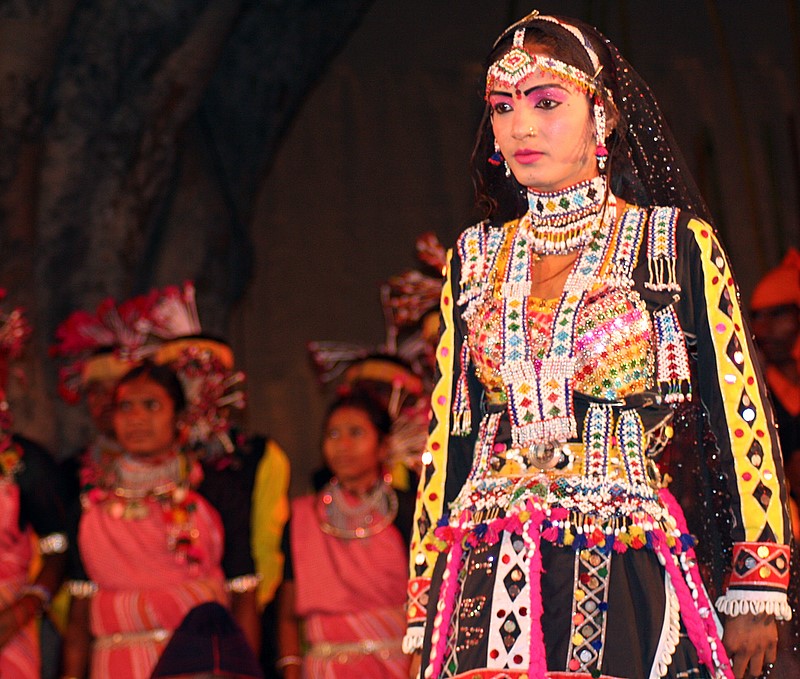
The swirling skirt has become a familiar image of Kalbelia dance. It is an effective photograph, but an incomplete introduction. Songs, musicians, individual performers and community identity remain essential to the art. Looking beyond the silhouette gives the audience more to enjoy and gives the artists more than the role of an anonymous colourful subject.
Keep the community in the name
Kalbelia songs and dances are associated with the Kalbelia community of Rajasthan. The name should not be used loosely for any Rajasthani performance involving a black skirt or rapid turns. Ask how the artists identify their tradition and record their names when available.
An introductory programme can explain the relationship between a particular song and dance. It may also clarify whether you are seeing a stage adaptation, a demonstration or a performance in another setting. Those distinctions help avoid exaggerated claims about what a short encounter represents.
Watch how movement meets music
Notice the moment a turn begins and how the performer returns from it. Where is the weight placed? How do the arms shape the movement? Then listen for the musical phrase around that transition. The detail can be more revealing than waiting for a faster sequence.
Do not treat apparent ease as evidence that the movement requires little training. A form can look spontaneous while depending on developed skill, familiarity with accompaniment and careful control of space.
Listen to the song as well as the rhythm
Ask for the subject of a song through an introduction or later conversation. A short explanation can change how you hear it. Avoid translating on the basis of a title alone, especially when a performance includes local language, humour or references unfamiliar to you.
Give musicians attention in your account. A dance photograph often excludes them, but their work is part of the experience. A complete credit should not stop at the performer nearest the camera.
Support artists with clear agreements
For a paid performance, lesson or photograph session, agree on the arrangement beforehand. Do not assume that an artist’s participation in a public event makes every request for additional entertainment or images free of charge.
When sharing permitted photographs, choose a caption that identifies a person or troupe rather than relying on a romantic stereotype. You can admire the energy and beauty of the performance while recognising the artists as contemporary professionals and community members with their own choices about how their work is presented.
Sources & further reading
UNESCO Intangible Cultural Heritage — tradition and community context