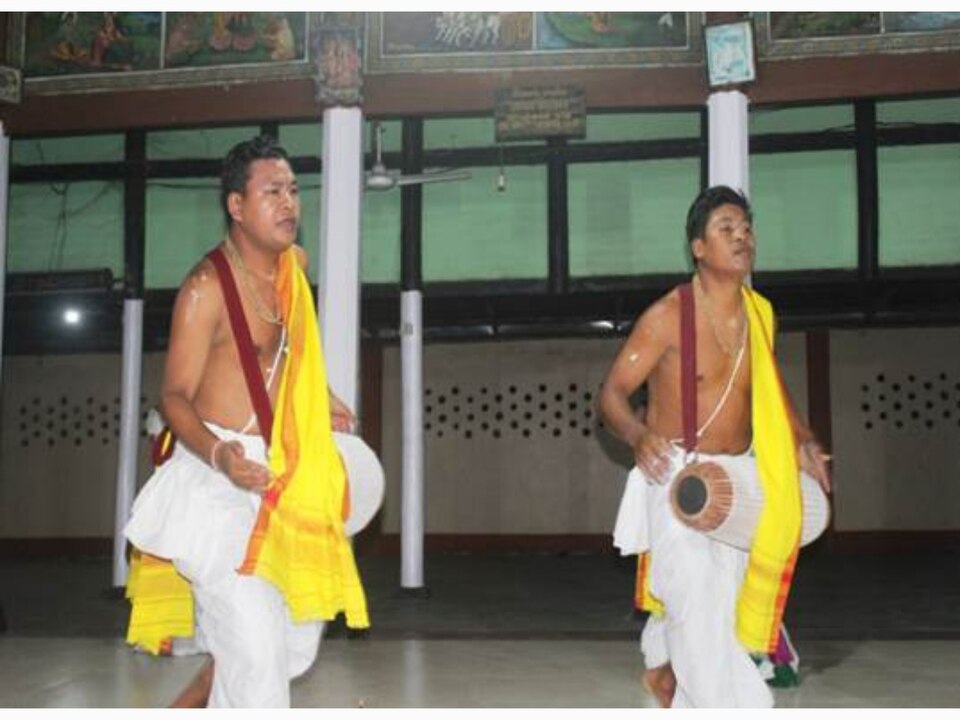
Sankirtana of Manipur brings singing, drumming and movement into a shared devotional occasion. Watching only the most athletic moment of a drum performance gives an incomplete impression. The relationship between performers, listeners and the occasion is just as important as the visible skill of an individual artist.
Begin with the community context
UNESCO describes Sankirtana in relation to the Vaishnava communities of the Manipur plains, including religious occasions and stages of life. Song and movement convey devotional narratives, particularly concerning Krishna. This context helps distinguish the practice from a concert assembled only for entertainment.
If you encounter a stage excerpt, find out what has been selected. A Pung Cholom presentation can introduce aspects of the drumming tradition without representing every component or setting of Sankirtana. Name the particular presentation when discussing it.
Listen for relationships
Attend to how a phrase begins, how others respond and how movement relates to rhythm. A listener does not need to count every beat correctly to notice coordination. Try following one layer of sound for a short time, then return to the ensemble.
If the words are unfamiliar, seek a reliable summary of their subject. Avoid inventing a translation from the mood of the music. A solemn sound does not by itself establish what a text says, just as an energetic passage does not remove its devotional meaning.
Let the occasion set your behaviour
In a community or religious setting, follow guidance on where to sit, when to move and whether recording is appropriate. The arrangement of listeners around performers can be part of the event’s character, so walking through a space to obtain a better angle may disrupt more than a view.
Ask questions during a suitable interval or a public discussion. A performer carrying an instrument or preparing for the next section may not be free to explain it at that moment.
Give credit beyond a short clip
Record the names of the artists and the context supplied by the organisers. Where permitted, a caption should distinguish an excerpt at a cultural festival from a life-cycle or temple occasion. That information changes how another viewer understands the recording.
Supporting training, attending a complete presentation and sharing accurate credits can be more helpful than repeatedly circulating a few seconds of striking movement. Sankirtana rewards attention to continuity: between voice and drum, between teacher and learner, and between an individual performance and the community life in which it has meaning.
Sources & further reading
UNESCO Intangible Cultural Heritage — tradition and community context
.jpg)