The first challenge of watching Kutiyattam may be learning to stop expecting a story to move at the speed of a film. A small gesture can receive sustained attention, and an expression may unfold through changes that are easy to miss while checking a phone. Giving the performance time is not merely polite; it changes what becomes visible.
Know the form you are watching
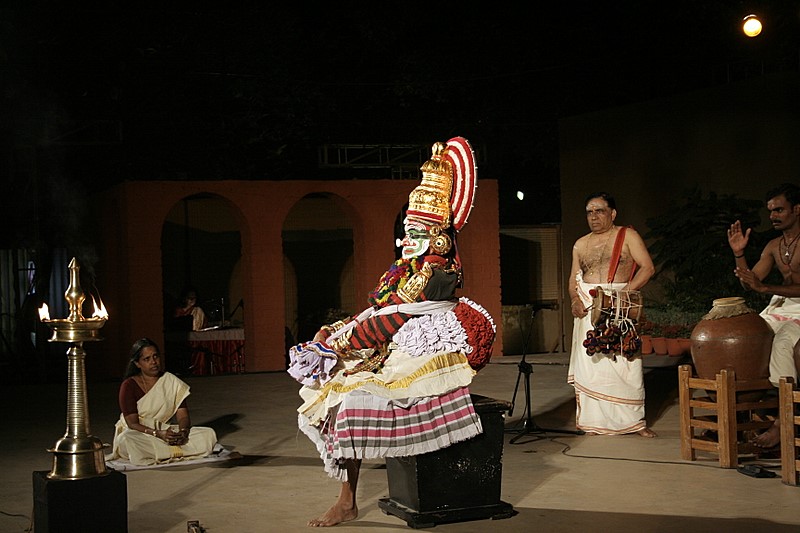
Kutiyattam is a Sanskrit theatre tradition associated with Kerala. It combines highly developed acting with a performance setting and musical accompaniment that require their own introduction. It should not be treated as another name for Kathakali simply because costumes and expressive faces are prominent in photographs of both.
Read the programme, if one is available, and identify the episode, performers and the nature of the presentation. A short demonstration and a longer traditional performance offer different experiences. Neither should be described as though it automatically contains the entirety of the form.
Follow one expressive channel
For a few minutes, attend only to the performer’s eyes. Then shift your attention to the hands or the changing posture of the body. This is an observation exercise, not a claim that each part works separately in the art itself.
You may begin to notice transitions that disappear when your attention is divided. If the meaning of a gesture is unclear, keep a brief note for later rather than whispering through the performance. Not understanding everything immediately is a normal starting point.
Listen to the relationship with sound
Music and percussion are not simply background added to a visual display. Notice when a movement and a sound meet, and when a pause becomes significant. A knowledgeable introduction can explain the instruments and their roles more precisely.
Avoid evaluating the performance only by the amount of visible activity. Stillness, repetition and a gradual development of expression can require intense control. The question is how attention is shaped, not how many dramatic movements occur per minute.
Support the work beyond the spectacle
Where photography or recording is allowed, follow the organiser’s conditions and do not use flash. A performer’s preparation, training and concentration deserve more than an uncredited clip circulated as an exotic sight.
Record the artist’s name and the title of the presentation when sharing a permitted image. If a discussion follows, ask about one moment you genuinely noticed. A specific question about a gesture or transition gives a teacher something to explain. It also turns a first encounter into the beginning of learning rather than a verdict delivered before the form has had time to speak.
Sources & further reading
UNESCO Intangible Cultural Heritage — tradition and community context