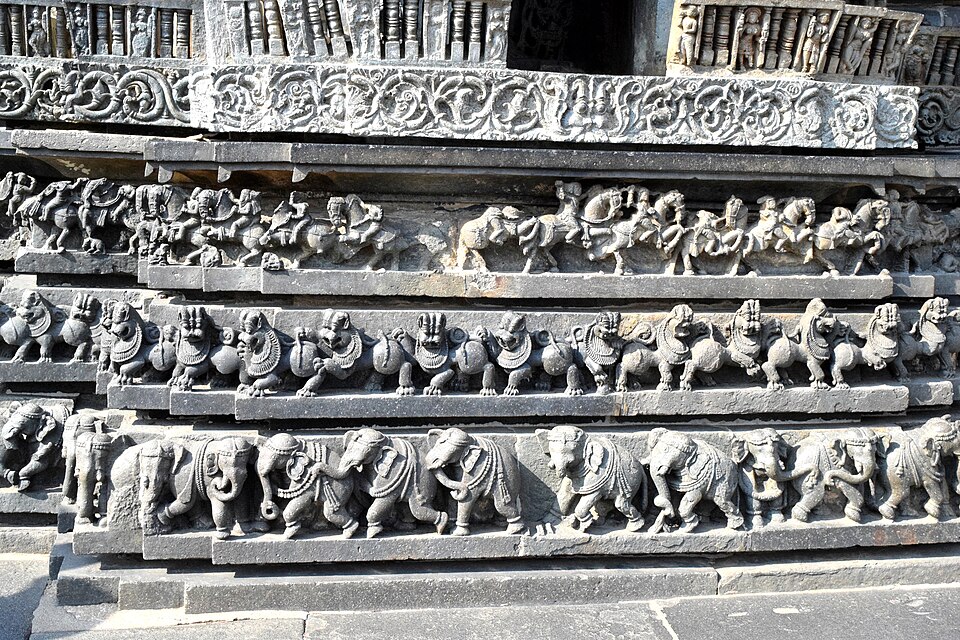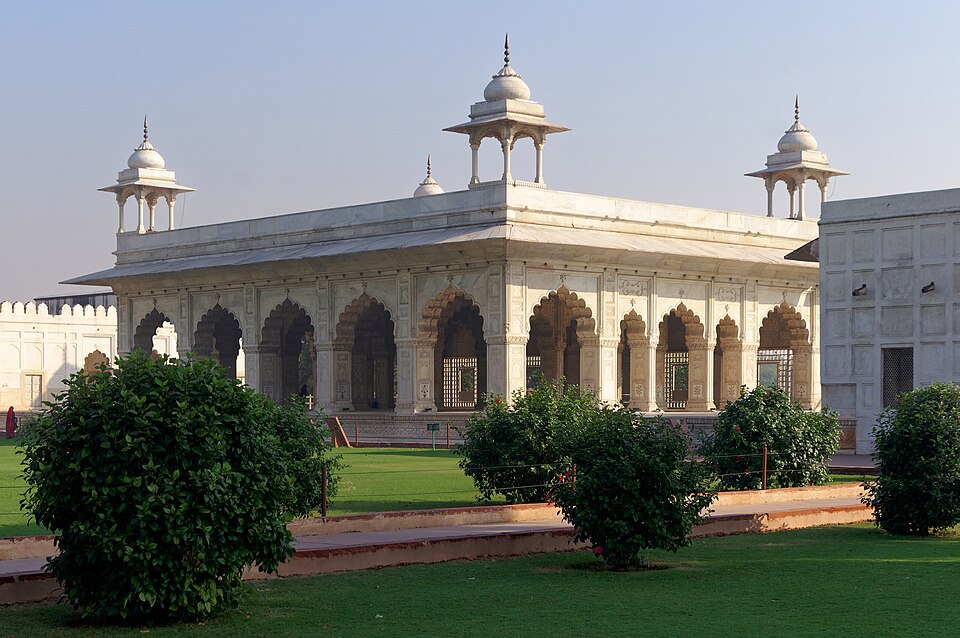
Delhi’s Red Fort carries several histories at once: a Mughal palace complex, a place changed by later powers, and a setting in modern national memory. No single photograph can contain all of them. The visit becomes clearer when these layers are recognised separately and then connected through the spaces that remain.
Begin with the palace inside the fort
The complex was built as part of Shah Jahan’s new capital. Its defensive boundary enclosed spaces concerned with residence, administration and ceremony. Looking only at the external walls gives an incomplete idea of the design.
Use a plan to understand where the accessible pavilions sit in relation to one another. Gaps in the present arrangement may matter as much as standing buildings. A surviving structure does not always show how densely the area around it was once occupied.
Follow the idea of water
UNESCO’s account draws attention to the water channel connecting principal private pavilions. Even where water is not flowing as it once did, the arrangement can help explain a relationship between architecture, comfort and the experience of courtly space.
Ask where a channel enters, crosses or leaves a room. Trace only the publicly accessible features. A diagram can help reconstruct the intended sequence more responsibly than an imaginative claim that every visible groove had the same purpose.
Look for signs of change
Conquest, occupation and later use altered the complex. The current monument is not a perfectly preserved stage set from one reign. Reading about those transformations prevents a visitor from interpreting every empty area as part of the original design.
If you enter a museum or exhibition, note the date and nature of the material on display. A painting, a later photograph and an archaeological plan can each explain something different. None should automatically be treated as a direct image of the same moment.
Separate ceremony from everyday access
The fort’s role in national ceremonies is distinct from ordinary visitor arrangements. Check current official guidance for closures, routes and security. Historic or ceremonial importance does not mean that every area is always open.
At the end, connect one architectural detail with one documented later change. The resulting account will have more depth than either a purely imperial story or a purely modern one. The Red Fort matters partly because its meaning has changed while its remaining fabric continues to shape how those meanings are encountered.
Sources & further reading
UNESCO World Heritage Centre — site history and significance