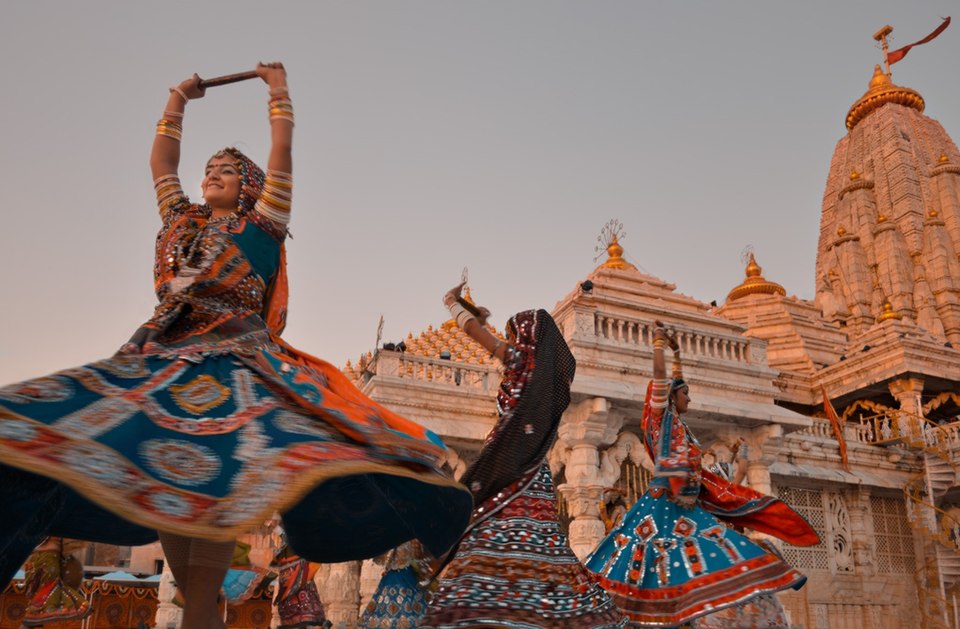
At a Garba gathering, the circle can seem to know what it is doing before a newcomer has worked out the first step. The best way to begin is not to rush into the fastest movement. Watch, listen and notice how the people around you leave space for one another. Participation becomes easier when the rhythm is treated as something shared.
Understand the setting
Garba is closely associated with Gujarat and Goddess devotion, especially during Navratri. A central lamp or sacred focus may form part of the gathering. The precise arrangement varies between a neighbourhood event, a temple celebration and a large organised venue. Ask what kind of event you are joining rather than assuming all gatherings follow the same programme.
UNESCO’s 2023 decision concerning Garba of Gujarat recognises its place as intangible cultural heritage. Such recognition concerns a living practice and its communities, not a requirement that every performance look identical. Local variation is part of what makes learning from participants valuable.
Watch one complete pattern
Before entering, observe a small group through several repetitions. Notice where the feet return, when the hands clap and how the line advances. You do not need to understand the entire evening’s choreography. One manageable pattern is enough for a beginning.
If someone offers help, ask them to demonstrate slowly at the edge of the dancing area. Avoid stopping in a moving line for a long explanation. When joining, keep your steps small until you understand the available space. The goal is to move with the group, not to prove how quickly you can learn.
Garba and dandiya are not interchangeable labels
Some events include both circular dance and sequences using sticks. Do not assume that carrying sticks is appropriate for every part of the programme. Follow the organisers’ instructions and the form currently being danced.
Where sticks are used, attention to distance matters. Practise gently and avoid large swings near someone who is still learning. A festive atmosphere works best when the participants remain aware of other people’s comfort.
Dress for movement and the venue
Traditional clothing can be part of the pleasure of the event, but choose something you can move in comfortably. Secure loose accessories and consider how a bag or long scarf might affect people nearby. Check the venue’s footwear and entry arrangements in advance.
There is no need to spend beyond your means to participate. Clean, suitable clothing and a respectful attitude matter more than copying an expensive outfit. If the event has a specific dress expectation, the organiser should explain it clearly.
Give the songs some attention
Even without understanding every word, you can ask about the meaning of a frequently repeated line. Learning the name of a song or the devotional subject adds another layer to the experience. Do not treat the music merely as background for making a video.
Ask before recording individuals, particularly children. Keep filming away from moving routes and respect anyone who declines. A brief memory of the evening is not more important than someone else’s ability to participate comfortably.
Help the circle remain welcoming
Make room for beginners, step aside when tired and avoid mocking a missed beat. If you know the pattern, a quiet demonstration can be more helpful than a shouted correction. Organisers can support newcomers by explaining the programme and leaving an easy place to watch before joining.
The most memorable part of a first Garba evening may be the moment when the pattern begins to feel shared. That experience comes through attention and courtesy as much as through technique. You can leave with one rhythm learned well and still have participated meaningfully.
Sources & further reading
ich.unesco.org — reference and further reading. Interpretive reflections and practical reading suggestions in this article are the website’s own explanatory material. Check current official arrangements before travelling.