Chakra diagrams are now familiar on posters and wellness products. Their apparent simplicity can be misleading. Traditions have used different arrangements of subtle centres, and a modern seven-colour chart is not a universal diagram found unchanged throughout Indian history. Understanding a particular image begins with asking where it came from.
Look at the diagram as a document
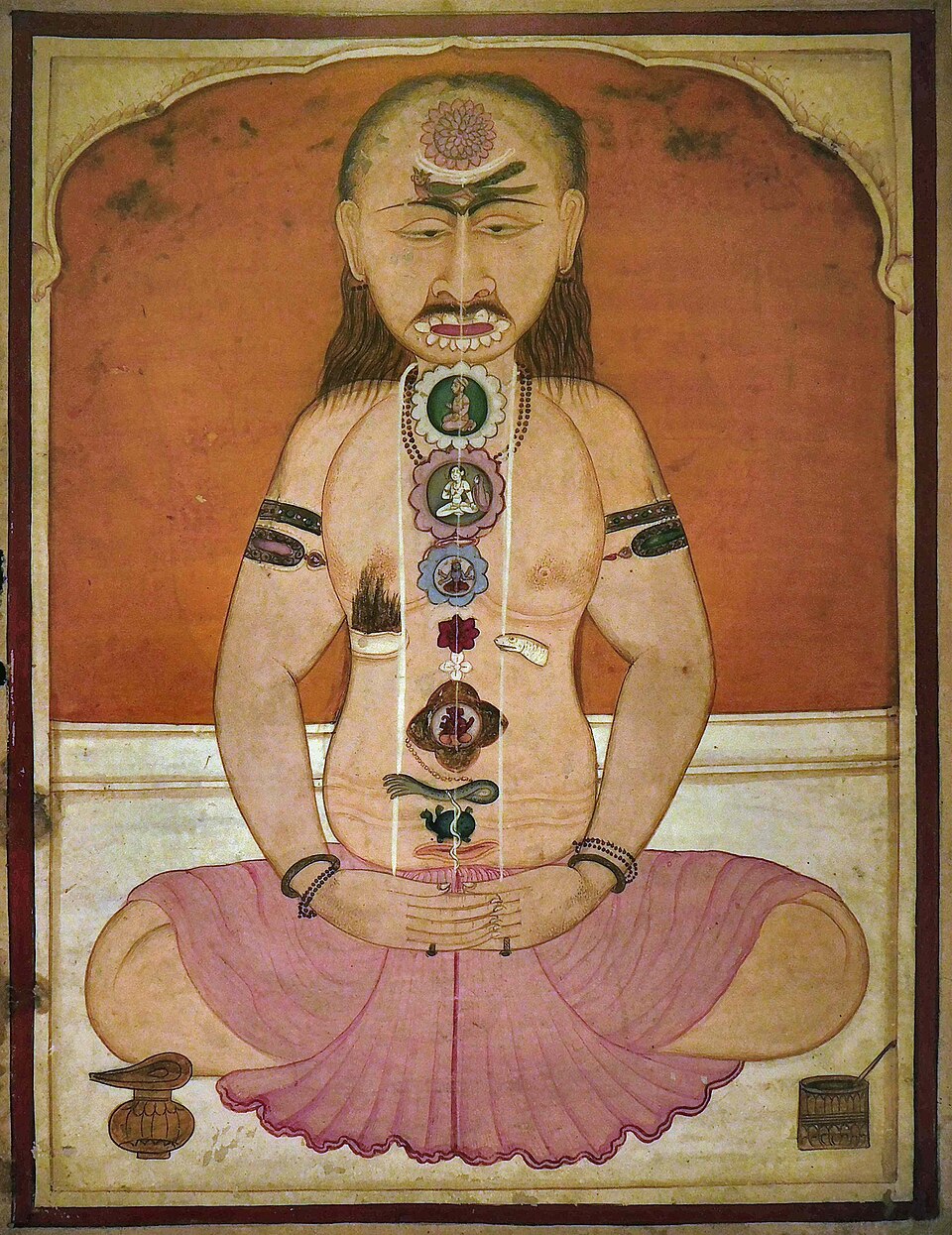
Lotuses, petals, letters, geometrical forms and deities can appear together in a chakra representation. They organise a contemplative and ritual vocabulary. A lotus with a certain number of petals is not a medical illustration of a hidden physical organ, even when its position is related symbolically to a part of the body.
Record what is actually visible before supplying an interpretation. How many centres are shown? Are they labelled? Is a channel drawn between them? A museum description or the text accompanying the image may explain details that a generic internet chart would obscure.
Six centres and the crown
The Shat-chakra-nirupana is a well-known account of six centres, with discussion of the thousand-petalled lotus above them. The previous page incorrectly called it a sixth-century work; that unsupported dating has been removed. Its terminology should be studied with a reliable edition and commentary, not reconstructed from a colour-coded commercial poster.
Names often encountered include muladhara, svadhisthana, manipura, anahata, vishuddha and ajna. Sahasrara is commonly included in modern seven-centre presentations. Naming them does not settle the differences among texts, lineages or modern interpretations.
What the image does not establish
A chakra chart cannot diagnose the cause of anxiety, infertility, digestive symptoms or pain. Statements that a blocked centre directly causes a particular illness require evidence beyond symbolic correspondences. Nor does assigning colours to endocrine glands demonstrate that traditional subtle anatomy and modern anatomy are identical.
The earlier article presented several such associations too confidently. The revised page treats chakra language as a subject of religious and historical interpretation. If symptoms are affecting daily life, they deserve suitable medical attention rather than an online energy diagnosis.
A better question for further study
Instead of asking which single chart is correct for everyone, ask what this chart means within its own tradition. Compare its caption, source text and intended use. Note whether the author is describing a historical system or offering a modern adaptation. That habit makes the subject richer and helps a reader recognise when a health claim has been added to an image that originally served a different purpose.