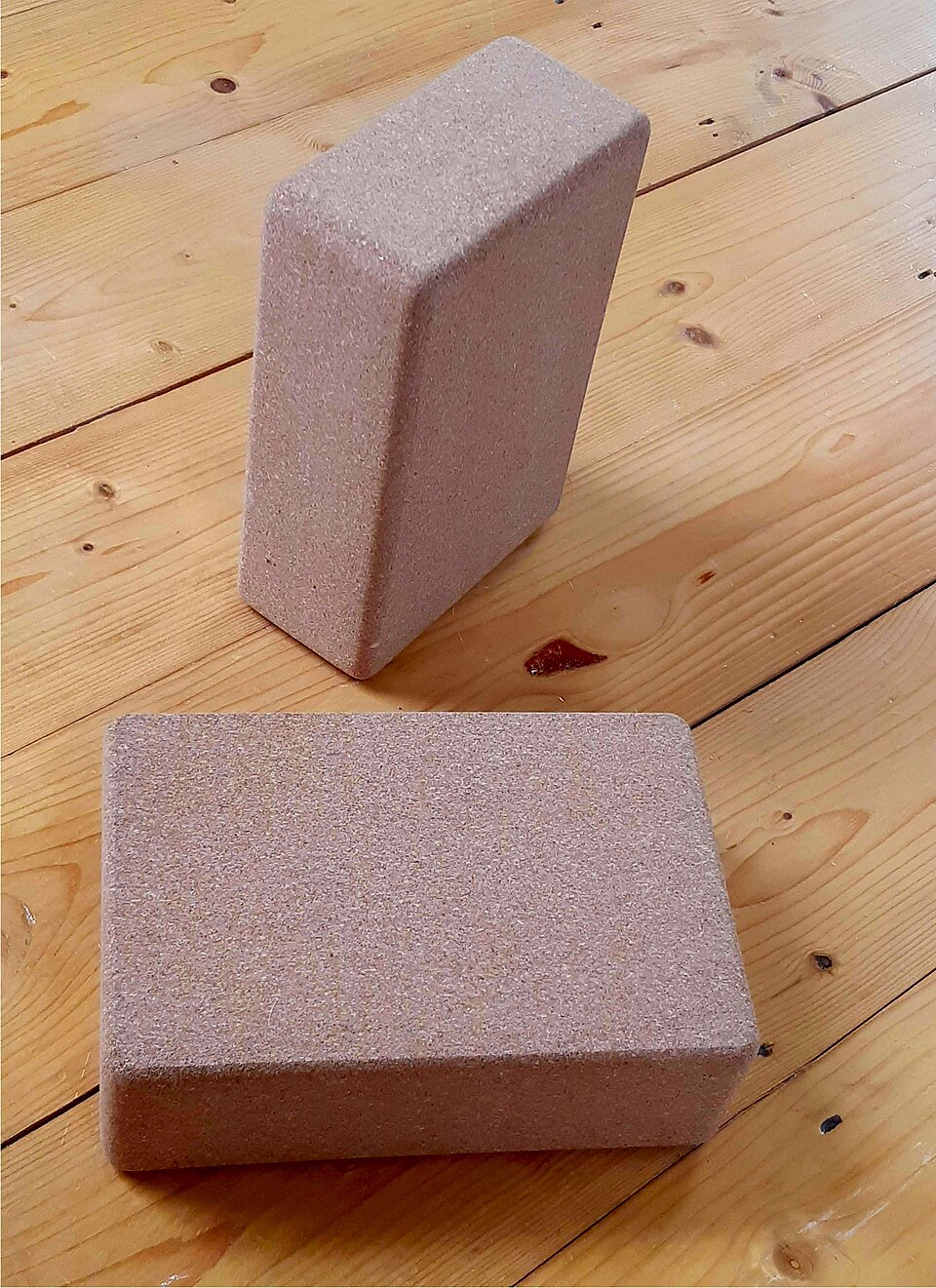
A block, strap, folded blanket or chair can look like an optional accessory in a yoga photograph. In a class, the more useful question is what the object is helping a person do. A prop may change reach, support or the demands of a position; it is not a sign that someone has failed to perform the real practice.
Ask about the purpose first
When a teacher offers a block, ask what it changes. Does it bring a surface closer? Does it provide support? The explanation matters more than copying the exact arrangement used by the person beside you. Different bodies and different purposes can require different choices.
A prop should not be used simply to force a position deeper. If the goal is unclear, pause and ask. A photograph of an impressive arrangement rarely shows how it was selected, what instruction preceded it or whether it is appropriate for someone else.
Equipment must suit the task
A chair used for support needs to be stable and appropriate for the setting. A household object that looks similar to studio equipment may behave differently. Ask the teacher before improvising, particularly when balance or body weight is involved. Do not copy an advanced supported position from a still image.
The same caution applies to straps: they are tools for instruction, not devices for pulling a joint past a comfortable range. Individual modifications should be taught by someone able to observe and respond to you, with clinical input where a medical condition requires it.
Remove the hierarchy
Classes sometimes develop an unspoken ladder in which doing something without support is treated as automatically superior. That can distract from the actual purpose of the session. A person may use a prop consistently, temporarily or not at all; the choice is not a public measure of discipline.
If you are choosing a class, ask whether support and alternatives are routinely available. A teacher who plans for them makes it easier for participants to make choices without feeling singled out. This is especially useful in a mixed group with different experience levels.
Make a small learning record
After class, note the prop, the purpose explained and any question you still have. Avoid turning the note into an unsupervised instruction sheet for an unfamiliar position. Bring the question to the next session.
Learning how a support changes an activity is more useful than collecting equipment. It also shifts attention from how a pose looks to how clearly it is taught and how appropriately it is adapted.