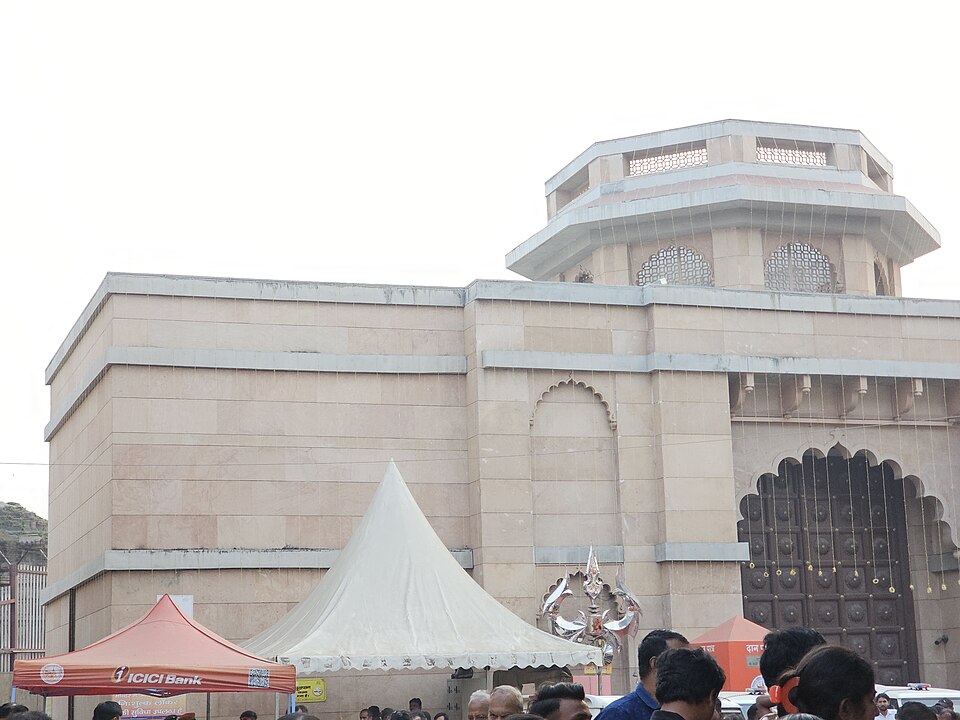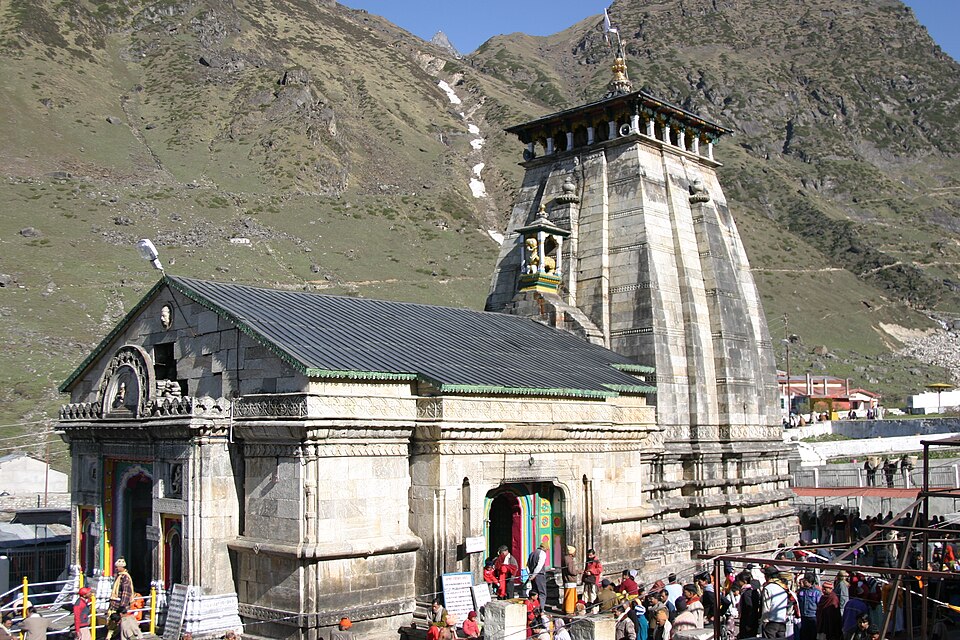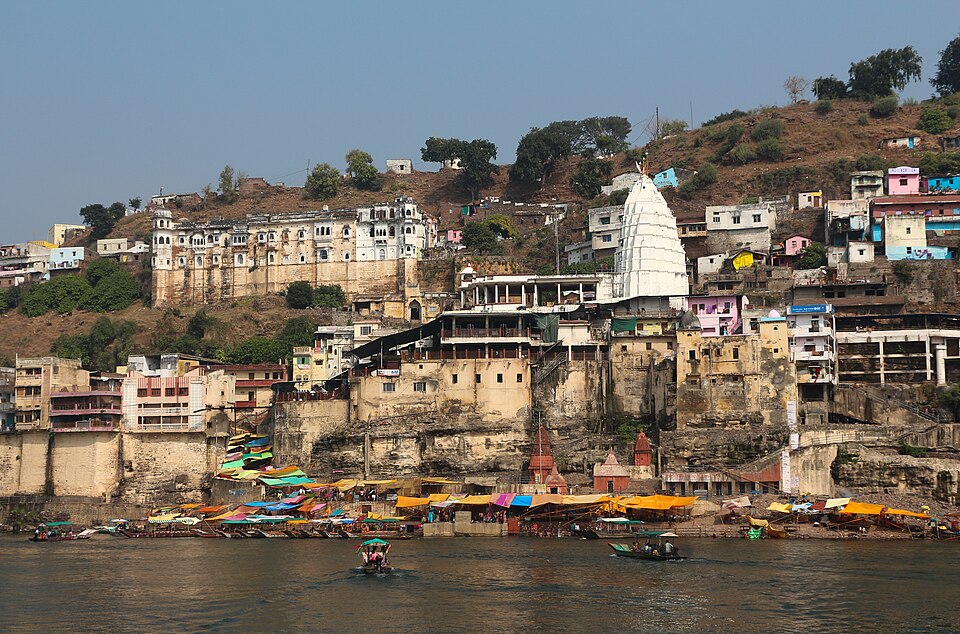
Omkareshwar is a major Shiva pilgrimage destination on the Narmada in Madhya Pradesh. Understanding the visit begins with two names: Omkareshwar on the island and Mamleshwar on the mainland. They belong to the same pilgrimage setting but are distinct temple complexes.
The island and the sacred syllable
Madhya Pradesh Tourism relates the course of the river to the form of the sacred syllable ॐ. This is a traditional visual association. It should not be exaggerated into a claim that a survey proves the island traces an exact piece of Devanagari calligraphy.
The association helps explain the place’s devotional meaning. A map serves a different purpose: it helps identify the island, crossings and destinations. Neither replaces the other.
Include Mamleshwar in the account
The state tourism account describes Mamleshwar separately and notes inscriptions and historical patronage. That is a useful reminder that the region’s religious narrative and its surviving architectural evidence are different kinds of history.
When reading an itinerary, check which temple each photograph and instruction concerns. An image of the island’s riverside buildings may not show Mamleshwar. Likewise, worship arrangements at one shrine should not automatically be assumed to apply at the other.
Shankara traditions and evidence
Omkareshwar is also associated with traditions about Shankara. Such accounts belong to the history of religious memory and biography. A reported conversation, the composition of a hymn and the identification of a particular cave each require their own source. This introduction does not present a dramatic dialogue as a witnessed historical event.
Two different kinds of circumambulation
A walk around the island and the much longer Narmada parikrama are not the same undertaking. Do not infer the duration, distance or obligations of the river pilgrimage from a short local walking route. Practices and individual arrangements can differ.
Making a workable visit
Confirm the current crossing options, temple access and return transport locally. Leave enough time to visit the two shrines without rushing. A riverfront photograph cannot establish present water conditions, and an old article’s evening ceremony time should not be treated as a current booking.