Kedarnath belongs both to the twelve Jyotirlinga traditions and to the Panch Kedar group in Uttarakhand. Those associations help explain its religious importance, but they do not make a Himalayan journey simple. A useful introduction keeps the sacred narrative, the physical landscape and current travel arrangements distinct.
Five places connected by a narrative
Kedarnath, Tungnath, Rudranath, Madhyamaheshwar and Kalpeshwar form the familiar Panch Kedar group. In local devotional accounts, the Pandavas seek Shiva after the war, and Shiva takes a bull's form. Different parts of that form are associated with the five shrines. Uttarakhand Tourism describes this narrative in its account of Madhyamaheshwar.
These associations connect the places without making them one compact walking circuit. Each has its own approach and local setting. Do not assume that a successful visit to one establishes the time, preparation or access needed for all the others.
Read the building without inventing engineering
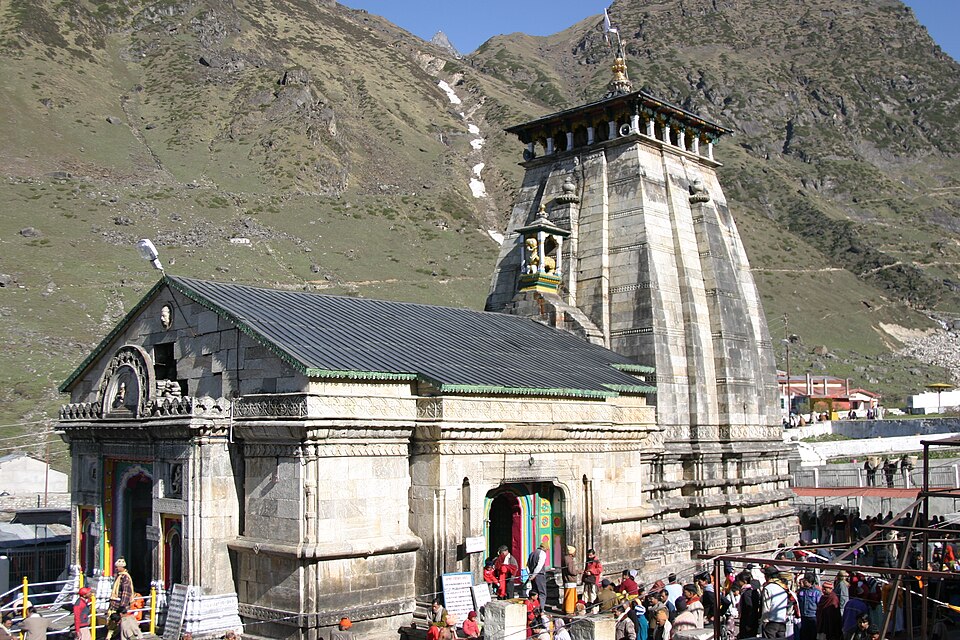
Kedarnath's stone exterior and mountain setting are striking. A photograph can show visible masonry, doors and surrounding terrain, but it cannot establish hidden joints, material properties or resistance to earthquakes. Claims about how an old building survived a disaster require engineering and conservation evidence.
Record what you can see and distinguish it from a guide's explanation. Traditions connecting the shrine with Shankaracharya belong in a discussion of sacred history; they should not automatically be treated as a precise date for every surviving part of the structure.
Altitude symptoms are not spiritual progress
At high elevation, headache, nausea, dizziness or unusual tiredness can indicate altitude illness. Do not explain them as purification or a necessary stage of devotion. CDC guidance advises against further ascent when symptoms appear; worsening symptoms call for descent, and severe symptoms require urgent medical help.
Plan gradual acclimatisation and discuss relevant medical conditions with a clinician before travel. Physical fitness alone does not establish that an individual will be unaffected. A cultural article cannot assess your suitability for a particular route or provide a personal treatment plan.
Check the journey that is actually available
Routes, weather, registration and shrine access can change. Use the official temple committee and state authorities for current arrangements, including the seasonal move of worship to Ukhimath. An old article's opening date or walking distance should not be used as a live travel instruction.
Build flexibility into the plan and allow someone in the group to turn back without embarrassment. A considerate pilgrimage includes attention to companions, porters, local residents and the mountain environment. The meaning of the journey does not depend on completing it at the expense of health or sound judgement.