
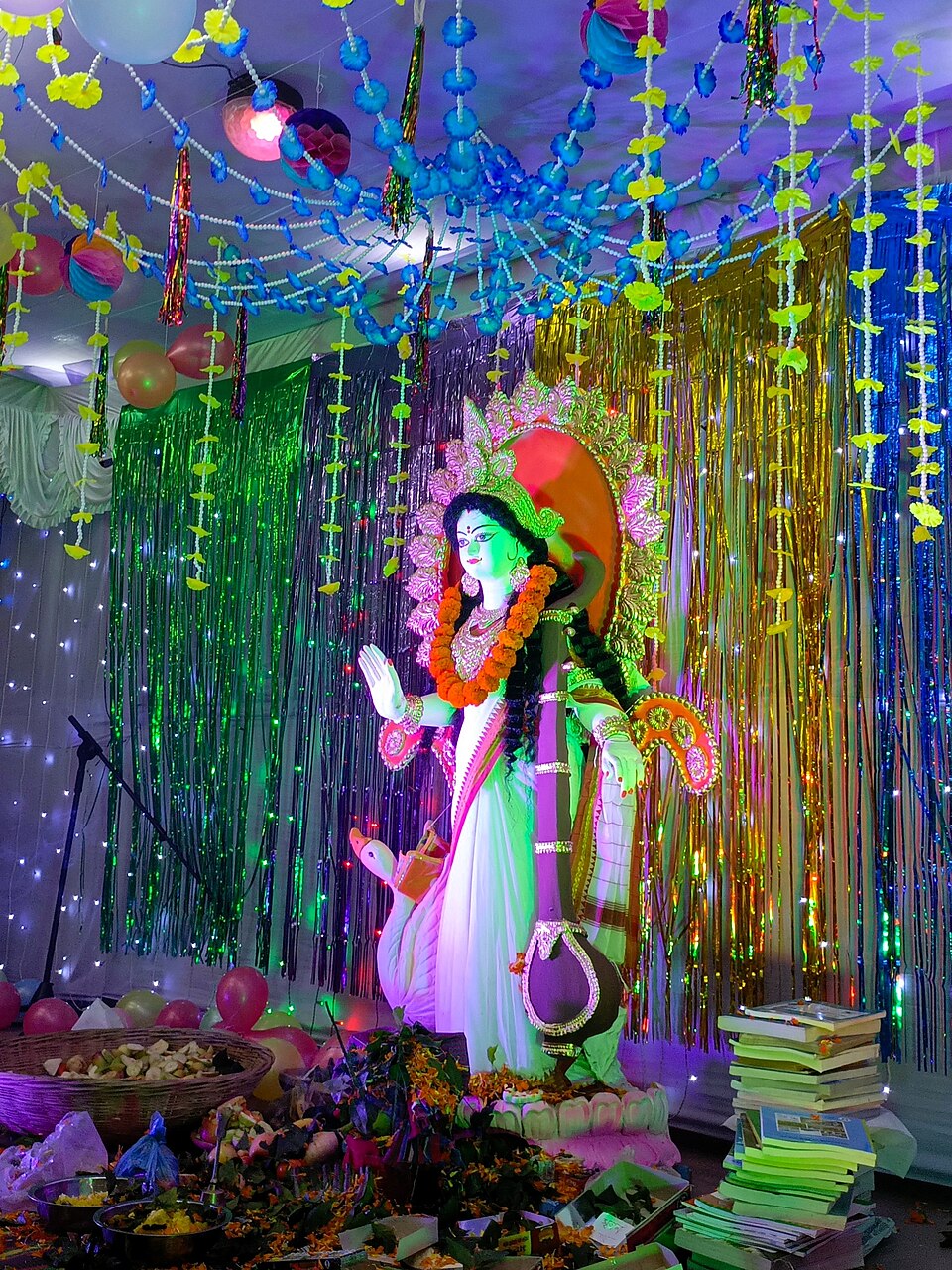
A Saraswati image often brings together a veena, a book and a bird associated with the Goddess. Looking at these details can open a conversation about music, learning and discernment. It also teaches an important habit: describe the particular image before assuming that every representation follows an identical formula.
The veena and cultivated skill
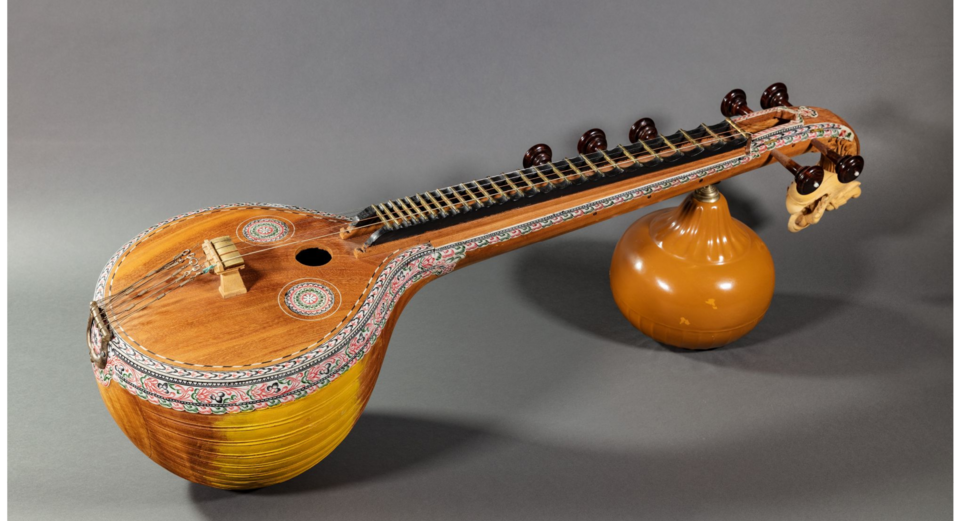
The veena connects Saraswati with music. Its presence can invite reflection on the relationship between knowledge and practice. An instrument has possibilities, but a musician develops the ability to bring them into sound through attention and training.
In a painting, notice how the instrument is held and how the artist arranges the hands. A devotional composition may emphasise grace or symbolism rather than providing a technical lesson in playing. It should not be used as an instrument manual.
The book and the work of learning
A book points towards knowledge and its transmission. Depending on the artwork, it may be clearly visible, partly hidden or replaced by another attribute. Read a museum or collection description when identifying an unfamiliar object.
The image can prompt an everyday question: how do we treat the knowledge we receive? Care for books matters, but so do accurate quotation, honest attribution and the willingness to learn something difficult rather than only collecting information.
The hamsa in interpretation
The bird called hamsa is commonly rendered as a swan or goose in English descriptions. Devotional explanations often connect it with discernment. Such symbolism belongs to an interpretive tradition; it should not be presented as a biological claim about what a real bird can separate or detect.
Artists may depict the bird differently. Compare the artwork's title, date and cultural setting instead of correcting its appearance to match one modern poster.
Let the artwork remain an artwork
A historical print, a temple sculpture and a contemporary festival image serve different purposes. Record the artist or collection when known, and do not describe a later image as a photograph of an ancient event.
Looking slowly makes the familiar Goddess image newly interesting. The viewer can appreciate its devotional meaning while noticing the choices of the artist: colour, balance, gesture and the relationship between learning represented in a book and learning expressed through music.



.png)