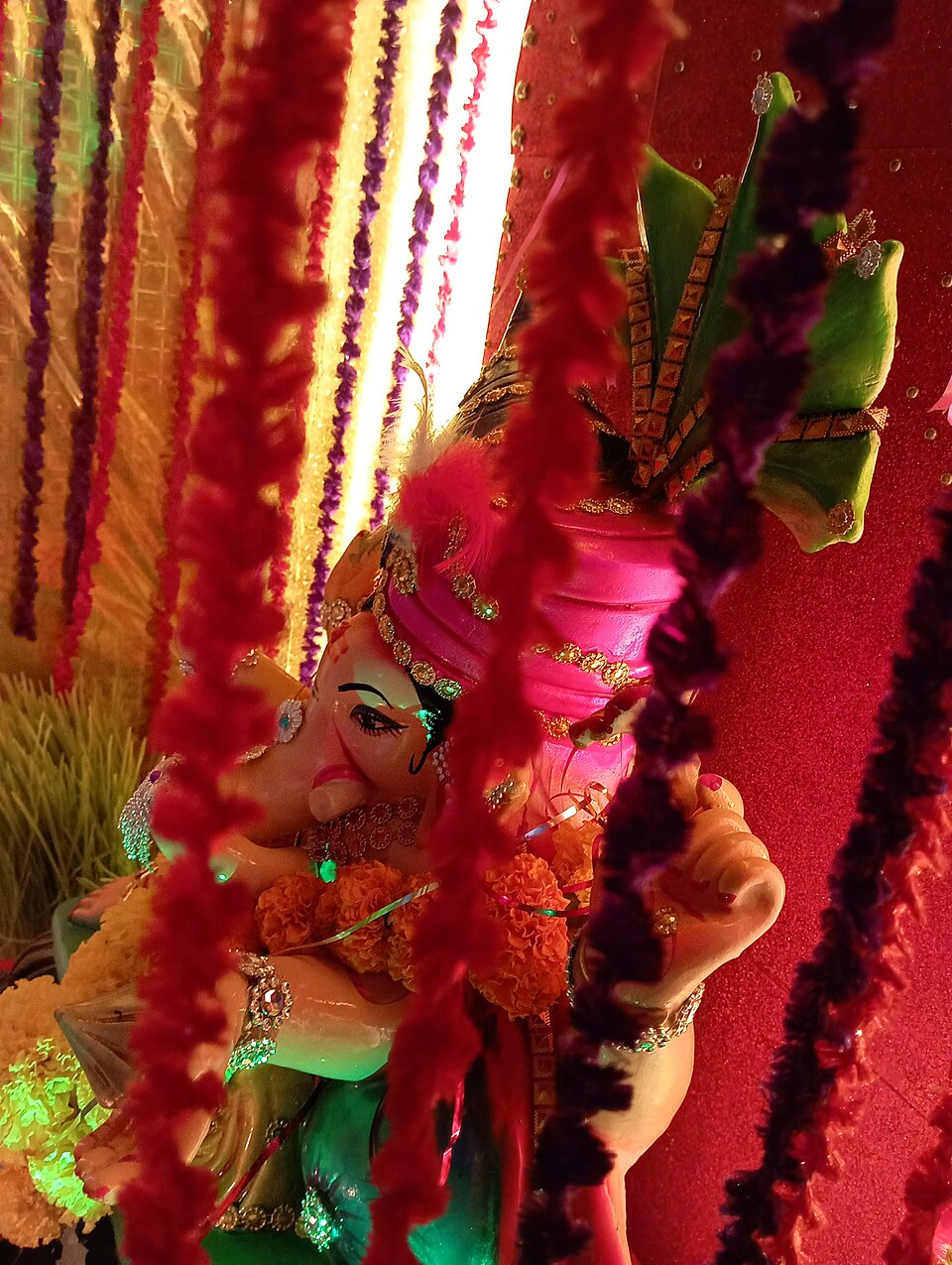
Ganesh Chaturthi is shaped by arrival, daily attention and farewell. An image is welcomed into a home or public setting, worship is offered and the observance later moves toward immersion. Following that sequence reveals the work and relationships behind the most widely photographed moments.
Before the image arrives
Makers, decorators and households prepare well before the public celebration. Ask who made the image, what materials were used and how the setting was arranged. These are cultural questions as well as practical ones: the festival supports skills that disappear from view if attention begins only when the crowd gathers.
A photograph of an image should include a useful caption rather than unverified claims about its age or fame. If the maker wishes to be credited, record the name accurately. Do not assume that every image follows the same regional style.
Daily worship and hospitality
Aarti, offerings and visits can give the days their rhythm. Modak is a familiar offering, but recipes and household customs differ. In Goa, for example, the decorated matoli canopy is a distinctive feature described in official festival accounts.
These local details make a richer article than a universal checklist. Ask hosts how long their observance lasts and what visitors should know. Some households conclude earlier than the large public celebrations associated with Anant Chaturdashi.
A public space requires shared work
Public mandals organise decoration, queues, performances and many practical services. Visitors can help by respecting routes, keeping access clear and following photography requests. A crowded setting is not the place to stop unexpectedly for an elaborate portrait.
When discussing a public image, distinguish its devotional role from the temporary architecture around it. Both may involve skilled making, but they are different subjects. Record what can be verified instead of repeating an unattributed claim that an installation is the largest or oldest.
Plan the farewell from the beginning
Ask local organisers about the permitted immersion arrangements and appropriate materials before purchasing an image. Current rules and facilities differ by place. A general festival article cannot replace that local information.
The departure can be understood as part of the relationship established by the welcome, rather than an afterthought once the photographs are taken. Cleaning the shared space and disposing of other materials responsibly are also part of the work. A careful account keeps arrival, hospitality and farewell connected, making room for devotion without overlooking the people and places that sustain it.



