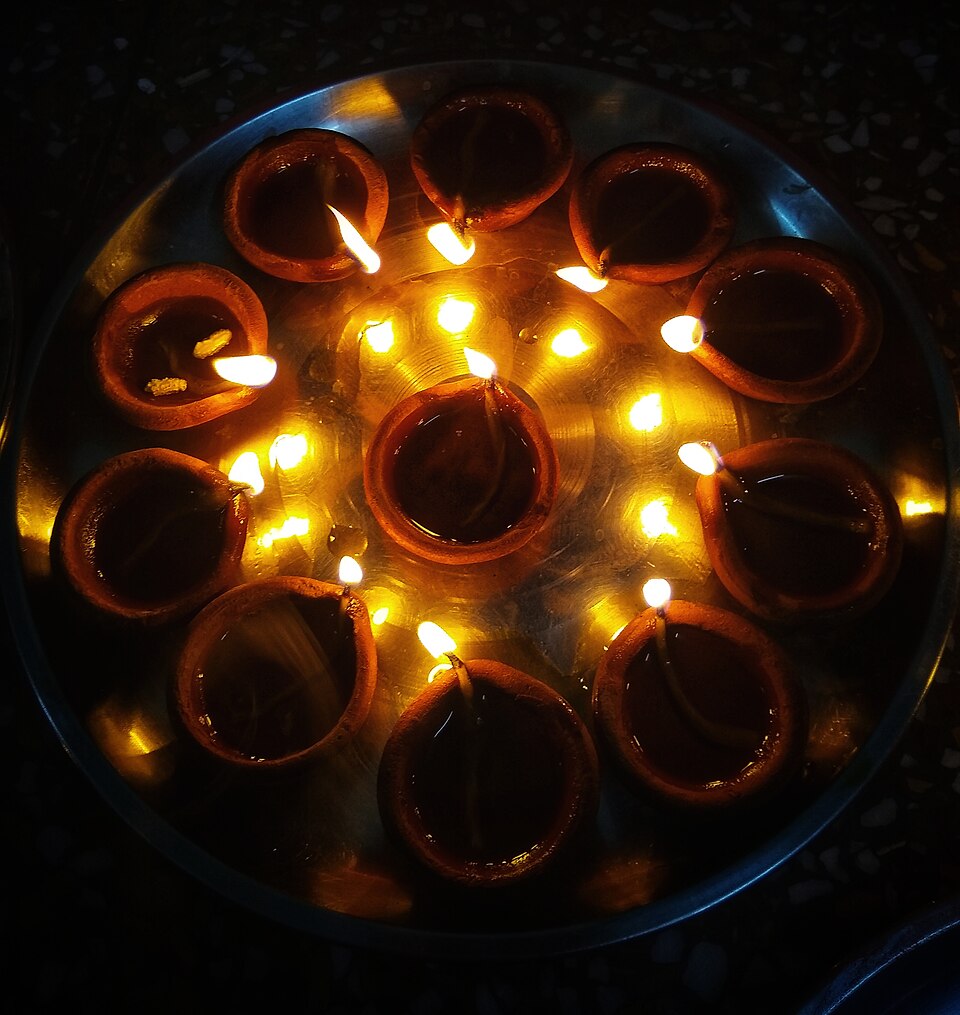
Diwali is often introduced as a festival of lights, but the phrase covers many household and community traditions. Dhanteras, Lakshmi worship, Naraka Chaturdashi, Govardhan Puja and sibling celebrations can be part of the wider season. Their order and emphasis vary, so one family's five-day account should not be treated as a compulsory national script.
Dhanteras and the language of prosperity
Purchasing utensils or precious metal is familiar in some settings, and Dhanvantari is associated with the day in devotional tradition. These practices raise a useful question: what does a household mean by prosperity? Care, useful possessions and generosity can be part of the answer, without turning a festival into pressure to spend beyond one's means.
Auspiciousness is a religious interpretation, not a guarantee of financial returns. A purchase does not become a sound investment because of its date. It is possible to honour a custom modestly, with a repaired object, a cleaned kitchen or an act of sharing.
The work behind the light
Preparing lamps, cleaning a room, arranging a rangoli and making food all require time. Notice who performs that work and whether it is shared. Festival hospitality is easier to sustain when one person is not expected to produce an elaborate celebration for everyone else.
Clay lamps also connect the celebration with makers and markets. If you buy them, ask how they were made and allow for practical details such as stable placement and space around flames. Their beauty is not diminished by taking ordinary care in a crowded home.
Several narratives, not one explanation
Rama's return, Lakshmi worship and Krishna-related traditions appear in different Hindu settings. Jain and Sikh observances associated with the season have their own histories and meanings. They deserve explanation in their own terms rather than being folded into one generic story about the defeat of darkness.
Ask hosts which day matters most to them and how they learned their practice. Such conversations reveal variation within regions as well as between them. A family that celebrates differently is not necessarily missing a prescribed stage.
Make a record worth returning to
Write down a recipe with the cook's name, photograph a lamp arrangement with permission, or record a song title. Note the year and place so an archival photograph is not mistaken for the next festival's programme. An account grounded in people and practices gives readers more than sweeping claims that every item represents the same spiritual anatomy in all traditions.



