Two textiles may both be sold as Kalamkari while being made through different processes. One may feature a drawn narrative; another may depend on repeated block-printed forms. Understanding that distinction is a useful first step for anyone who wants to appreciate the cloth beyond a familiar colour palette or a broad craft label.
Ask which process is involved
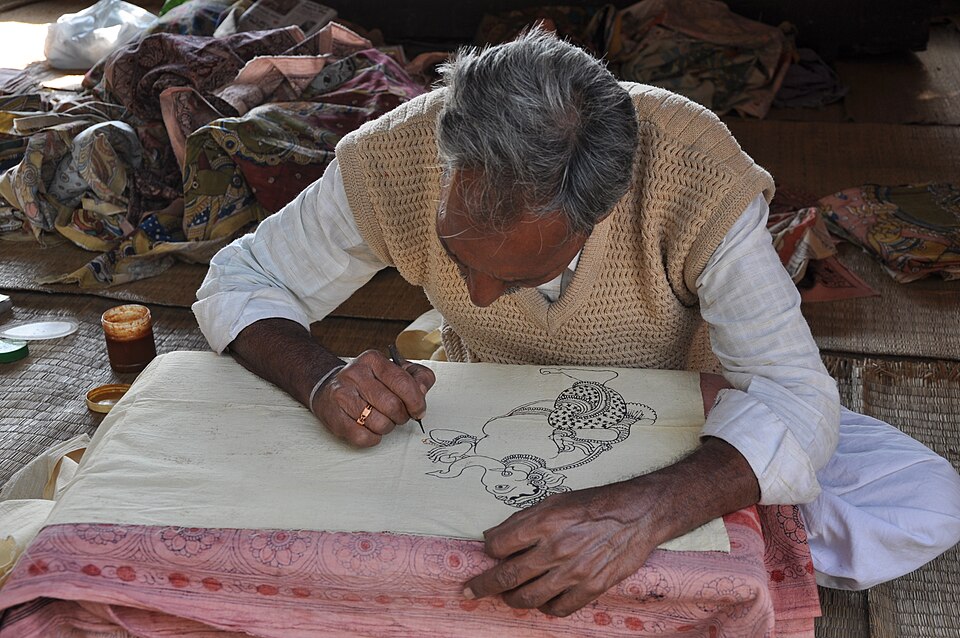
Kalamkari is associated with traditions in Andhra Pradesh, including the hand-drawn work of Srikalahasti and the block-printing tradition of Machilipatnam. These are useful distinctions, although a seller should explain the actual object rather than rely on a place-name alone.
Look for information about drawing, printing and any later additions. A contemporary textile can combine processes or adapt a traditional appearance through industrial production. Clear labelling allows the buyer to understand what is being offered without dismissing every adaptation as the same thing.
Compare a line with a repeat
In a drawn composition, follow a line around a figure and notice how it responds to the available space. In a printed repeat, look at the relationship between neighbouring impressions. How is the pattern continued, and where does a border establish a different rhythm?
These observations are not an infallible authenticity test. Skilled production and modern reproduction can be difficult to distinguish from a photograph. Use them to begin a conversation with a knowledgeable maker or seller, not to pronounce a verdict from one irregular edge.
Be precise about colour claims
If the cloth is described as naturally dyed, ask what that means for the particular piece. The origin of colour, the preparation of the cloth and the care it requires are separate questions. A traditional craft name does not guarantee that all products carrying it use identical materials.
Obtain washing and storage advice from the maker. Do not test dyes with household chemicals or aggressive rubbing in an attempt to prove a claim. A destructive home test can damage a textile without producing a reliable answer.
Read a narrative with its source
Where a painting depicts an epic or devotional scene, ask for the characters and episode. Keep the explanation beside the artist’s name. A narrative textile deserves more than a caption describing it as an attractive pattern.
Whether you choose a small panel or a garment, knowing the process changes how you look after and discuss it. Kalamkari becomes easier to appreciate when drawing, printing, materials and storytelling remain visible as specific choices made by people rather than disappearing beneath one general label.
Sources & further reading
Official cultural reference — background and further reading