The story of Daksha’s sacrifice is often the first explanation a visitor hears when asking why a shrine is called a Shakti Peetha. It brings together family conflict, religious pride, grief and the power of the Goddess. Its emotional force deserves a slower reading than a short list of places where Sati’s body is said to have fallen.
The conflict at the sacrifice
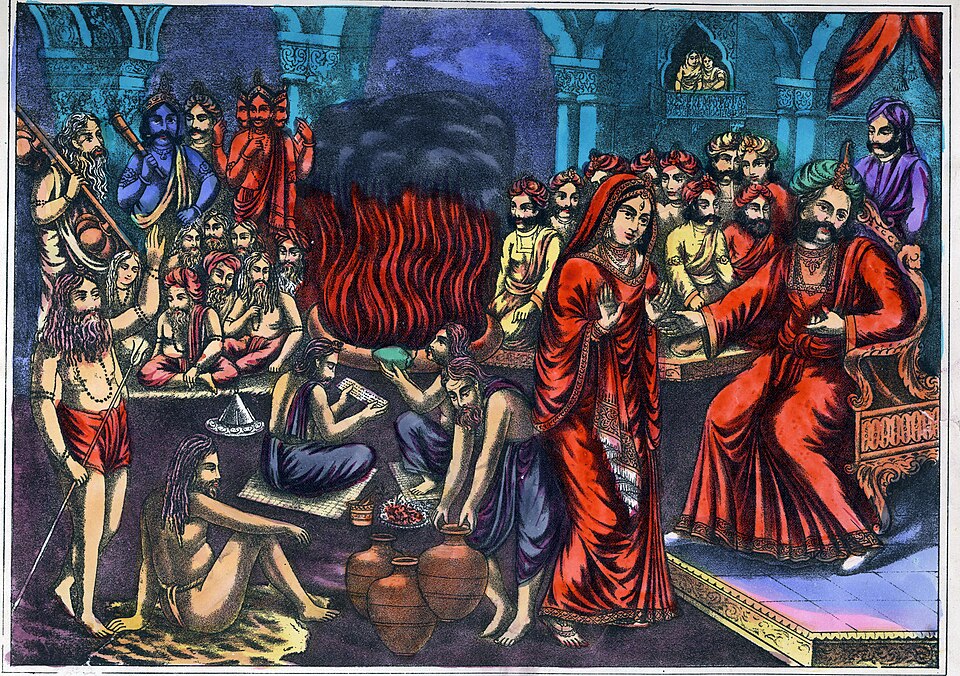
In a familiar telling, Daksha conducts a great sacrifice but excludes Shiva, his daughter Sati’s husband. Sati goes to the gathering and encounters disrespect towards Shiva. Unable to accept the humiliation, she gives up her life. Shiva’s response brings devastation to the sacrifice and exposes the failure of an outwardly grand religious event that lacks respect.
Different Puranic and regional accounts arrange the events differently. Names, speeches and details of Sati’s death vary. A retelling should identify itself as a version of the narrative. Combining every detail found online into one account can produce a story that belongs to no particular source.
From grief to sacred geography
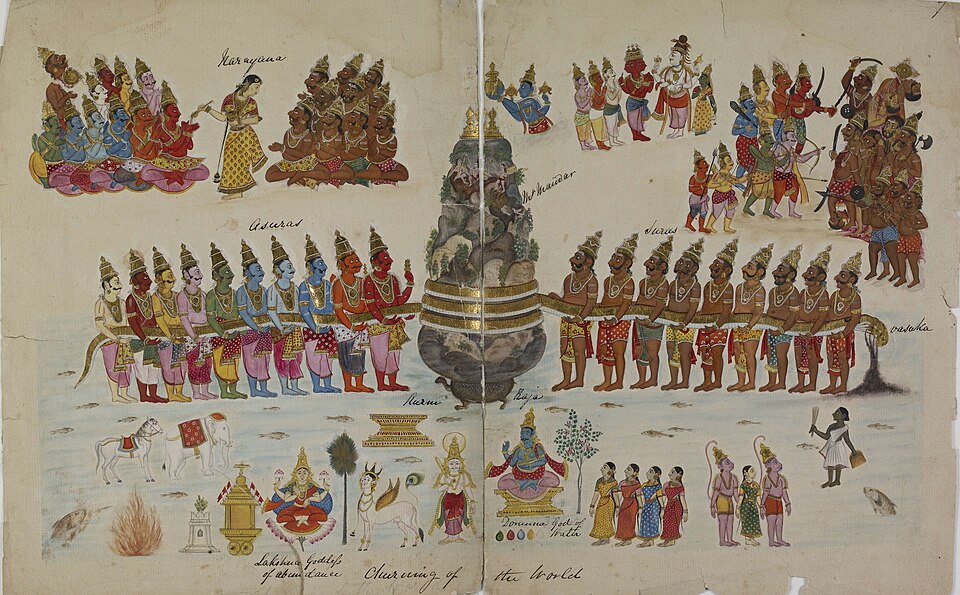
In the widely circulated Peetha narrative, Shiva carries Sati’s body, and Vishnu intervenes so that its parts are dispersed. The places associated with their descent become sacred seats of the Goddess. Some lists also include ornaments. Communities connect their local shrine to this larger account through a particular name and association.
The narrative should not be used as a geological explanation or as proof of a precise historical date. Its setting is sacred story. Archaeological evidence may tell us about a temple building, an inscription or a period of patronage; those are different questions from the devotional meaning of Sati’s presence.
What does the story invite us to consider?
One reading focuses on the danger of pride. Daksha has the status and resources to organise a sacrifice, but those advantages do not guarantee wisdom. The story asks whether a religious act remains meaningful when it becomes a stage for humiliation. This question can be understood without turning every character into a simple psychological label.
Another reading attends to grief. Shiva’s sorrow is not presented as a tidy problem solved by a clever sentence. It changes the world of the narrative. The eventual sacred geography transforms loss into places of relationship and worship. This is an interpretation of the story, not a claim that every tradition explains it in exactly the same way.
Read difficult episodes with care
Sati’s death is part of the narrative’s tragedy. It should not be presented as an instruction for a person facing family conflict, rejection or distress. Devotional literature can be studied respectfully while recognising that a sacred story is not a practical rule for responding to harm in ordinary life.
When discussing the account with younger readers, focus on dignity, the consequences of contempt and the importance of seeking help during conflict. There is no need to dwell on graphic details. Questions about the story are welcome; understanding a tradition does not require suppressing uncertainty.
Connect the story with a place
At a Shakti Peetha, ask which version is told locally and how the deity is addressed. Read the temple’s account alongside a named textual source. Note where they agree and where they differ. Such differences can reveal the way a living tradition develops a local voice.
The story becomes richer when a reader resists the urge to make every detail uniform. Its continuity lies partly in the conversations it continues to support between text, community and place.
Sources & further reading
www.wisdomlib.org — reference and further reading. Interpretive reflections and practical reading suggestions in this article are the website’s own explanatory material. Check current official arrangements before travelling.