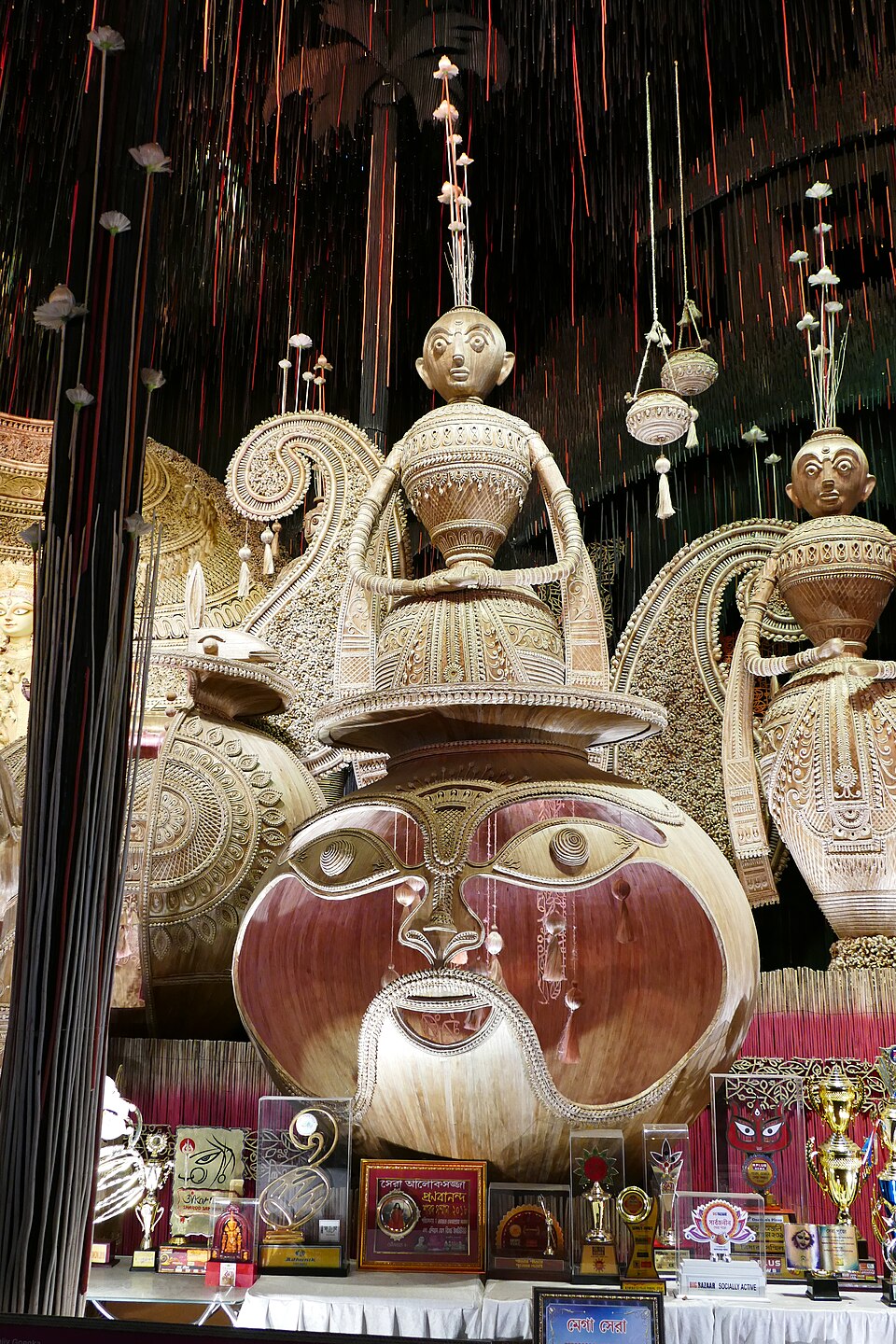
A Durga Puja pandal may be temporary, but the work behind it is substantial. Sculpture, structure, lighting, organisation and neighbourhood participation come together for a limited period. Looking at those contributions helps explain why Kolkata’s Puja is more than a sequence of decorated places to photograph in one night.
See both worship and public art
Durga Puja in Kolkata combines religious observance with extensive artistic and community activity. UNESCO’s recognition concerns the living practice, not a competition to identify one permanent building. The temporary nature of a pandal is part of how it is encountered.
Begin by asking what kind of space you are entering. Some areas are for moving visitors, others for ritual activity or those carrying out the work of the Puja. Follow the organiser’s guidance rather than assuming every position is available for photography.
Follow an idea into materials
Where a theme is explained, compare the stated idea with the materials, colours and route through the pandal. How does the entrance prepare the visitor? Which details become visible only from inside? A theme can be appreciated through specific choices rather than a general label such as “grand.”
Do not infer an artist’s intention from a photograph alone if a description or interview is available. A design can refer to a local issue, a historical form or an imaginative setting, and those references deserve accurate explanation.
Remember the many kinds of labour
Idol makers and designers may receive attention, but construction, electrical work, transport, cleaning and crowd management also matter. Ask who is credited in the organisers’ material. Including those names where appropriate expands the story beyond the most visible finished object.
During preparations, stay out of work areas unless invited. A partly built structure is not a safe public attraction merely because it looks interesting. Photographing unfinished work also calls for permission from the people responsible for it.
Plan a route you can enjoy
Current crowd arrangements and access can change from one day to another. Select a manageable group of locations and follow official local guidance. A shorter route leaves more attention for both the art and the people sharing the space.
When writing afterwards, identify the year, neighbourhood and organising Puja where known. A temporary design should not be presented as a permanent feature awaiting every future visitor. Accurate dates and credits preserve something valuable: a record of a particular community’s creative effort at a particular moment, rather than an interchangeable image of a festival crowd.
Sources & further reading
UNESCO Intangible Cultural Heritage — tradition and community context