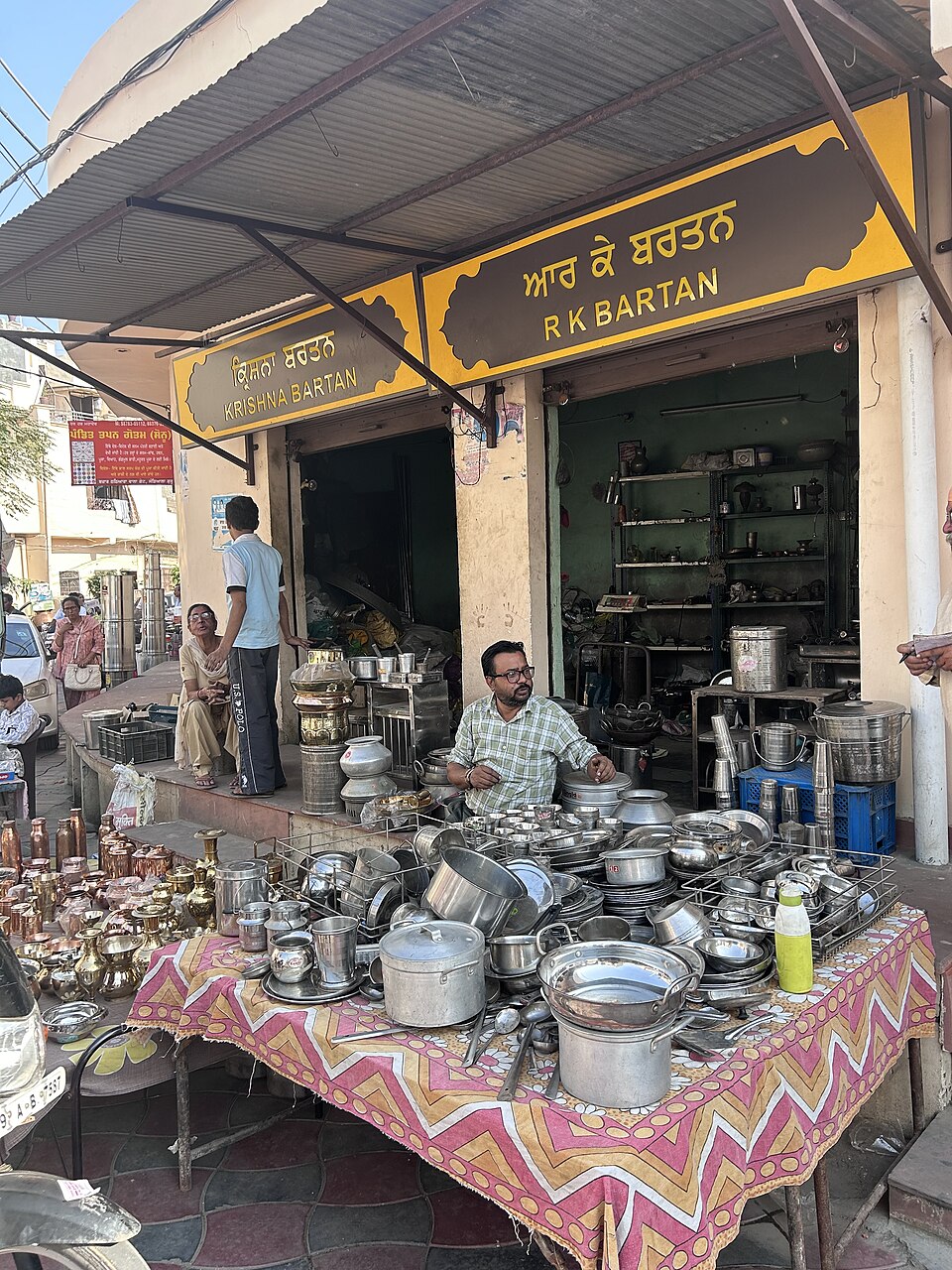
A handmade metal vessel carries information in its shape, rim and surface. Small hammer marks can reveal a process that a perfectly uniform industrial finish conceals. The Thathera craft of Jandiala Guru offers a way to look at ordinary utensils as skilled work, without requiring every useful object to become a decorative museum piece.
Understand the material and process
The tradition recognised by UNESCO concerns the making of brass and copper utensils by the Thathera community of Jandiala Guru in Punjab. Shaping metal involves knowledge of the material as well as repeated physical work. A finished pot does not explain all the stages that produced it.
If a workshop welcomes visitors, ask to see a permitted example of work in progress. Comparing a partly shaped piece with a finished vessel can make the sequence easier to understand than a list of tools alone.
Look at function through form
Study the opening, depth, base and edge of a vessel. How might the shape relate to pouring, serving or handling? Ask the maker about the intended use rather than assigning one from appearance. Similar forms can be made for different markets.
Surface variation should be discussed specifically. “Handmade” does not mean every irregularity is either a flaw or proof of authenticity. A maker can explain which marks belong to shaping, finishing or later wear.
Ask practical questions before buying
Find out the material, any lining or coating, the intended use and the maker’s care instructions. A historic craft description is not enough to establish that every new or antique vessel is suitable for every food or liquid.
Avoid buying on the basis of a promised health benefit from a metal. The cultural interest lies in the craft and the people practising it. For household use, clear product information and appropriate care matter more than unsupported medicinal claims.
Value the maker’s explanation
A workshop is a working environment. Keep away from tools and hot material, and do not interrupt a process to arrange a photograph. If you request a demonstration, ask whether there is a fee or an appropriate time.
Keep the maker or workshop name with a purchase and with any permitted image you share. That connection gives the vessel a traceable story. Instead of calling it only a traditional Indian pot, you can describe what it is, who made it and which visible details helped you understand the labour behind an everyday object.
Sources & further reading
UNESCO Intangible Cultural Heritage — tradition and community context