Inside Jaisalmer Fort, an attractive lane may also be somebody’s route home. Shops, religious buildings and residences make the setting different from a monument cleared of everyday life. A good visit begins by recognising that the fort continues to be used, and that the needs of its inhabitants belong in any discussion of its heritage.
See the settlement within the walls
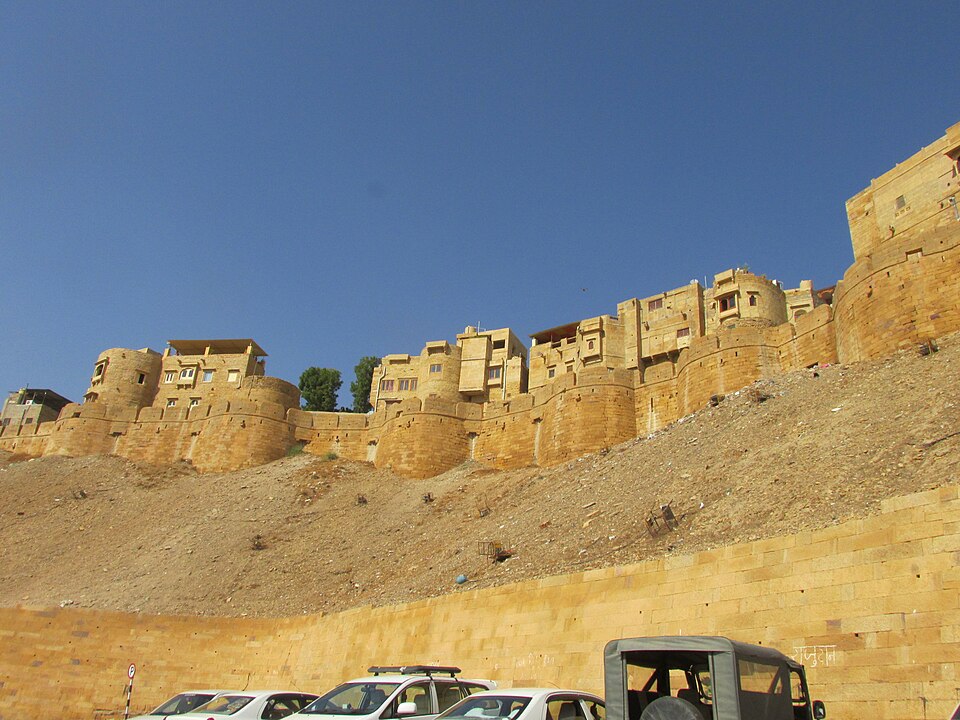
Jaisalmer is one of the forts in Rajasthan’s UNESCO-listed ensemble. Its character includes an inhabited urban setting as well as fortifications and monumental buildings. The word “living” should describe this continued use, not suggest that nothing has changed over the centuries.
Look at how the lanes fit within the boundary. Notice where a route widens, where it becomes a residential passage and how views towards the surrounding city appear. A map and a modest walking route are more useful than an attempt to enter every lane.
Treat carved houses as homes
A decorated balcony or doorway may be part of a private residence. Admire it from an appropriate public position and ask before photographing interiors or residents. A sign offering a visit applies to that particular property, not to neighbouring houses.
When reading about a haveli, keep the building’s name and location with the description. Do not use a photograph of one elaborate facade to illustrate every house in the fort. Individual histories disappear when a neighbourhood is reduced to a generic golden backdrop.
Understand conservation as daily work
Occupied heritage faces practical demands: water, drainage, repairs, waste collection and access. These are not uninteresting modern problems interrupting an authentic past. They affect whether historic buildings and present residents can continue to share the same place.
A responsible visitor can help in simple ways, such as using designated facilities and avoiding behaviour that damages surfaces or blocks circulation. Conservation is not achieved by asking residents to live without ordinary services for the benefit of a view.
Buy and photograph with clear expectations
Ask a shopkeeper about an object’s material and maker rather than assuming every item sold within the fort was made there. If you arrange a paid tour or interior visit, establish what it includes before starting. Clear expectations make the encounter easier for both sides.
Before leaving, spend a moment noticing an ordinary activity that does not need to be photographed. The fort’s continuing life is part of what you came to understand. Respecting that life is a more meaningful response than trying to make every lane appear empty and timeless.
Sources & further reading
UNESCO World Heritage Centre — site history and significance