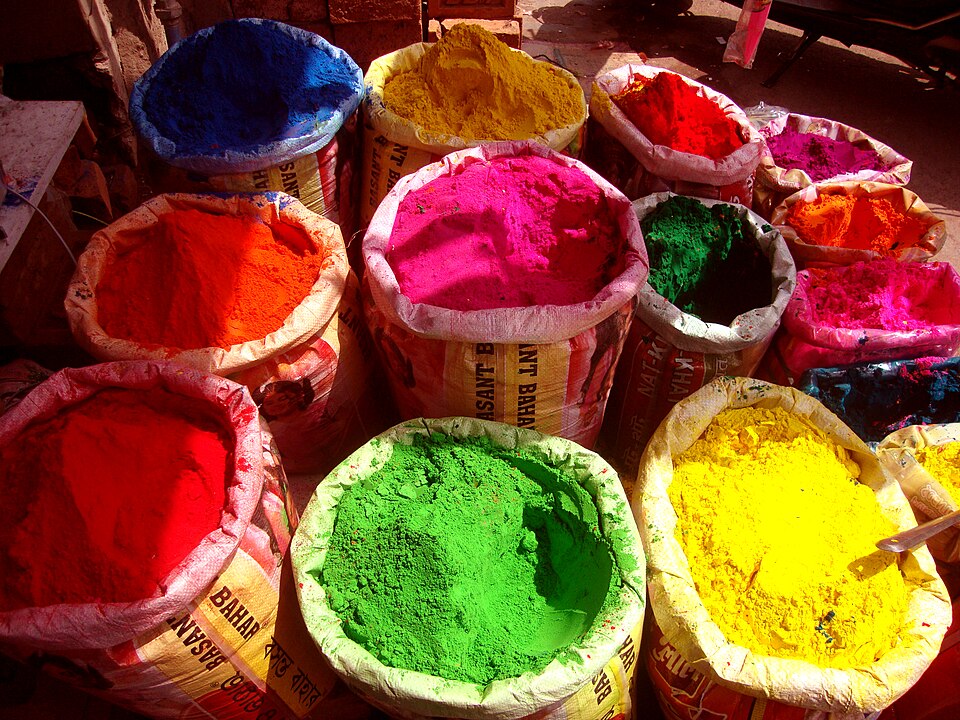
Holi is often photographed as a cloud of colour, but the festival includes more than its most spectacular moment. Bonfire traditions, songs, visits and regional stories shape how it is celebrated. A thoughtful introduction should also make room for the person who wants to join without being overwhelmed.
Separate the observances
Holika Dahan and the playing of colours are related parts of many celebrations, but they are not the same activity. The story of Prahlada and Holika is associated with the bonfire in familiar accounts, while Krishna-related traditions are important in other aspects of the season.
Regional forms deserve their own names and explanations. A photograph from one town or community should not be captioned as though it represents every Holi celebration. Ask what is happening at the particular event before supplying a general story.
Consent belongs in the celebration
Ask before applying colour to someone, especially a stranger or a person holding a camera. A festive setting does not remove the need to respect a refusal. People may have many reasons for participating differently, and they need not disclose them to justify a boundary.
If organising a gathering, explain the arrangements clearly: where colour play happens, where people can remain without participating and how children will be supervised. Avoid throwing substances toward faces or involving animals. A welcoming event gives people a real choice about how they join.
Attend to the quieter work
Preparation and cleaning are part of the festival too. Ask who supplies materials, manages water and clears the space afterwards. Planning a manageable amount of colour and waste can make a celebration easier for hosts and neighbours.
Food, music and greetings can offer ways to participate beyond vigorous colour play. For a cultural record, a song title or a cook's explanation may preserve as much meaning as the brightest photograph. Obtain permission before recording people at close range.
Keep the date and place visible
An archival picture should be labelled with its actual setting where known. A Holi image from Bangladesh, Nepal or a diaspora celebration may be relevant, but it should not be presented as a photograph from an Indian town it does not show.
Check current local arrangements before attending a public event. The general festival account explains meaning; it does not establish this year's access or crowd conditions. Joining respectfully depends on both kinds of knowledge: understanding the celebration and listening to the people sharing it with you.



