Before a Ganesha image reaches a home or public mandal, it has passed through a workshop. Someone has planned its size, shaped its features, allowed materials to dry, applied colour and prepared it for transport. Remembering that work adds another dimension to the festival's final farewell.
Look beyond the finished face
The face often draws a visitor's attention first, but the whole image needs balance. The base must support the form; projecting hands and ornaments need care; the chosen size must suit the space where it will be installed. These are practical decisions as well as artistic ones.
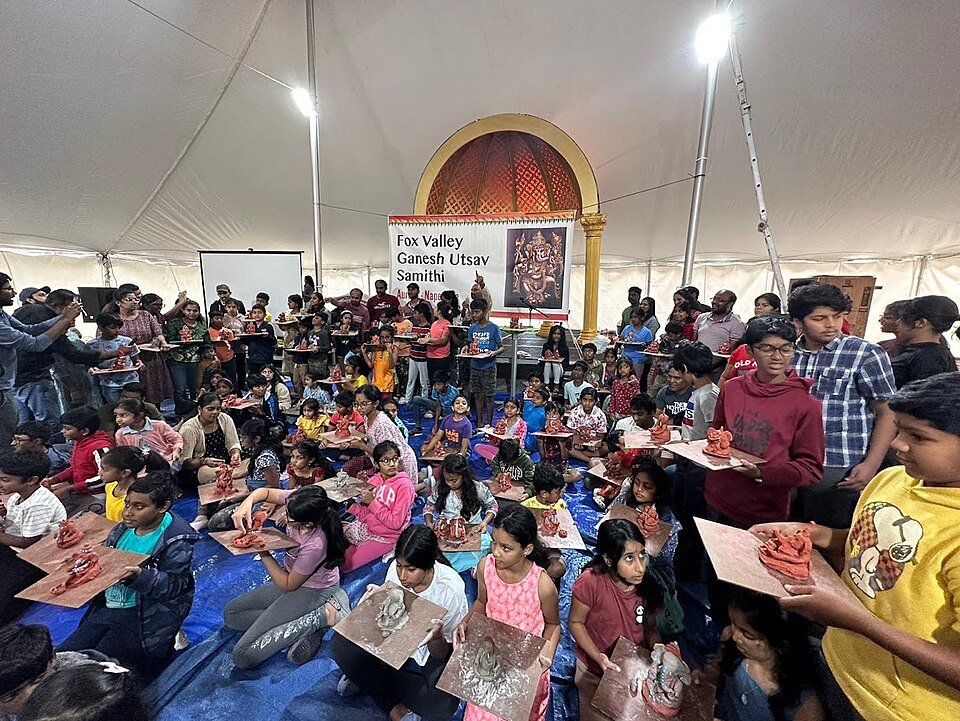
Different workshops use different methods and materials. Ask the maker about the particular image in front of you instead of assuming that one video shows how every festival image is produced. A children's clay workshop, for example, illustrates learning and participation rather than the complete process of a professional studio.
Ask useful questions when ordering
Discuss dimensions, weight, material, finish and the intended immersion arrangement. Give a realistic delivery date and confirm what is included. A late change to size or ornament can affect work that has already taken considerable time.
If commissioning a design, explain the religious and visual details that matter to the family. Clear reference images can help, but they should not become a demand to copy another living artist's work without permission.
Credit the maker
When sharing a photograph of an image, include the artisan or workshop's name if they wish to be credited. Ask before photographing unfinished work or customers' commissions. A workshop is a place of livelihood, not automatically a public exhibition.
Pay attention to the skills that are easy to overlook: preparing the surface, controlling a painted line or arranging the expression. These details make a more useful conversation than asking only how quickly the image was made.
Carry that respect into the farewell
The image's temporary place in the festival does not make the labour behind it disposable. Handling it carefully, understanding its materials and following an appropriate immersion arrangement acknowledge the maker's work as well as the devotional purpose.
The cycle from workshop to welcome to visarjan brings art into everyday community life. Looking at the process helps a visitor see the festival as a shared undertaking involving artists, households, volunteers and the people who restore the public space afterwards.



